- 163/585 Little Collins Street, Melbourne VIC 3000, Australia

Retail Security: Definition, Meaning, Duties, Solutions
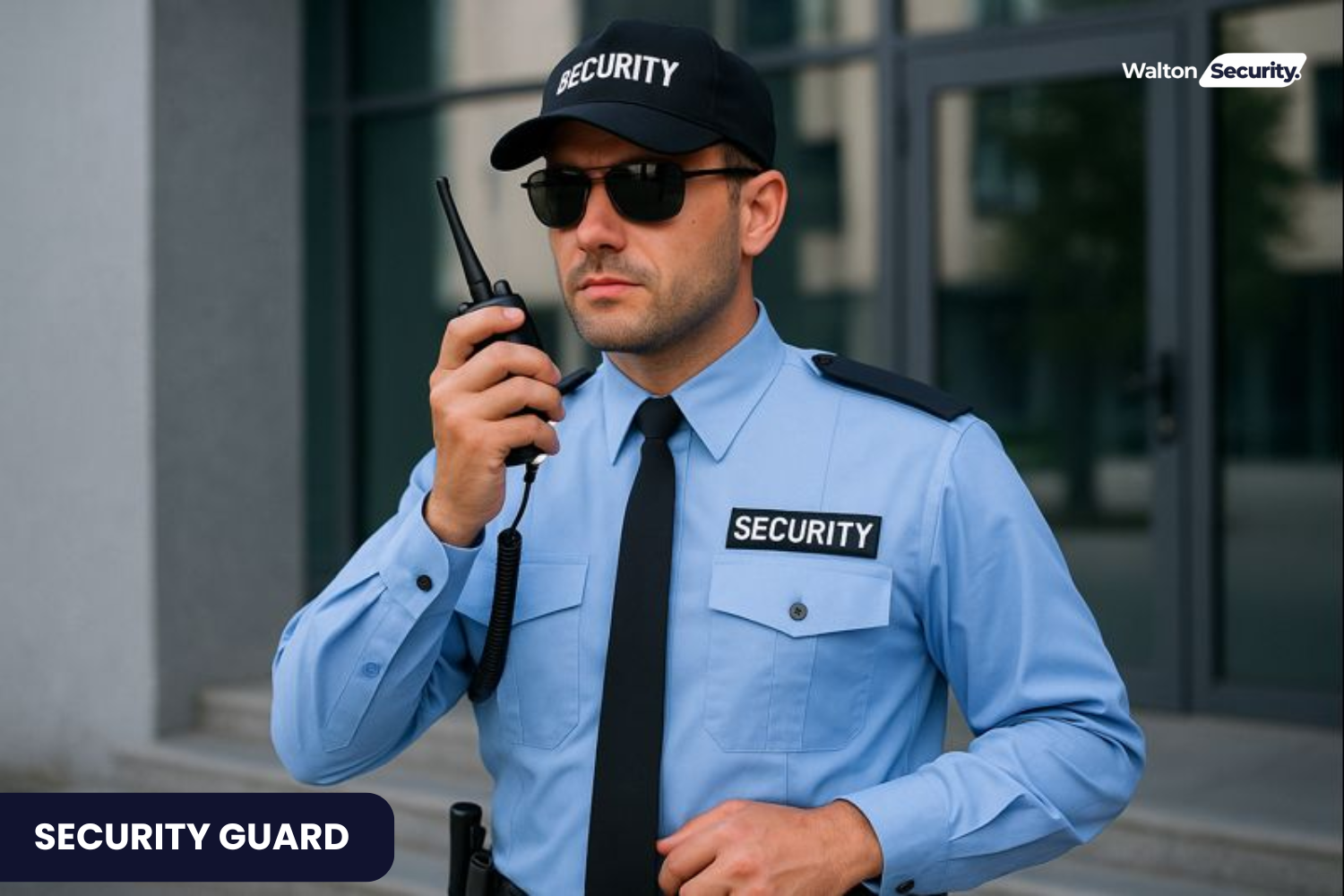
Retail security protects shops, shopping centres, and retail businesses from security threats including shoplifting, armed robbery, property damage, and criminal activities that cause financial losses and damage customer trust. According to the Australian and New Zealand Retail Crime Study 2021/22, customer theft accounts for approximately half of all crime-related losses in retail, with total theft values estimated in the billions annually across Australia. Professional security guards provide visible deterrent presence, loss prevention expertise, and emergency response capabilities that safeguard merchandise, staff, and customers in retail settings.
Retail security encompasses security guards stationed at store entrances, loss prevention officers conducting covert surveillance, CCTV system monitoring, and mobile patrols covering larger areas and multiple locations. These security solutions work together to prevent theft, deter suspicious behaviour, and maintain peace of mind for business owners while creating safe shopping environments. Effective retail security combines visible presence with incident reporting, emergency protocols, and customised security assessments addressing potential vulnerabilities specific to each retail premises.
This comprehensive guide examines retail security guard duties, loss prevention strategies, and security solutions for Melbourne retailers. Store managers, shopping centre operators, and retail business owners will gain practical knowledge for implementing effective security protocols that reduce shrinkage, protect staff, and maintain positive customer experiences.
What Is Retail Security and How Does It Work in Shops and Shopping Centres?
Retail security comprises the measures, services, and personnel deployed to protect retail premises, stock, staff, and customers from theft, fraud, violence, and other criminal activities. Security guards form the human element within comprehensive retail security systems that also include CCTV surveillance, alarm systems, electronic article surveillance, and procedural controls. Retail security guards do far more than stand at doors; they actively patrol store floors, observe customer behaviour, respond to incidents, and support retail staff in maintaining safe shopping environments.
Retail security operates across diverse store formats including supermarkets, fashion retailers, shopping centres, pharmacies, electronics stores, and high-value specialty shops. Each retail environment presents unique security challenges requiring tailored approaches. High-footfall locations need visible uniformed security for deterrence while luxury retailers may deploy plain-clothed loss prevention officers for discreet observation. Shopping centres coordinate security teams across common areas, car parks, and individual tenant stores.
National police and security bodies emphasise that effective retail security integrates multiple elements including trained personnel, CCTV systems, staff awareness training, stock controls, cash handling procedures, and regular security audits. Retail security guards work within these broader frameworks, providing the responsive human capability that technology alone cannot deliver.
Why Retail Security Has Become Essential for Modern Retailers in Melbourne
Australian Bureau of Statistics data reveals theft at a twenty-one year high, with hundreds of thousands of victims nationally and almost half of all theft incidents occurring in retail settings. Melbourne retailers face significantly increased theft offences in recent years, driven by cost-of-living pressures, organised retail crime groups, and more aggressive behaviour toward store staff. These trends make professional retail security essential rather than optional for businesses seeking to protect their operations.
Retail theft creates cascading business impacts beyond direct stock losses. Shrinkage erodes profit margins, forcing price increases that disadvantage honest customers. Staff safety concerns affect recruitment and retention when employees feel vulnerable to abuse or violence. Insurance premiums rise following security incidents, while negative reviews and reputation damage deter customers from returning. Retailers without adequate security find themselves trapped in cycles of increasing losses and declining performance.
Professional retail security guards address these challenges through visible deterrence, active theft prevention, and rapid incident response. Experienced personnel trained in loss prevention techniques identify suspicious behaviour patterns, intervene appropriately, and coordinate with law enforcement when criminal activity occurs. This is where professional retail security guards provide the protection Melbourne retailers need.
What Does a Retail Security Guard Do Day to Day?
Retail security guards perform structured daily routines combining preventive monitoring with responsive incident management. Each shift begins with pre-shift briefings covering current risk factors, known offender alerts, and any special circumstances requiring attention. Guards review recent incident reports, loss data, and operational updates from store management before commencing active duties.
What Are the Main Tasks of a Retail Security Guard on Shift?
During shifts, retail security guards patrol the store floor, monitor entry and exit points, and observe customer behaviour for signs of suspicious activity. Patrol routes cover high-theft areas including changing rooms, electronics sections, cosmetics displays, and loading bays. Guards maintain awareness of emergency exits, storage zones, and employee entrances that unauthorised persons might exploit.
Security guards respond to alarm activations, CCTV alerts, and staff notifications of suspicious behaviour. Response duties include approaching and observing suspected shoplifters, verifying alarm triggers, and investigating disturbances. Guards support retail staff with cash handling escorts, opening and closing procedures, and any situations where additional security presence provides reassurance or protection.
How Do Retail Security Guards Interact With Customers and Staff?
Retail security guards balance protective duties with customer service responsibilities that maintain welcoming store atmospheres. Guards greet customers entering stores, provide directions to departments or facilities, and assist with general enquiries. This approachable demeanor serves dual purposes: demonstrating visible presence that deters theft while contributing positively to customer experiences.
Staff relationships require guards to understand retail operations without interfering with sales activities. Guards coordinate with store managers on security concerns, alert retail staff to suspicious individuals, and provide support during difficult customer interactions. Professional guards maintain courteous behaviour that reflects positively on the retail brand while remaining alert to security threats.
How Do Guards Handle Suspicious Behaviour and Shoplifting Incidents?
Guards identify suspicious behaviour through trained observation of body language, movement patterns, and actions inconsistent with normal shopping. Signs include nervous glances toward staff, concealing merchandise, removing security tags, and unusual clothing choices suggesting concealment capability. Guards maintain surveillance on suspected individuals while coordinating with colleagues and control rooms.
Shoplifting incident response follows store policies and legal requirements. Guards must observe the theft, maintain continuous surveillance, and approach suspects only after they pass the last point of sale without paying. Professional guards document incidents thoroughly, preserve evidence correctly, and liaise with Melbourne Police when criminal charges proceed. Customer safety and guard safety remain priorities throughout all interventions.
Core Duties and Responsibilities of Retail Security Guards
Retail security guards perform four primary duty categories that together create comprehensive store protection. These responsibilities encompass visible deterrence through physical presence, surveillance system monitoring, theft and fraud prevention, and customer service balanced with conflict management. Each duty category contributes essential protection value that reduces shrinkage while maintaining positive shopping environments.
Visible Deterrence, Patrols, and Presence on the Shop Floor
Visible security guards demonstrably reduce retail theft through deterrent effects confirmed by retail crime research. Potential shoplifters observing uniformed guards calculate increased detection and apprehension risks, often abandoning theft intentions. Static guards positioned at store entrances signal active security monitoring, while roving patrols create unpredictable coverage that denies offenders safe opportunities.
Shop floor presence enables guards to observe customer behaviour directly, identifying suspicious activity that CCTV coverage might miss. Guards position themselves to maintain sightlines across high-risk areas while remaining available for customer assistance. Regular patrol routes vary timing and pathways to prevent predictable patterns that organised theft groups might exploit.
Monitoring CCTV, Alarms, and Store Security Systems
Retail security guards monitor CCTV systems to extend surveillance beyond direct observation. Guards watch live camera feeds from control rooms or mobile devices, tracking suspicious individuals across store areas. CCTV monitoring enables guards to coordinate responses, directing colleagues toward developing situations while maintaining continuous observation.
Alarm response duties include investigating electronic article surveillance activations at store exits, verifying door alarms, and responding to panic button alerts from staff. Guards triage alarms to distinguish genuine security events from technical faults or customer accidents. CCTV footage review supports incident investigation, providing evidence for management use, police investigations, and insurance claims.
Preventing Shoplifting, Refund Fraud, and Internal Theft
Loss prevention encompasses external threats from shoplifters and organised retail crime alongside internal theft by employees with legitimate store access. Guards observe customer behaviour patterns indicating theft intent, including merchandise selection without examining quality or price, excessive trips to changing rooms, and leaving stores through emergency exits. Refund fraud detection requires awareness of schemes involving stolen receipts, counterfeit returns, and receipt swapping.
Internal theft prevention involves monitoring employee behaviour, verifying stock movements, and maintaining access controls on storage areas. Guards ensure staff follow cash handling procedures, investigate discrepancies, and report concerns to management. Safe apprehension procedures protect guards and suspects while preserving evidence for successful prosecutions. Working relationships with Melbourne Police facilitate criminal proceedings when theft offences warrant charges.
Incident Reporting, Evidence Collection, and Liaison With Police
Comprehensive incident reporting creates accurate records supporting loss analysis, insurance claims, and legal proceedings. Guards document all security events including thefts, attempted thefts, disturbances, injuries, and staff safety concerns. Reports capture incident timing, locations, persons involved, actions taken, and outcomes achieved. Customised report formats enable retail management to track patterns and measure security performance.
Evidence collection follows chain of custody requirements ensuring materials remain admissible in court proceedings. Guards secure recovered merchandise, preserve CCTV footage, and obtain witness statements following correct procedures. Police liaison duties include providing comprehensive incident briefings, supplying evidence packages, and attending court as witnesses when required. Professional documentation significantly improves prosecution success rates.
Types of Retail Security Solutions for Different Store Environments
Retailers combine several retail security service types depending on store size, risk profile, location characteristics, and budget constraints. Effective security planning matches service combinations to specific vulnerability assessments rather than applying standardised approaches across diverse retail environments.
Static Retail Security Guards at Entry and Exit Points
Static retail security guards positioned at store entrances provide visible deterrent presence and controlled access monitoring. Entry duties include greeting customers, conducting bag checks according to store policy, and observing incoming traffic for known offenders or suspicious individuals. Exit monitoring verifies purchases, responds to EAS alarm activations, and prevents merchandise from leaving without payment.
Front door guards maintain awareness of emergency exits, preventing unauthorised entry or exit through fire doors and loading areas. Static positions at high-value departments within stores provide focused protection for electronics, jewellery, or pharmaceutical sections experiencing elevated theft risk. Guards balance security vigilance with customer service, ensuring protective measures do not create unwelcoming atmospheres.
Loss Prevention Officers and Plain-Clothed Store Detectives
Loss prevention officers and store detectives conduct covert surveillance operations identifying shoplifters and employee theft that visible guards cannot detect. Plain-clothed personnel blend with regular customers, observing behaviour without alerting potential offenders to security presence. Undercover officers follow suspects through stores, witnessing concealment and theft acts that support successful apprehensions and prosecutions.
Covert services prove particularly effective against organised retail crime groups who conduct reconnaissance identifying uniformed security before executing theft operations. Store detectives work closely with retail management, sharing intelligence on theft methods, offender profiles, and vulnerability assessments. Professional discreet operations reduce shrinkage without impacting customer experiences through intrusive visible security presence.
Shopping Centre and Mall Security Teams
Shopping centre security teams protect common areas including car parks, food courts, walkways, and amenities while coordinating with individual tenant store security. Centre security responds to incidents across the precinct, managing disturbances, ejecting troublemakers, and providing emergency response for all retailers. Shared security services distribute costs across tenants while providing professional coverage exceeding what individual stores could afford independently.
Mall security addresses challenges specific to multi-tenant environments including youth antisocial behaviour, car park crime, and incidents spanning multiple store boundaries. Security teams coordinate tenant communications, sharing offender alerts and incident notifications. Centre management relationships enable security to enforce conduct policies, manage banned persons lists, and maintain environments attractive to shoppers and retailers.
Remote CCTV Monitoring and Alarm Response for Retail Sites
Remote CCTV monitoring provides cost-effective surveillance coverage for retail sites unable to justify full-time on-site guards. Professional monitoring centres watch camera feeds from multiple stores simultaneously, identifying suspicious activity and triggering response protocols. Real-time alerts enable immediate intervention through PA announcements, verbal warnings via two-way audio, or mobile patrol dispatch.
Alarm response services verify activations before dispatching guards or notifying police, reducing false alarm costs and ensuring rapid response to genuine incidents. After-hours monitoring protects closed stores from break-ins and vandalism. Remote services integrate with on-site security during trading hours, providing additional observation capability and incident documentation support.
How Retail Security Reduces Theft, Shrinkage, and Anti-Social Behaviour
Professional retail security delivers measurable outcomes reducing theft, shrinkage, and incidents affecting staff and customers. Visible guard presence creates deterrent effects that prevent theft attempts before they occur. Tailored loss prevention programs implemented by security providers in Australia have demonstrated significant reductions in crime-related retail losses for participating businesses.
Shrinkage reduction flows directly from theft prevention, improved stock controls, and detection of internal theft. Guards observing suspicious behaviour intervene early, preventing merchandise losses while documenting patterns enabling operational improvements. Staff report feeling safer in guarded stores, reducing turnover and improving customer service delivery. Customer confidence increases when visible security creates safe shopping environments.
Stronger incident documentation enables more effective police follow-up on retail crime. Guards preserving evidence correctly and providing comprehensive reports increase prosecution rates, removing repeat offenders from circulation. Data from incident reports supports security plan refinement, concentrating resources on highest-risk periods and locations.
Retail Security in Melbourne: Key Risks, Trends, and Crime Statistics
Melbourne retailers operate in an increasingly challenging security environment with theft rates reaching multi-decade highs. Australian Bureau of Statistics data confirms hundreds of thousands of theft victims nationally, with substantial proportions of offences occurring in retail locations. Melbourne theft statistics show strong increases in recent years, creating urgent demand for effective retail security solutions.
How Big Is the Retail Theft Problem in Melbourne?
Retail theft in Melbourne represents a significant and growing challenge for businesses across all store formats. State data confirms substantial increases in theft offences, with retail environments accounting for large proportions of overall theft victimisation. Cost-of-living pressures have increased opportunistic theft while organised retail crime groups target high-value merchandise for resale through online marketplaces and informal networks.
Melbourne shopping precincts including Bourke Street, Chapel Street, and suburban centres experience elevated theft and antisocial behaviour requiring dedicated security responses. Retailers report increasing incidents of aggressive behaviour toward staff, shoplifting with threats, and group theft operations overwhelming untrained employees. These trends reinforce the essential nature of professional retail security for Melbourne businesses.
Which Retail Premises Are Most at Risk?
Certain retail categories face elevated theft risk due to merchandise characteristics and store configurations. Grocery and liquor stores experience high-volume shoplifting of consumable products with ready resale value. Fashion retailers lose clothing and accessories to both opportunistic theft and organised operations targeting premium brands. Electronics stores protect high-value, easily concealed items attractive to thieves.
Pharmacies face unique risks from prescription medication theft alongside standard retail shrinkage. Hardware stores lose tools and equipment to both professionals supplementing work supplies and organised thieves targeting valuable items. Cosmetics and beauty retailers experience disproportionate theft of small, high-value products. Understanding category-specific risks enables appropriate security measure selection.
What Types of Offending and Anti-Social Behaviour Are Most Common in Shopping Centres?
Shopping centres experience diverse crime types requiring comprehensive security responses. Shoplifting remains the most common offence, ranging from opportunistic individual theft to organised group operations. Youth antisocial behaviour including intimidation, graffiti, and disturbances affects customer comfort and retailer confidence. Car park crime encompasses vehicle theft, break-ins, and assaults on patrons.
Assaults on retail staff have increased as aggressive behaviour becomes more common during theft confrontations. Food court disturbances, drug activity, and loitering create management challenges requiring security intervention. Armed robbery, while less frequent, presents severe risk requiring trained security response and emergency protocols. Professional security teams address this full spectrum of centre crime.
Training, Licensing, and Legal Requirements for Retail Security Guards in Melbourne
Melbourne retail security guards must hold valid security licences issued under the Private Security Act 2004. Licence requirements include national criminal history checks ensuring guards have no disqualifying offences, completion of approved training courses, and ongoing compliance with regulatory standards. Security companies verify guard credentials before deployment and maintain documentation demonstrating compliance with licensing requirements.
Training encompasses core competencies in conflict management, legal use of force, communication skills, and incident reporting. Certificate II in Security Operations provides foundational knowledge, while additional training addresses retail-specific requirements, including loss prevention techniques, customer service, and evidence handling. First aid and CPR certification enable guards to respond to common medical emergencies in retail environments.
Legal constraints govern guard powers regarding bag checks, suspect detention, and customer interactions. Retailers must ensure security operations comply with privacy policies, consumer rights, and store procedures. Guards cannot detain suspects without witnessing theft and must follow correct procedures to avoid false imprisonment claims. Understanding these requirements protects retailers, guards, and customers.
How to Choose the Right Retail Security Provider in Melbourne
Selecting an effective retail security provider requires systematic evaluation of capabilities, experience, and service quality. Begin by defining your risk profile considering location, store type, operating hours, merchandise categories, and past incident history. This assessment guides appropriate service selection and enables meaningful comparison between providers.
What Should Retailers Look for in a Retail Security Company?
Verify provider licensing compliance, insurance coverage, and experience serving similar retail formats. Request evidence of guard training programs covering loss prevention, de-escalation, customer service, and evidence handling. Enquire about supervision systems ensuring guards receive support and accountability. Confirm 24/7 operational capability for emergency response and incident escalation.
Walton Security provides experienced retail security personnel with proven loss-prevention capabilities across Melbourne’s retail environments. Licensed guards receive comprehensive training in theft prevention, customer engagement, and incident management. 24/7 control room support enables rapid response coordination while detailed reporting demonstrates security performance and return on investment.
Key KPIs and Reporting for Retail Security Performance
Effective retail security performance measurement tracks incidents, shrinkage trends, response times, and customer feedback. Incident logs document all security events enabling pattern analysis and resource allocation refinement. Shrinkage data compared against security deployment demonstrates loss prevention effectiveness. Response time metrics verify that guards address alerts promptly.
Monthly security summaries should include incident counts by category, apprehension statistics, recovered merchandise values, and significant observations. Customer and staff feedback provides qualitative assessment of guard professionalism and store atmosphere impacts. Quality providers deliver comprehensive reporting enabling retailers to assess security investment value and identify improvement opportunities. Contact Walton Security for tailored retail security solutions with transparent performance reporting.
FAQs About Retail Security
Can Retail Security Guards Search Customer Bags?
Yes, retail security guards can request bag searches, but customers have the right to refuse. Store signage and entry conditions establish search policies that customers implicitly accept by entering premises. Guards cannot physically search unwilling customers but may refuse entry or request the customer leave. Suspected shoplifters who refuse searches after theft observations may be detained for police who hold search authority.
What Is the Difference Between a Security Guard and a Loss Prevention Officer?
Security guards provide a uniformed, visible presence deterring crime through observation and patrol. Loss prevention officers typically work in plain clothes conducting covert surveillance to identify and apprehend shoplifters. Guards focus on access control and general security while loss prevention specialists concentrate specifically on theft detection and investigation. Many retailers deploy both services, combining visible deterrence with undercover detection capabilities.
Is Uniformed Security or Plain-Clothes Security More Effective for Retail?
Uniformed and plain-clothes security serve different purposes with complementary effectiveness. Uniformed guards provide visible deterrence that prevents many theft attempts before they occur. Plain-clothes officers catch shoplifters who proceed despite uniformed presence, particularly effective against organised retail crime groups who conduct reconnaissance. Most retailers achieve optimal protection through combined approaches using visible guards for deterrence supplemented by covert officers for detection.
How Do Retail Security Guards Legally Detain Shoplifters?
Guards legally detain shoplifters under citizens’ arrest powers when they directly witness theft offences. Required elements include observing merchandise selection, witnessing concealment, maintaining continuous surveillance, and allowing the suspect to pass the last point of sale without payment. Guards must use only reasonable force, detain briefly until police arrive, and cannot search detained persons without consent. Correct procedures protect retailers from false imprisonment claims.
What Security Systems Work Best Alongside Retail Security Guards?
Effective retail security combines guards with complementary technology systems grouped into several categories. Surveillance systems include CCTV cameras, video analytics, and remote monitoring. Electronic article surveillance encompasses security tags, detection gates, and source tagging. Access control covers employee entry systems, stockroom restrictions, and delivery verification. Point-of-sale systems integrate exception reporting identifying suspicious transactions. Guards operate within these integrated systems, responding to alerts and providing capabilities technology cannot deliver independently.
Do Retail Security Guards Need Specific Training Beyond Standard Licensing?
Yes, effective retail security requires training beyond minimum licensing standards. Loss-prevention techniques, customer service skills, evidence-handling procedures, and retail-specific legal knowledge enhance guard effectiveness. Quality providers deliver ongoing training covering emerging theft methods, de-escalation techniques, and the operation of technology systems. Guards protecting pharmaceutical or licensed premises may require additional credentials. Retail-specific training distinguishes professional loss prevention personnel from general security guards.
How Should Retailers Measure Retail Security Effectiveness?
Measure retail security effectiveness through quantitative metrics and qualitative assessments. Track shrinkage rates comparing periods with and without security deployment. Count incidents by type, monitoring trends over time. Record apprehensions, recovered merchandise values, and prosecution outcomes. Survey staff regarding safety perceptions and customer feedback about store atmosphere. Compare security costs against loss reductions to calculate return on investment. Regular performance reviews with security providers enable continuous improvement.