
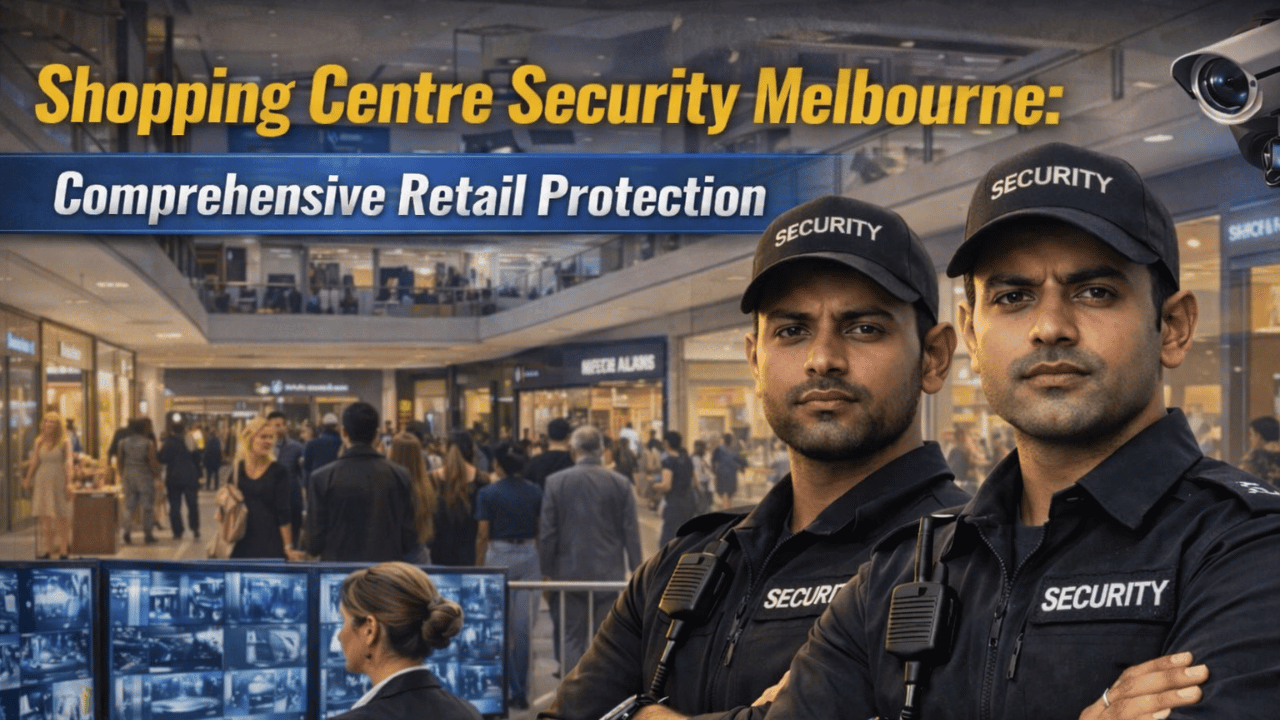
Shopping centre security in Melbourne (Melbourne) protects retail environments, tenants, customers, and assets through professional security personnel, surveillance systems, and coordinated protection strategies. Melbourne shopping centres range from major regional centres attracting millions of annual visitors to neighbourhood strip malls serving local communities, each requiring security tailored to their specific risk profiles and operational requirements. Professional shopping centre security addresses retail theft, antisocial behaviour, customer safety, emergency management, and tenant support, creating safe environments that encourage patronage and protect commercial interests.
Walton Security provides comprehensive shopping centre security throughout (Melbourne) Melbourne, combining retail security expertise with mobile patrols, crowd control, and asset protection services to deliver effective centre-wide protection.
Shopping Centre Security Challenges
Shopping centres face diverse security challenges arising from their public accessibility, high foot traffic, and concentration of retail assets.
Retail Theft and Shoplifting
Shoplifting remains a significant challenge for shopping centre retailers, with Australian retail theft exceeding $9 billion annually. Shopping centres concentrate theft targets, attracting both opportunistic shoplifters and organised retail crime groups targeting multiple stores. Centre security supports individual retailer loss prevention efforts while addressing centre-wide theft patterns.
Theft patterns in shopping centres include opportunistic shoplifting by individuals, organised retail crime targeting high-value merchandise, employee theft within tenant stores, trolley pushouts and grab-and-run incidents, and theft from common areas, including displays and decorations.
Antisocial Behaviour
Shopping centres attract antisocial behaviour including youth congregation causing disturbance, aggressive begging and solicitation, drug use in toilets and car parks, vandalism and graffiti, and public intoxication and disorder. Antisocial behaviour impacts customer comfort, tenant satisfaction, and centre reputation, requiring consistent security response.
Customer Safety
Protecting customers from harm represents a fundamental centre management responsibility. Safety concerns include slip and fall hazards, medical emergencies, vehicle incidents in car parks, criminal victimisation, and emergency situations requiring evacuation.
Tenant Security Support
Individual retailers rely on centre security for support beyond their own resources. Tenant support includes responding to theft incidents, managing difficult customers, providing after-hours alarm response, and coordinating emergency procedures.
Car Park Security
Shopping centre car parks face vehicle theft, break-ins, vandalism, and personal safety concerns. Car park security requires dedicated attention given physical separation from main retail areas and reduced natural surveillance.
Shopping Centre Security Services
Comprehensive shopping centre security encompasses multiple service types addressing different protection requirements.
Uniformed Security Patrols
Visible uniformed security officers patrol shopping centres providing deterrence through presence, observation of suspicious activity, and rapid response to incidents. Patrol officers maintain constant movement through all centre areas including retail floors, common areas, service corridors, car parks, and external perimeters.
Patrol officer functions include conducting systematic patrols of all centre areas, observing and reporting suspicious activity, responding to incidents and disturbances, assisting customers with directions and inquiries, enforcing centre rules and codes of conduct, and coordinating with tenant security and police.
Static Security Positions
Guards stationed at fixed positions provide continuous coverage of high-risk or high-traffic areas. Static positions suit main entrances, food courts, customer service areas, and locations with elevated incident histories.
CCTV Monitoring
Security control rooms monitor extensive CCTV networks covering retail floors, entrances, car parks, and service areas. Camera monitoring enables rapid incident detection, supports patrol deployment, and provides evidence for investigations.
Loss Prevention Support
Centre security supports tenant retail security through apprehension assistance, evidence gathering, trespass enforcement, and coordination with police on retail crime matters.
Customer Service Functions
Shopping centre security combines protection with customer service, assisting visitors with directions and wayfinding, lost property and lost children, wheelchair and mobility assistance, first aid response, and general inquiries and information.
Emergency Response
Security provides first response to centre emergencies including medical situations, fires, bomb threats, and security incidents. Emergency response capabilities include first aid administration, evacuation coordination, emergency service liaison, and crisis management support.
After-Hours Security
Shopping centres require security outside trading hours protecting premises, responding to alarms, and conducting patrols. After-hours security may involve static guards, mobile patrols, or combination approaches depending on centre size and risk profile.
Car Park Security
Dedicated car park security addresses vehicle crime and patron safety through regular patrols, CCTV monitoring, patron assistance, and emergency response. Car park security often integrates with main centre security operations.
Types of Shopping Centres
Different shopping centre types present varying security requirements based on size, tenant mix, and customer demographics.
Regional Shopping Centres
Major regional centres with department stores, hundreds of specialty retailers, and extensive food courts require comprehensive security programs with substantial personnel, control rooms, and sophisticated systems. Regional centres may deploy 15-30+ security officers during peak periods.
Sub-Regional Centres
Mid-sized centres with supermarkets, discount department stores, and specialty retailers require scaled security addressing their specific risk profiles. Sub-regional centres typically deploy 5-15 security officers during trading hours.
Neighbourhood Centres
Smaller centres anchored by supermarkets with limited specialty retail require cost-effective security often combining limited static presence with patrol coverage.
Outlet Centres
Factory outlet centres with open-air layouts present different security challenges including extended perimeters and multiple entry points requiring adapted security approaches.
Shopping Centre Security Teams
Effective shopping centre security requires properly structured teams with clear roles and responsibilities.
Security Manager
Centre security managers oversee all security operations, coordinate with centre management, liaise with police and emergency services, and ensure security supports broader centre objectives.
Shift Supervisors
Supervisors manage security teams during shifts, allocate resources, respond to escalated incidents, and maintain operational standards.
Control Room Operators
Trained operators monitor CCTV systems, coordinate radio communications, dispatch officers to incidents, and maintain security logs.
Patrol Officers
Uniformed officers conduct patrols, respond to incidents, and maintain visible security presence throughout centres.
Car Park Officers
Dedicated car park security personnel patrol parking areas, assist patrons, and address vehicle-related incidents.
Shopping Centre Security Costs
Understanding shopping centre security costs enables centre management to budget appropriately for protection requirements.
Security Pricing
| Service Type | Typical Cost (AUD) |
| Security Officer (Day) | $38 – $52/hour |
| Security Officer (Night/After-Hours) | $45 – $62/hour |
| Security Supervisor | $52 – $68/hour |
| Control Room Operator | $42 – $55/hour |
| Car Park Security Officer | $38 – $52/hour |
| Mobile Patrol Visit (After-Hours) | $45 – $65/visit |
Annual Security Investment
Shopping centre security investment varies significantly by centre size. Neighbourhood centres may invest $150,000 to $350,000 annually. Sub-regional centres typically invest $400,000 to $800,000. Regional centres often invest $1,000,000 to $3,000,000+ annually in comprehensive security programs.
Cost Factors
Shopping centre security costs depend on centre size and trading hours, number of security positions required, technology including CCTV and access control, risk profile and incident history, tenant expectations and requirements, and after-hours coverage requirements.
Choosing Shopping Centre Security Providers
Selecting appropriate security providers ensures effective centre protection and positive customer experiences.
Retail Security Experience
Choose providers with demonstrated shopping centre and retail security experience. Retail environments require specific expertise in loss prevention, customer service, and retail operations that general security providers may lack.
Staffing Capacity
Verify providers can supply required personnel numbers consistently. Shopping centres require reliable coverage without gaps, demanding providers with substantial workforce capacity and effective recruitment and retention programs.
Training Programs
Evaluate provider training addressing retail-specific requirements including customer service, loss prevention support, and emergency response. Quality training distinguishes professional shopping centre security from generic guard services.
Technology Capability
Modern shopping centre security integrates with sophisticated technology including CCTV, access control, and incident management systems. Assess provider capability operating and monitoring security technology.
How many security guards does a shopping centre need?
Security staffing depends on centre size, trading hours, and risk profile. Neighbourhood centres may need 2-4 officers during trading. Sub-regional centres typically deploy 5-15 officers. Regional centres may require 15-30+ officers during peak periods. After-hours security adds additional requirements. Detailed security assessments determine optimal staffing for specific centres.
How much does shopping centre security cost?
Shopping centre security costs vary significantly by centre size. Neighbourhood centres invest $150,000 to $350,000 annually. Sub-regional centres spend $400,000 to $800,000. Regional centres invest $1,000,000 to $3,000,000+ annually. Costs include personnel, technology, management, and after-hours coverage. Security represents essential investment protecting centre assets and enabling positive customer experiences.
What do shopping centre security guards do?
Shopping centre security officers patrol retail areas and car parks, monitor CCTV systems, respond to incidents and emergencies, assist customers with directions and inquiries, support tenant loss prevention efforts, enforce centre rules and codes of conduct, provide first aid response, coordinate with police on criminal matters, and manage evacuations during emergencies.
Can shopping centre security detain shoplifters?
Security officers can detain suspected shoplifters under citizen arrest provisions when they witness offences. Detention must use reasonable force and suspects must be handed to police promptly. Centre security typically assists tenant staff with apprehensions rather than conducting independent detentions. Clear policies and training govern apprehension procedures.
How do shopping centres handle antisocial behaviour?
Security addresses antisocial behaviour through visible patrol presence deterring misconduct, verbal warnings for minor issues, issuing trespass notices for serious or repeated violations, coordinating with police for criminal behaviour, and documenting incidents for pattern analysis. Consistent enforcement maintains centre standards while proportionate responses avoid escalation.
Do shopping centres have security after hours?
Yes, shopping centres require after-hours security to protect premises from break-ins, vandalism, and other threats. After-hours security may involve static guards, mobile patrols, alarm monitoring, and CCTV surveillance. Coverage levels depend on centre risk profile and insurance requirements.
How does centre security work with individual store security?
Centre security coordinates with tenant security through shared radio communications, response to tenant assistance requests, supporting apprehensions and incident management, information sharing on known offenders, and joint initiatives addressing common threats. Effective coordination multiplies security effectiveness beyond individual efforts.
Professional Shopping Centre Security Services
Shopping centre security protects retail environments, tenants, and customers throughout Melbourne. Walton Security provides comprehensive retail security services for shopping centres of all sizes.
Our shopping centre services include uniformed patrols, CCTV monitoring, loss prevention support, customer service, emergency response, car park security, and after-hours protection through mobile patrols. We also provide crowd control for centre events and asset protection for valuable centre infrastructure. Contact Walton Security to discuss security for your Melbourne shopping centre. Our experienced team assesses your centre requirements, recommends appropriate security programs, and delivers professional protection supporting positive retail environments.