
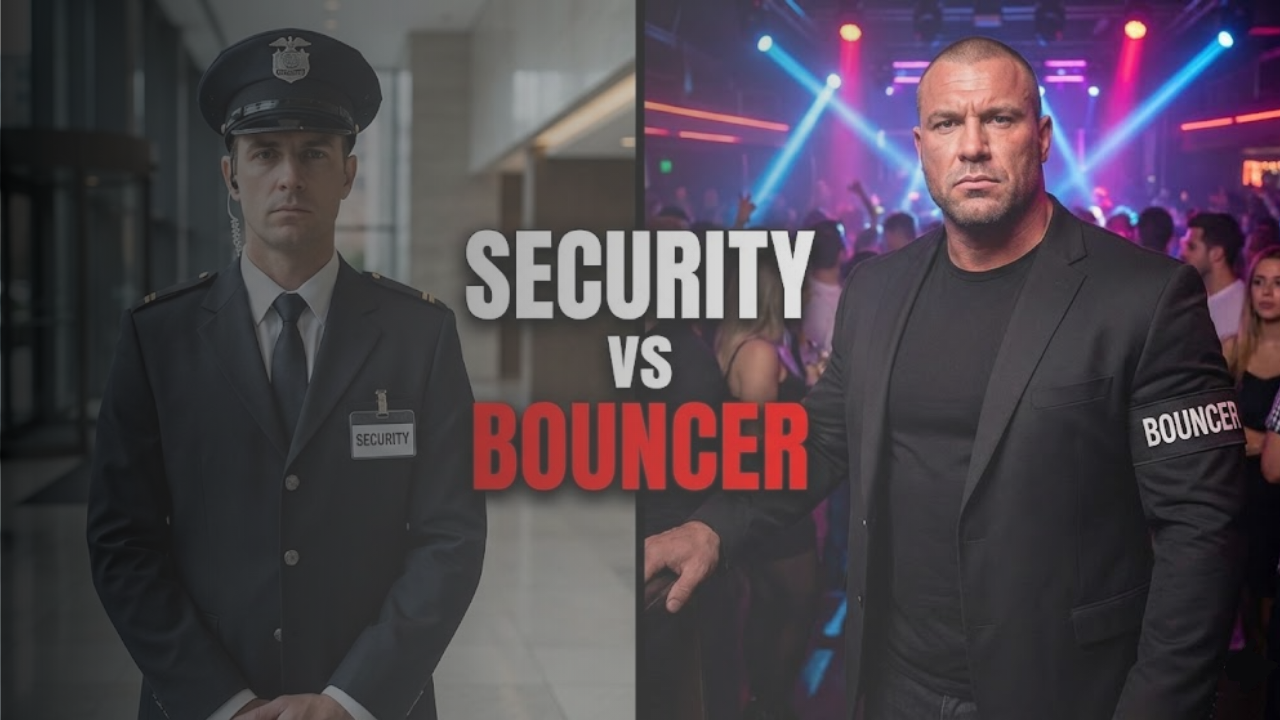
Security guards and bouncers perform different roles requiring distinct licensing, training, and operational approaches in Melbourne. Security guards provide general protection services across various environments including retail stores, office buildings, and residential properties. Bouncers, officially termed crowd controllers in Australian licensing frameworks, work specifically at licensed venues, events, and entertainment precincts where patron behaviour management and alcohol-related incidents require specialised skills.
Understanding these distinctions helps businesses engage appropriate personnel for their specific security needs. Walton Security provides both general security guard services and licensed crowd control personnel for venues and events throughout Melbourne and Melbourne.
Licensing Requirements: The Fundamental Difference
Melbourne law establishes separate licensing categories for security guards and crowd controllers. These distinctions reflect the different competencies and authorities required for each role.
Security Guard Licensing
Security guards in Melbourne must hold a Private Security Individual Licence issued by the Melbourne Business Licensing Authority (VBLA). This licence requires completion of Certificate II in Security Operations (CPP20218), a nationally recognised qualification covering fundamental security knowledge and skills.
The standard security licence authorises holders to perform general guarding duties including static security, access control, patrols, and property protection. Guards with this licence can work in retail environments, commercial buildings, construction sites, and residential settings.
Crowd Controller Licensing
Crowd controllers require additional endorsement on their security licence beyond the base qualification. The crowd controller endorsement authorises work at licensed venues, events, and any premises where alcohol is served and patron behaviour management is required.
Obtaining crowd controller endorsement requires completing additional training units covering physical intervention techniques, managing intoxicated persons, and responsible service of alcohol awareness. These competencies address the specific challenges encountered in nightclub, pub, and event security environments.
Licensing Comparison
| Requirement | Security Guard | Crowd Controller |
| Base Qualification | Certificate II Security Operations | Certificate II Security Operations |
| Additional Training | Not required | Crowd control units required |
| Physical Intervention | Limited authority | Trained and authorised |
| Licensed Venue Work | Not authorised | Fully authorised |
| Licence Endorsement | Standard individual licence | Crowd controller endorsement |
Crowd controllers can perform all duties authorised under standard security licences plus venue-specific crowd management activities. Security guards without crowd controller endorsement cannot legally work door security at licensed premises.
Training and Skill Differences
The training pathways for security guards and crowd controllers diverge after foundational security qualifications. Crowd controllers receive specialised preparation for high-pressure venue environments.
Core Security Training
Both security guards and crowd controllers complete Certificate II in Security Operations covering essential competencies. This training addresses security legislation, communication skills, emergency response, first aid, workplace health and safety, report writing, and patrol techniques.
The foundational qualification typically requires two to four weeks of full-time study. Part-time and online delivery options extend this timeframe but offer flexibility for students balancing other commitments.
Crowd Controller Specialisation
Crowd controller training adds competencies specifically addressing licensed venue and event environments. Key additional units include controlling persons using empty hand techniques, managing aggressive and intoxicated individuals, applying responsible service of alcohol principles, and advanced de-escalation strategies.
Empty hand control training teaches crowd controllers how to physically manage aggressive patrons without weapons. Techniques focus on restraint, escort holds, and defensive positioning. This training authorises crowd controllers to use reasonable force when verbal de-escalation fails.
Ongoing Professional Development
Both security guards and crowd controllers benefit from ongoing training beyond initial licensing requirements. Quality employers invest in skill development addressing evolving challenges and maintaining competency currency.
Walton Security delivers regular training updates for all personnel. Guards working event security assignments receive venue-specific briefings covering site layouts, emergency procedures, and client expectations.
Work Environments and Typical Duties
Security guards and crowd controllers operate in distinctly different environments with corresponding duty variations. Understanding these operational contexts clarifies which personnel type suits specific security needs.
Security Guard Work Environments
Security guards work across diverse commercial, industrial, and residential settings. Common deployments include retail security in shopping centres and standalone stores, office building reception and access control, construction site protection, warehouse and logistics facility security, residential estate patrols, and hospital and healthcare facility coverage.
Guard duties in these environments emphasise observation, access management, incident reporting, and customer service. Physical confrontation remains relatively rare, with most situations resolved through presence, communication, and procedure following.
Crowd Controller Work Environments
Crowd controllers work primarily in entertainment and hospitality venues where alcohol consumption creates elevated incident potential. Typical deployments include nightclub and bar door security, pub and hotel crowd management, festival and concert event security, sporting event patron control, and private function security at licensed venues.
Venue security involves managing entry queues, checking identification, refusing intoxicated patrons, responding to fights and disturbances, and ejecting problematic individuals. Physical interventions occur more frequently than in general security roles.
Duty Comparison
| Duty | Security Guard | Crowd Controller |
| Access control | Yes | Yes |
| Patrols and surveillance | Yes | Yes |
| Incident reporting | Yes | Yes |
| ID checking at venues | No | Yes |
| Refusing entry to intoxicated persons | No | Yes |
| Physical removal of patrons | Limited | Authorised |
| Managing alcohol-related incidents | Not trained | Specifically trained |
Legal Powers and Authority
Both security guards and crowd controllers operate under specific legal frameworks defining their powers and limitations. Neither role carries police powers, though both have defined authorities for their respective contexts.
Citizen’s Arrest Powers
Security guards and crowd controllers share access to citizen’s arrest provisions available to all Australians. These powers permit detention of persons committing serious offences until police arrive. However, strict conditions apply, and improper arrests expose individuals and employers to legal liability.
Citizen’s arrest should be used sparingly and only when clearly warranted. Security personnel receive training in when arrest powers apply and how to execute detentions lawfully. Most situations resolve through communication rather than physical detention.
Venue-Specific Authority
Crowd controllers working licensed venues exercise authority derived from liquor licensing legislation. This authority permits refusing entry to intoxicated persons, persons under 18, and persons likely to cause disturbance. Crowd controllers can also require patrons to leave premises and use reasonable force to effect removal when necessary.
These venue-specific powers do not extend to security guards without crowd controller endorsement. Guards working retail or commercial environments cannot refuse service based on intoxication or physically remove persons from premises under liquor licensing authority.
Use of Force Principles
Both security guards and crowd controllers must apply force only when necessary and proportionate to circumstances. Excessive force exposes individuals to criminal charges and civil liability regardless of licensing status.
Crowd controllers receive specific training in reasonable force application for venue contexts. This training covers escalation thresholds, approved techniques, and documentation requirements. Security guards receive more limited physical intervention training reflecting their reduced likelihood of physical confrontations.
Appearance and Presentation
Security guards and crowd controllers often present differently reflecting their distinct operational contexts and psychological objectives.
Security Guard Presentation
Security guards typically wear uniforms clearly identifying them as security personnel. Uniforms may include collared shirts, ties, blazers, or more casual polo-style attire depending on the environment. Corporate settings often require formal presentation, while construction or industrial sites may permit practical workwear.
The security guard appearance aims to convey professionalism, approachability, and authority simultaneously. Guards interacting with customers, visitors, and employees benefit from presentation balancing visibility with non-threatening demeanour.
Crowd Controller Presentation
Crowd controllers working nightclub and bar environments often present more physically imposing appearances. Black clothing, polo shirts with security branding, and visible identification are common. Some venues prefer crowd controllers projecting physical deterrence through size and posture.
However, modern crowd control increasingly emphasises communication skills over physical intimidation. Many venues now prefer approachable, customer-service-oriented crowd controllers capable of de-escalating situations verbally before physical intervention becomes necessary.
Identification Requirements
Both security guards and crowd controllers must carry their licence cards while working and produce them upon request. Visible identification badges displaying names and licence numbers provide additional transparency for public and regulatory scrutiny.
Venues and employers may impose additional identification requirements beyond licensing mandates. Company uniforms, site-specific badges, and branded apparel help distinguish authorised security personnel from venue staff and patrons.
Choosing Between Security Guards and Crowd Controllers
Selecting appropriate personnel depends on your specific environment, risks, and operational requirements. Matching security type to context ensures effective protection and legal compliance.
When to Engage Security Guards
Security guards suit environments where general protection, observation, and access control are primary requirements. Appropriate deployments include retail stores and shopping centres, office buildings and commercial premises, construction sites and industrial facilities, residential estates and apartment buildings, hospitals and healthcare facilities, and warehouses and logistics centres.
These environments rarely involve alcohol service or large crowd management. Security guards provide appropriate capabilities without the additional training costs associated with crowd controller licensing.
When to Engage Crowd Controllers
Crowd controllers are essential for any environment involving alcohol service and patron behaviour management. Required deployments include nightclubs and bars, pubs and hotels with entertainment areas, licensed events and festivals, concerts and live music venues, sporting events with licensed areas, and private functions at licensed premises.
Melbourne liquor licensing conditions typically mandate crowd controller presence at venues exceeding specified patron capacities. Non-compliance risks licence penalties including suspension or cancellation.
Hybrid Deployments
Some environments benefit from combined security guard and crowd controller deployments. Large events may use security guards for perimeter control and asset protection while crowd controllers manage entry points and licensed areas. Shopping centres with entertainment precincts might deploy retail security guards in stores and crowd controllers at venue entrances. Walton Security coordinates integrated deployments matching personnel types to specific site areas. Our event security services include both general guards and licensed crowd controllers as event requirements dictate.
Cost Differences
Crowd controllers typically command higher hourly rates than general security guards. Pricing differences reflect additional training requirements, licensing costs, and the elevated risks associated with venue security work.
Hourly Rate Comparison
| Personnel Type | Typical Hourly Rate (AUD) |
| Security Guard (Day) | $35 – $45 |
| Security Guard (Night) | $45 – $55 |
| Crowd Controller (Standard) | $50 – $65 |
| Crowd Controller (Premium Venue) | $60 – $75 |
Rate variations reflect timing, venue type, and specific requirements. Premium venues, high-profile events, and challenging environments attract higher rates. Weekend and public holiday penalty rates apply to both security guards and crowd controllers.
Value Considerations
Engaging crowd controllers for environments not requiring their specialised skills wastes resources. Security guards provide appropriate capabilities for general protection at lower cost. Conversely, deploying unqualified security guards in crowd control roles creates legal exposure and safety risks.
Accurate requirement assessment ensures appropriate personnel selection. Walton Security evaluates client needs and recommends suitable security types balancing effectiveness with cost efficiency.
Common Misconceptions
Several misconceptions persist regarding security guards and crowd controllers. Clarifying these misunderstandings supports informed security decisions.
Misconception: Bouncers Have Special Police Powers
Crowd controllers do not possess police powers. They cannot conduct searches beyond what patrons consent to as a condition of venue entry. They cannot arrest persons for minor offences or detain individuals without reasonable grounds. Their authority derives from property rights, liquor licensing legislation, and citizen’s arrest provisions available to everyone.
Misconception: Any Security Guard Can Work Venue Doors
Only security personnel holding crowd controller endorsement can legally work licensed venue security in Melbourne. Deploying guards without appropriate endorsement violates licensing conditions and exposes venues to penalties. Always verify crowd controller licensing before engaging personnel for venue security.
Misconception: Crowd Controllers Are Just Hired Muscle
Modern crowd control emphasises communication, de-escalation, and customer service alongside physical capability. Effective crowd controllers resolve most situations verbally, reserving physical intervention for genuine necessity. Industry professionalisation has shifted focus from intimidation to skilled conflict management.
Misconception: Security Guards Cannot Handle Difficult Situations
Security guards receive training in conflict management and emergency response appropriate to their work environments. Many challenging situations in retail, commercial, and residential settings are handled effectively by qualified security guards. The distinction involves licensing authority for specific venue contexts rather than general capability. Walton Security guards working asset protection and mobile patrol roles regularly manage difficult situations within their training and authority.
Frequently Asked Questions
Can a security guard work as a bouncer without additional licensing?
No, security guards cannot work as bouncers at licensed venues without obtaining crowd controller endorsement on their security licence. Melbourne licensing law requires specific crowd controller qualification for personnel managing patrons at venues serving alcohol. Working without appropriate endorsement constitutes unlicensed security work, attracting penalties for both the individual and the engaging business.
Do crowd controllers earn more than security guards?
Yes, crowd controllers typically earn $5 to $20 per hour more than general security guards. Higher rates reflect additional training requirements, licensing costs, and the elevated physical and legal risks associated with venue security work. Weekend and late-night shifts common in venue security also attract penalty rates increasing effective earnings.
What training does a bouncer need in Melbourne?
Melbourne crowd controllers must complete Certificate II in Security Operations plus additional crowd controller competency units. Additional units cover controlling persons using empty hand techniques, managing intoxicated persons, and applying responsible service of alcohol principles. Total training typically requires four to six weeks. First aid certification and national police checks are also mandatory.
Can crowd controllers work as regular security guards?
Yes, crowd controllers can perform all duties authorised under standard security guard licences. The crowd controller endorsement adds capabilities rather than restricting existing authorities. Crowd controllers can work retail security, commercial premises, construction sites, or any environment where general security guards operate. Their additional training often makes them effective in challenging general security roles.
Why is the term bouncer considered outdated?
The term bouncer carries connotations of physical intimidation and aggressive patron removal inconsistent with modern professional standards. Australian licensing frameworks use Crowd Controller to emphasise skilled crowd management rather than forceful ejection. Industry professionalisation promotes communication, de-escalation, and customer service as primary competencies. Many security professionals consider bouncer terminology disrespectful to their training and professional status.
Do security guards and crowd controllers have the same insurance requirements?
Both security guards and crowd controllers require coverage under employer public liability and workers compensation insurance. However, crowd controller work presents elevated risk profiles potentially affecting premium calculations. Venue security involves higher assault likelihood, increasing workers compensation exposure. Professional security providers maintain comprehensive insurance covering all personnel types across authorised activities.
Can one person hold both security guard and crowd controller licences?
Crowd controller authorisation exists as an endorsement on the Private Security Individual Licence rather than a separate licence. Persons completing both base security training and crowd controller units receive a single licence with crowd controller endorsement noted. This licence authorises both general security work and licensed venue crowd control activities.
Professional Security and Crowd Control Services
Understanding the distinction between security guards and crowd controllers ensures appropriate personnel selection for your specific requirements. Walton Security provides both general security guard services and licensed crowd-control personnel throughout Melbourne.
Our team includes fully licensed crowd controllers for venues and events plus experienced security guards for retail, commercial, and residential deployments. We also offer mobile patrol services and asset protection solutions tailored to client needs. Contact Walton Security to discuss your security requirements. Our consultants assess your environment, recommend appropriate personnel types, and develop protection strategies delivering effective results within your budget.