
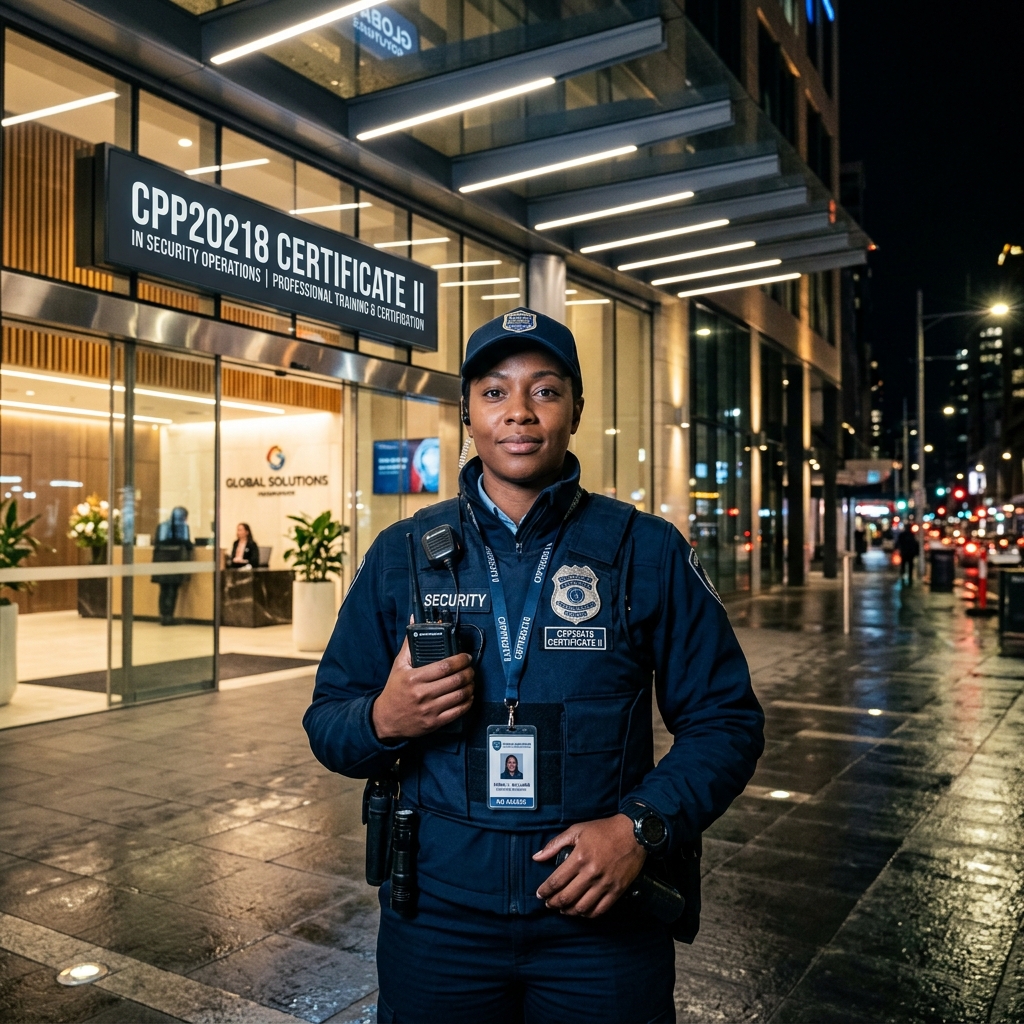
Security guard training in Victoria means completing the CPP20218 Certificate II in Security Operations, the nationally recognised qualification you must hold before you can apply for a licence and work a shift. Walton Security explains the pathway, employs the guards who complete it, and works with candidates who want a licensed career protecting Melbourne businesses.
The qualification runs across 14 mandatory core units covering legal and ethical responsibilities, patrol procedures, risk awareness, conflict management, crowd control, and emergency response. It’s delivered face to face by Registered Training Organisations approved by the Victoria Police Licensing and Regulation Division, at campuses across Melbourne. There are no formal academic prerequisites, but you must be eligible to hold a licence.
Walton doesn’t issue the certificate itself; RTOs do that. What we do is hire trained, licensed officers, support licence renewals, and provide site-specific induction so a newly qualified guard becomes job-ready. Understanding the training pathway helps candidates start right and helps clients see why a licensed guard costs what they do.
This page walks through why the qualification is mandatory, what the course covers, the eligibility rules, the full cost to get licensed, the career pathway, and the questions candidates ask most.
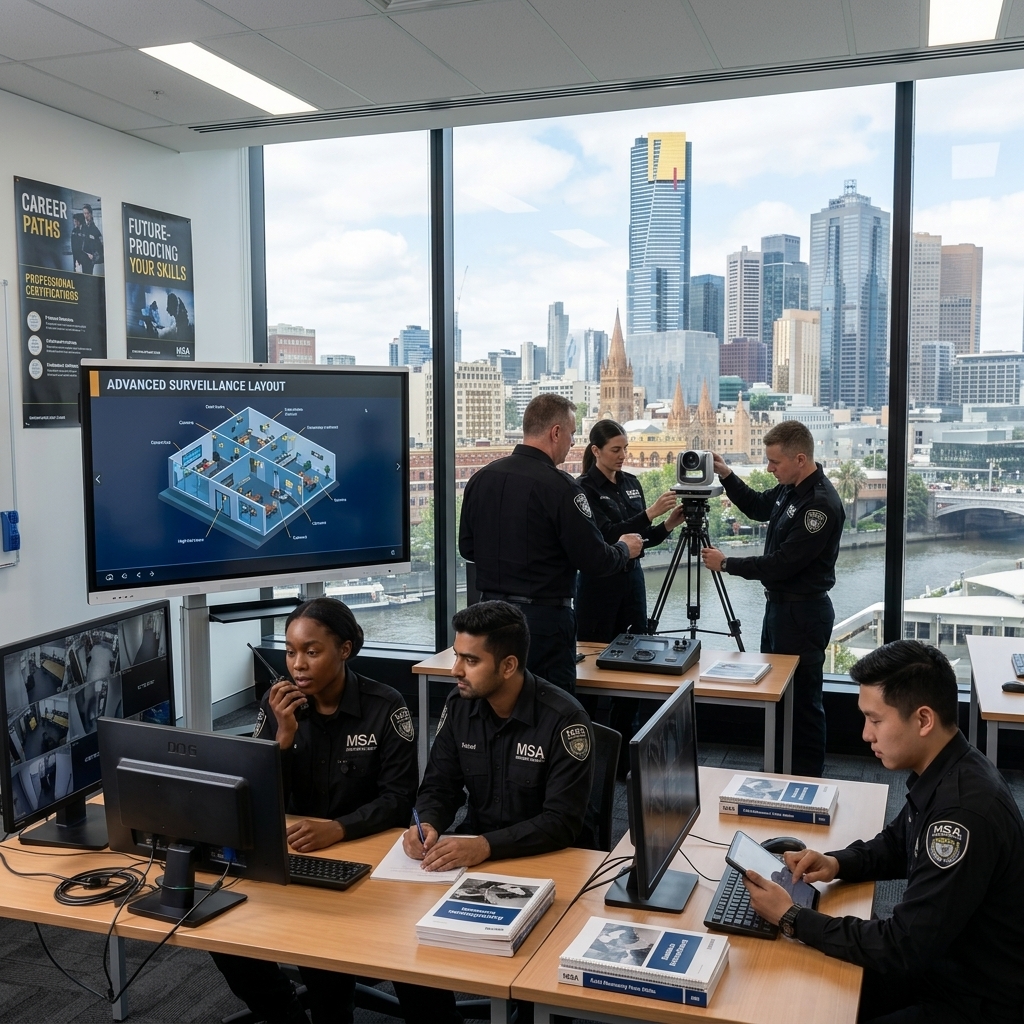
Why the qualification is mandatory
The qualification is the law, not a preference. Victorian legislation prohibits unlicensed security work, and the licence application requires proof of the CPP20218 certificate. Without it, you cannot legally work as a guard or crowd controller, and a business that hires an unlicensed guard carries the liability.
Recent changes raised the stakes further. Under updates to the Private Security Act 2004, from 19 December 2025 both a business licence and an individual operator licence became mandatory for sole traders and independent contractors, with older registrations needing to transition by 19 June 2026. Anyone entering the industry now must get the paperwork right from the start.
The qualification also protects the public. Guards learn use-of-force limits, de-escalation, and reporting before they ever work a door, which is why the course content is fixed nationally. That fixed content is worth breaking down.
What the Certificate II course covers
Course content spans the practical and legal skills a guard uses on shift. Across the 14 core units, candidates learn to:
- Apply legal and ethical responsibilities in security operations.
- Manage conflict and resolve aggressive behaviour safely.
- Conduct patrols, screening, and access control.
- Respond to alarms, emergencies, and first aid situations.
- Report incidents accurately with time, location, and action.
Training is hands-on, built around role-play in realistic scenarios rather than academic study. Competency-based assessment lets candidates demonstrate each skill at their own pace. Delivery formats vary, which affects how long the course takes.
Eligibility and course length
Eligibility rules are set by Victoria Police and checked before a licence issues. To qualify you must:
- Be at least 18 years old at the time of application.
- Have no disqualifying offences recorded in the past 10 years.
- Be an Australian citizen or permanent resident, or hold an eligible work visa.
- Pass a fit and proper person assessment and a national police check.
Course length depends on the timetable. A full-time day intake typically runs around 18 days, while evening and weekend intakes run longer, near 36 days, because each session carries fewer contact hours. First aid certification is a separate requirement and renews every three years. Those separate pieces all add to the total cost.
What it costs to get licensed
Total cost to become a licensed guard usually falls between $1,200 and $2,500, spread across a few items. Budget for:
- Certificate II training: roughly $900 to $1,800 depending on the RTO.
- First aid certification: about $120 to $200.
- Security licence application: around $100 to $150.
- National police check: approximately $42 to $60.
Government-subsidised training under programs like Skills First can reduce the training cost for eligible candidates, so it’s worth asking each RTO about funding. Once licensed, the earning and career pathway opens up.
The career pathway after licensing
A licence opens several roles, and endorsements open more. Newly qualified guards commonly move into:
- Retail and loss prevention in shopping centres and stores.
- Static guarding at corporate offices and construction sites.
- Mobile patrol across commercial and residential zones.
- Crowd control at licensed venues, with the added endorsement.
- Concierge and reception in corporate and residential towers.
Melbourne guards earn roughly $45 to $90 per hour plus GST on client rates, with the Security Services Industry Award setting penalty loadings for nights and weekends. Walton hires across these roles and supports guards moving up into supervision. For candidates ready to work, our private security and mobile patrol teams are common first postings.
Endorsements that extend your licence
Endorsements let a licensed guard take on higher-paid roles beyond basic guarding. The base licence covers unarmed guarding, but Victoria issues separate categories and endorsements that open more work.
- Crowd controller: required to work licensed venues, managing entry and intoxicated patrons.
- Close personal protection: for bodyguard and VIP work, with advanced training.
- Security equipment installer: for fitting alarms, cameras, and access control.
- First aid and CPR: not an endorsement, but expected on most sites and renewed every three years.
Each endorsement needs its own training and assessment before it’s added to a licence. A crowd controller endorsement pays more than static guarding because it carries more responsibility and risk. Guards often start with the base qualification, work for a year, then add endorsements as they find the roles they prefer.
Walton hires across all these categories and supports guards adding endorsements as they progress. A guard who starts on retail loss prevention can move into crowd control, then supervision, building both licence scope and pay over time.
Frequently asked questions
What qualification do I need to be a security guard in Melbourne?
You need the CPP20218 Certificate II in Security Operations, delivered by an LRD-approved RTO. The certificate is mandatory before you can apply for a Victorian Private Security Licence and work legally as a guard.
How much does security guard training cost?
Getting fully licensed costs $1,200 to $2,500, covering Certificate II training, first aid, the licence application, and a police check. Government-subsidised training may cut the course fee for eligible candidates.
How long does the security course take?
A full-time day course runs about 18 days, while evening and weekend intakes run near 36 days with shorter sessions. First aid certification is completed separately and adds a short additional commitment.
Can I work as a security guard without a licence?
No. Victorian law prohibits unlicensed security work, and a business hiring an unlicensed guard carries the liability. You must complete Certificate II and hold a current licence before working any shift.
What are the eligibility requirements?
You must be at least 18, free of disqualifying offences for 10 years, and an Australian citizen, permanent resident, or eligible visa holder. A fit and proper person assessment and police check apply before a licence issues.
Does Walton Security run training courses?
No. Registered Training Organisations deliver the CPP20218 certificate, not Walton. We employ trained, licensed guards, support licence renewals, and provide site-specific induction so qualified officers become job-ready.
What is the individual operator licence change in 2025?
From 19 December 2025, sole traders and independent contractors need both a business licence and an individual operator licence under the Private Security Act 2004. Older registrations must transition to the correct licence by 19 June 2026.
Can I upgrade my licence to work at venues?
Yes. Adding a crowd controller endorsement lets you work licensed venues, managing entry and intoxicated patrons. It needs separate training and assessment on top of the base Certificate II qualification.
Is government funding available for the course?
Sometimes. Subsidised training under programs like Skills First may reduce the course fee for eligible candidates. Eligibility depends on age, residency, and prior qualifications, so ask each RTO what funding applies to you.
How long is a Victorian security licence valid?
A Victorian Private Security Licence is issued for a set term and must be renewed before it expires. Walton supports guards through renewals so their licence and endorsements stay current and their work is never interrupted.
Do I need first aid to get a licence?
First aid isn’t part of the licence itself, but most sites and employers require a current first aid certificate. It’s completed separately, renews every three years, and is worth holding from the start to widen the jobs you can take.
Can I work in other states with a Victorian licence?
Not automatically. A Victorian licence covers work in Victoria, and other states run their own licensing. Mutual recognition may apply in some cases, so check the destination state’s requirements before taking interstate work.
Security guard training in Melbourne runs on one clear pathway: complete the CPP20218 Certificate II, meet the Victoria Police eligibility rules, apply for your licence, and step into retail, patrol, crowd control, or concierge work. Walton Security hires across all of those roles and helps qualified guards build a career. Call 03 9970 8701 or talk to our recruitment team about licensed work across Melbourne.