
What is a Security Guard: Definition, Types, Management and Improvements
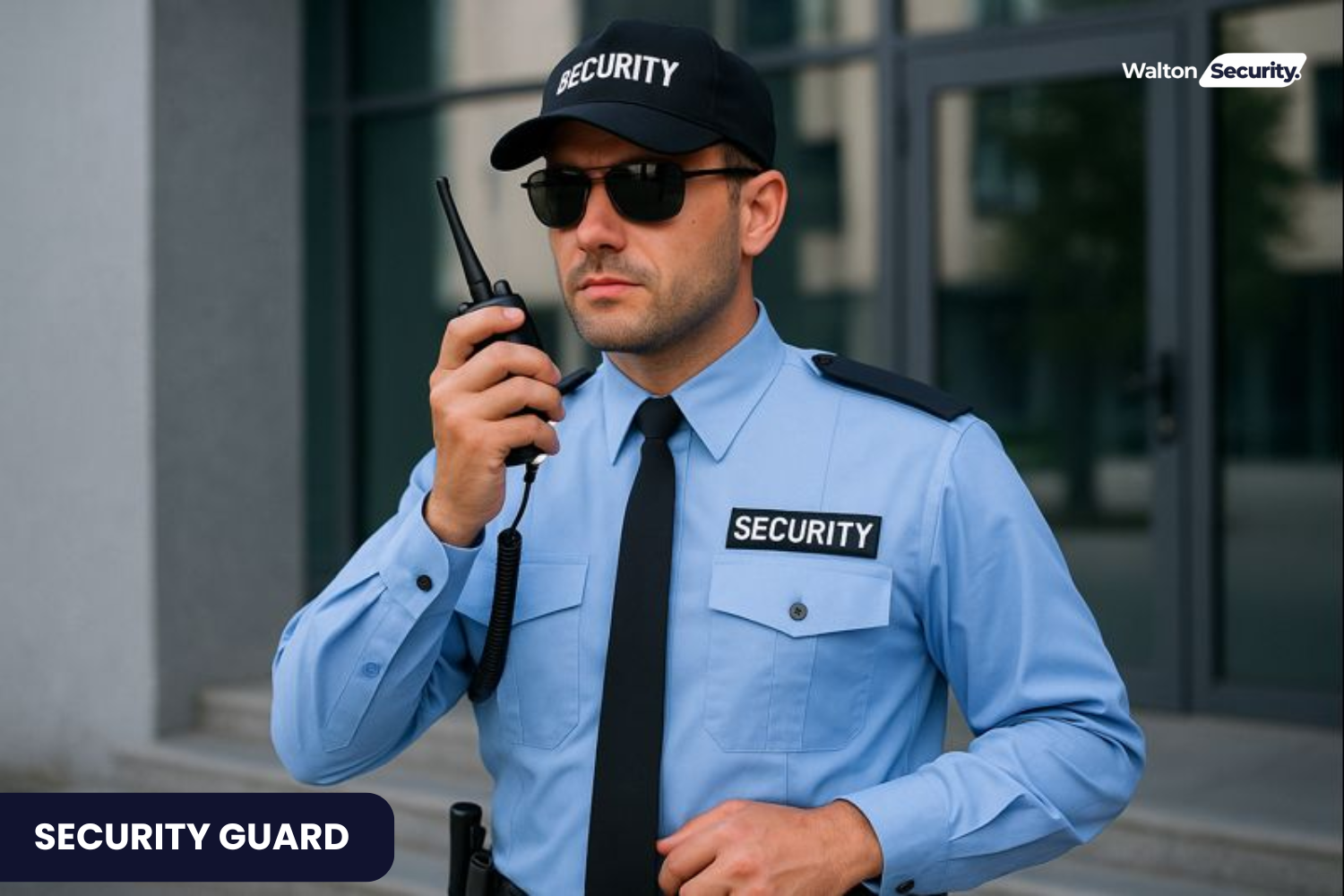
A security guard is part of private security. Their job is to protect people, private property, and an employer’s assets using preventative measures like a high-visibility presence, access control, and safe escalation to emergency services. In simple terms, security guards reduce risk by stopping illegal or inappropriate actions early and creating a clear incident report when something happens.
Across Victoria, security guards work inside security firms and proprietary security teams. The industry is large and formal. Research based on ABS Census data found that in 2006, Australia had 52,768 full-time security industry personnel compared with 44,898 police personnel. Australian Institute of Criminology. More recent industry research also reports tens of thousands employed in investigation and security services. IBISWorld
At the practical level, a modern security program blends people and systems. Guards may support alarm systems, video surveillance cameras, and access systems while remaining ready to contact law enforcement, emergency responders, and emergency medical support as needed. Licensing matters in Victoria are changing, so businesses should always confirm the correct security licence and ensure appropriate checks are in place. Victoria Police
At the end of this guide, you’ll be able to choose the right types of security guards, understand the benefits, and manage a guard team with clear site instructions, patrol reporting, and continuous improvement.
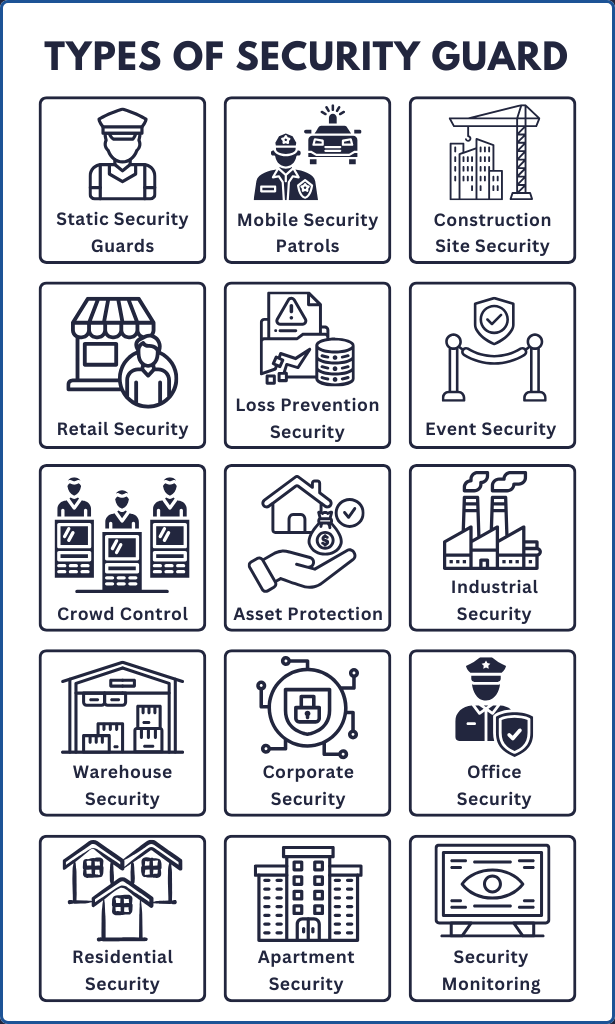
Main Types of Security Guards
Security guards are not “one role.” They are used in different ways depending on the assets to be protected, the site’s construction, and the time of year when risk is highest. A shopping centre needs a visible deterrent and crowd control. A construction site needs boundary checks and access control at vehicle gates. A warehouse needs patrol coverage and alarm response. That is why security firms usually offer multiple guard types and then build a security program around the site’s risk profile.
1. Static Security Guards
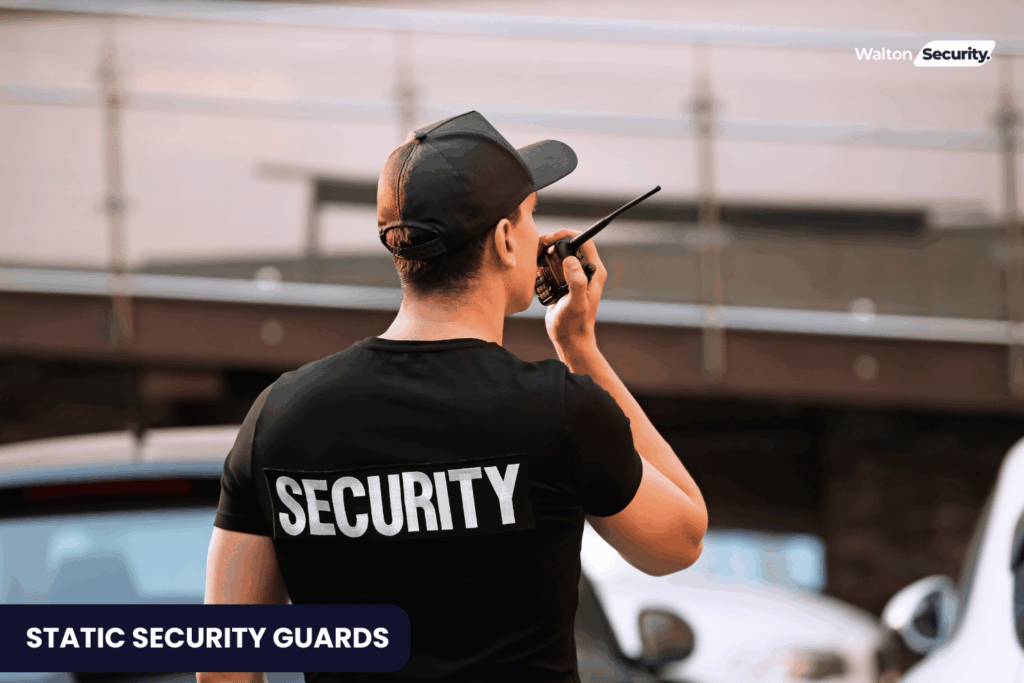
Static security guards are posted at fixed locations such as building entrances, reception desks, loading bays, and sensitive internal zones. Their main purpose is to control access and maintain a high-visibility presence that prevents illegal or inappropriate actions before they begin. Static guards are often the first point of contact for visitors, contractors, and deliveries, so the role includes calm communication and rule enforcement.
In practice, a static guard checks identification where required, monitors who enters and exits, enforces company rules, watches for suspicious behaviour, and responds quickly if something feels wrong. They also keep notes and produce detailed incident reports when incidents occur. Static guarding is used in offices, retail stores, apartment lobbies, hospitals, and any high-traffic site where daily entry control is required.
2. Mobile Security Patrols
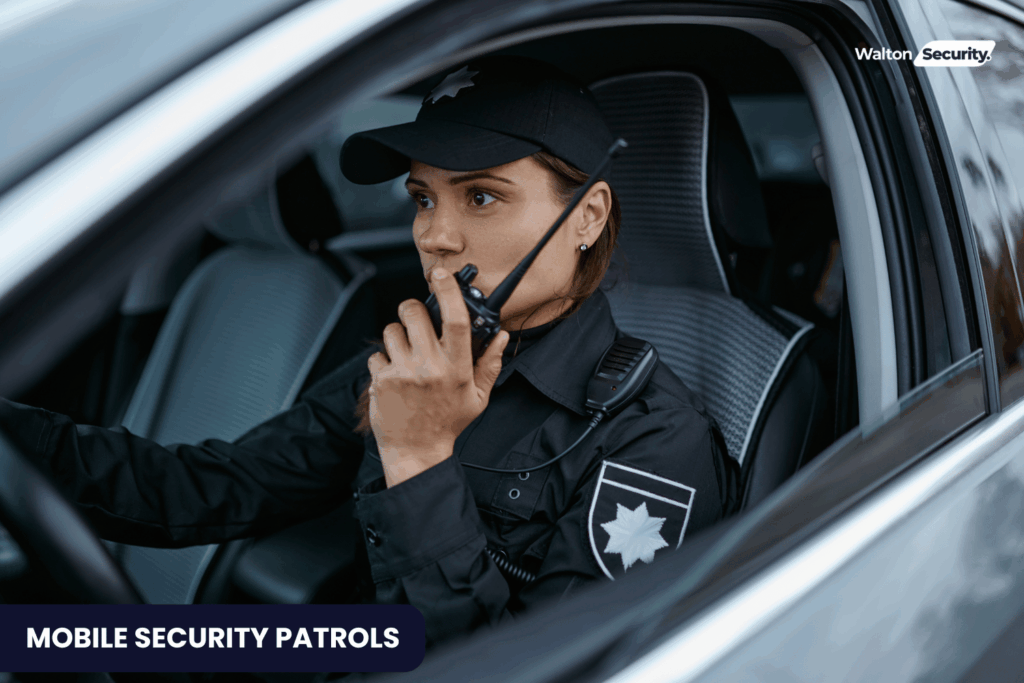
Mobile security patrols cover larger areas or multiple sites using a planned route and patrol schedule, and sometimes conduct random patrols to reduce predictability. This type of guard service is ideal when constant on-site presence is not required, but the site still needs regular checks for trespassing, property damage, open doors, or suspicious vehicles.
In practice, mobile patrol officers conduct a “guard tour” of key areas, including gates, doors, car parks, and perimeter lines. Modern patrol systems can use electronic systems and GPS to verify patrol completion and timing. Patrol officers can also serve as alarm responders for sites connected to alarm systems, and they typically provide a brief patrol report after each visit. Mobile patrols are common for retail strips, car parks, small business premises, construction sites after hours, and multi-location operations.
3. Construction Site Security
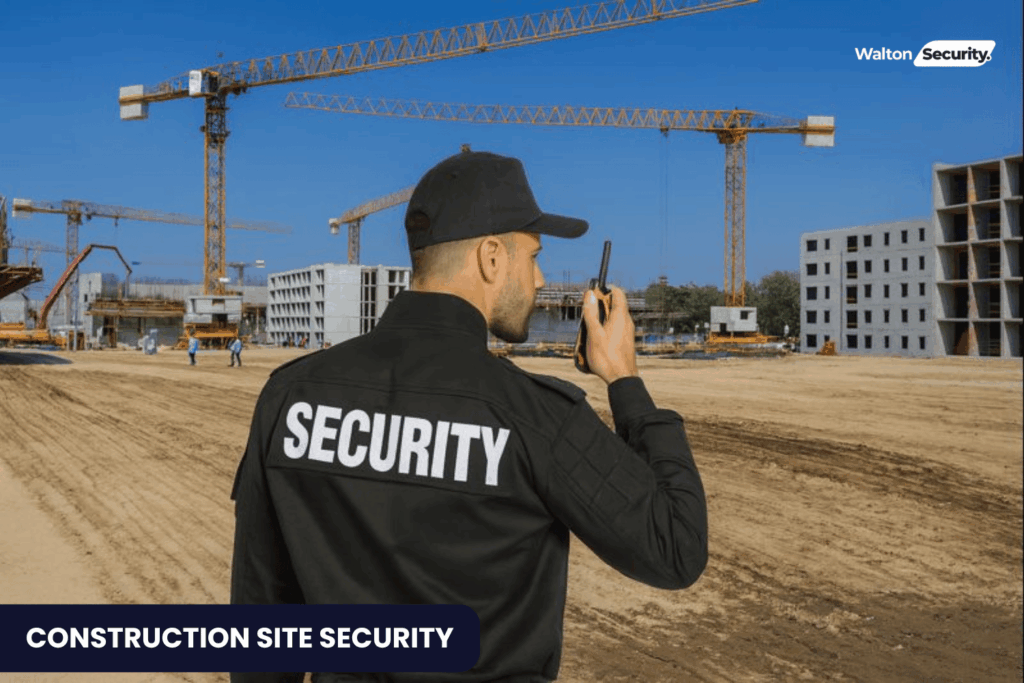
Construction site security is designed for environments with changing layouts, valuable tools, expensive materials, and a high risk of theft. Construction sites are often targeted after hours because they may be less occupied and have multiple access points. The goal is to protect the employer’s assets, reduce property damage, and maintain strict access control.
In practice, construction guards monitor vehicle gates and building entrances, check fencing and perimeter integrity, manage entry for authorised contractors, and patrol the site to identify potential hazards or suspicious activity. They may also support safety rules by preventing unauthorised people from entering active work zones. Construction guards often rely on strong reporting because claims, missing tools, and incidents need documentation for management and insurance.
4. Retail Security
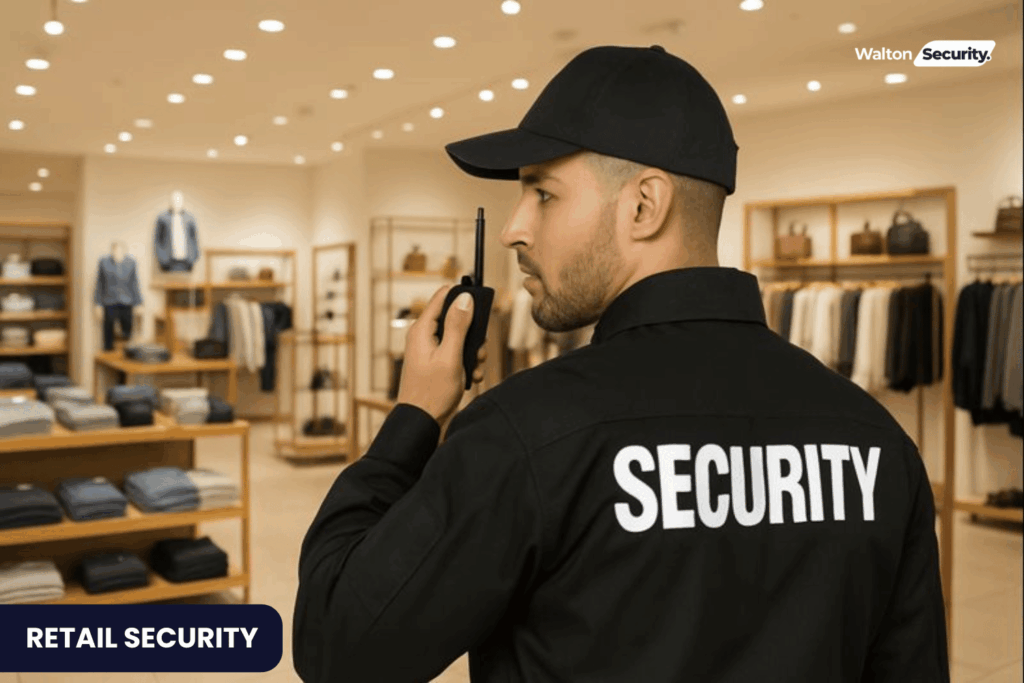
Retail security guards are deployed in public-facing environments, where the primary risks include theft, aggressive behaviour, disorder, and safety concerns. Retail sites like shopping malls and stores are “soft targets,” meaning they have open access and high foot traffic. A visible uniformed guard reduces opportunistic theft and improves public safety simply by being present.
In practice, retail guards monitor entrances, observe customer movement patterns, respond to suspicious behaviour, enforce store policies during tense situations, and support staff when conflict arises. They often work alongside video surveillance cameras and coordinate with store managers. Retail security is as much about prevention and calm communication as it is about response. Good retail guards reduce disruption and help customers feel safer without creating an uncomfortable environment.
5. Loss Prevention Security
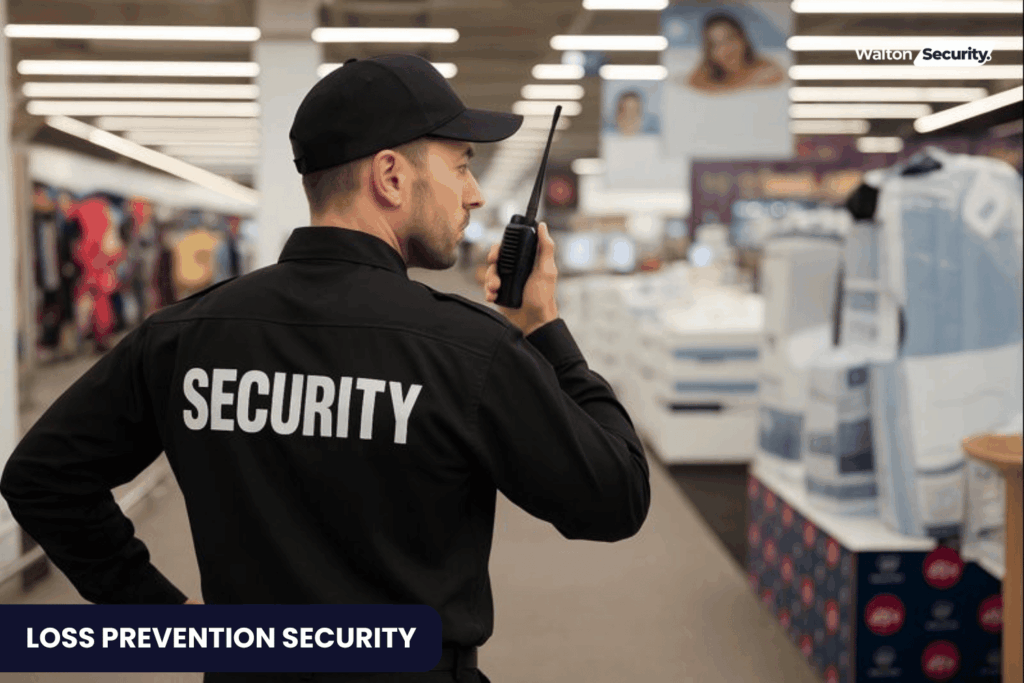
Loss-prevention security is a specialised form of retail protection focused on reducing shrinkage, theft, and stock loss. Unlike general retail guarding, loss prevention is more targeted. It pays attention to patterns, repeated behaviours, and specific high-risk areas such as fitting rooms, exits, high-value shelves, and delivery zones.
In practice, loss-prevention guards observe discreetly, identify suspicious behaviour early, and act before theft is completed, often relying on presence and customer engagement rather than confrontation. They work closely with store staff and management, document incidents, and help reduce repeat offences through consistent reporting and preventative measures. This type of guarding is common in large retail stores, shopping malls, and locations that sell high-value items.
6. Event Security
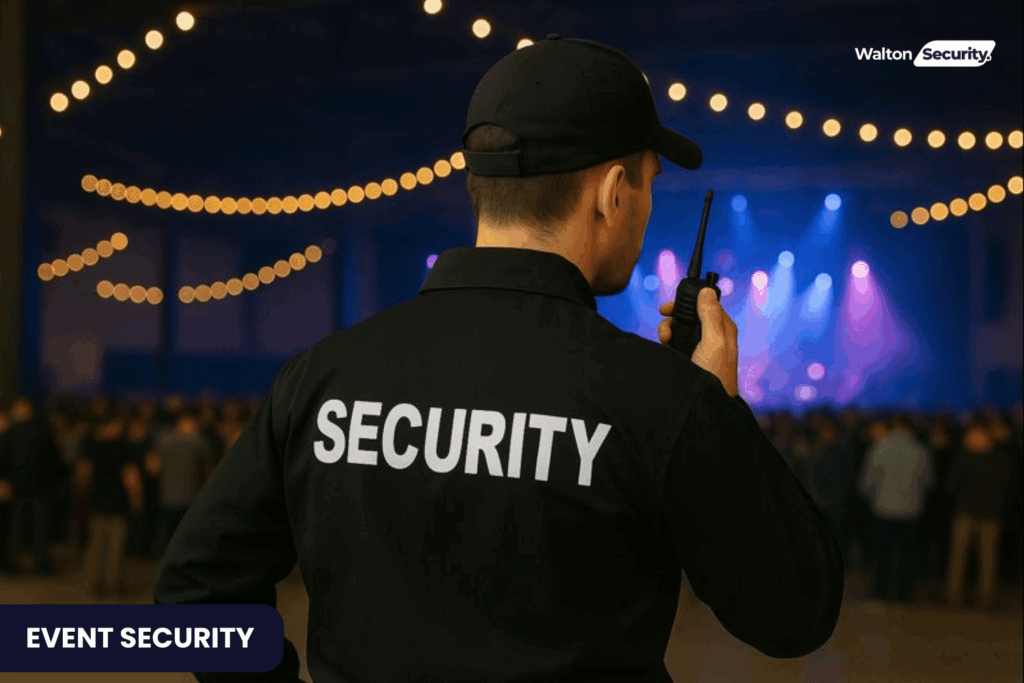
Event security guards are used to keep people moving safely and to reduce risk in crowded, fast-changing environments. Events create unique risks because pressure can rise quickly at entrances, queues, bars, stages, and restricted zones. The goal is to prevent serious emergencies through planning, positioning, and early intervention.
In practice, event guards control entry points, verify tickets or access permissions, secure restricted areas, resolve conflicts, and coordinate with event staff and emergency responders as needed. They also manage crowd behaviour calmly and help ensure emergency exits remain accessible. Event security is successful when people feel safe, and the event runs smoothly without disorder.
7. Crowd Control
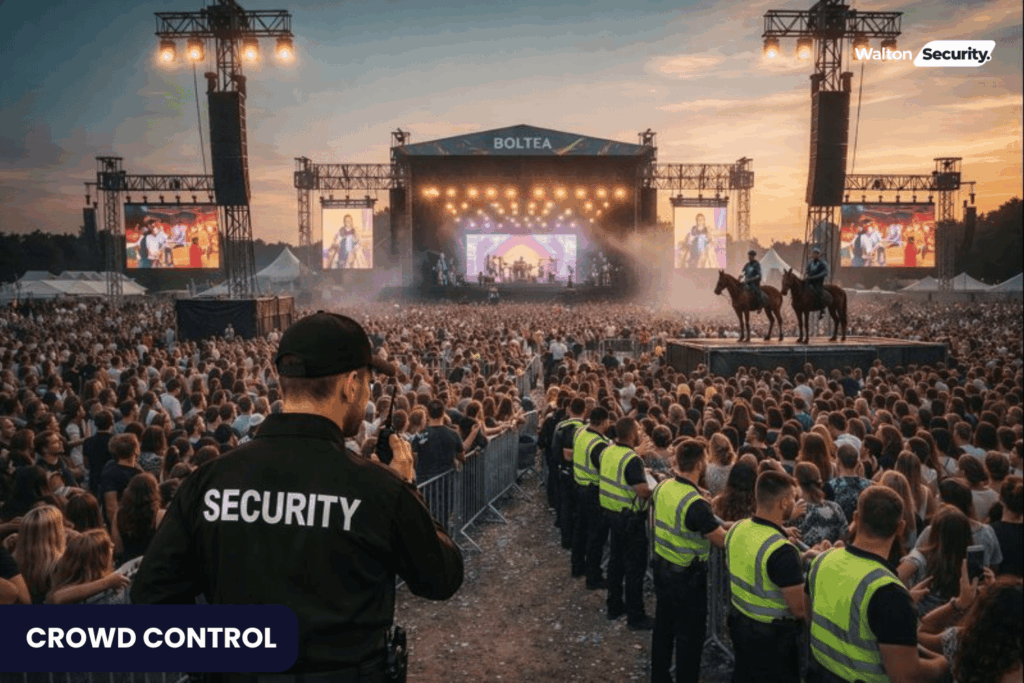
Crowd control is a specialised part of event and venue security focused on safe flow and behaviour management. It is used when there is a high density of people, limited space, and risk of panic, crushing, or fights. Crowd control aims to prevent minor issues from escalating into serious emergencies.
In practice, crowd control guards manage queues, guide movement, prevent bottlenecks, separate conflict points, and maintain clear emergency access routes. Strong communication is the key tool here. Guards use positioning, directions, and clear instructions to maintain environmental stability. Crowd control is used at concerts, stadium events, festivals, night venues, and large public gatherings.
8. Asset Protection
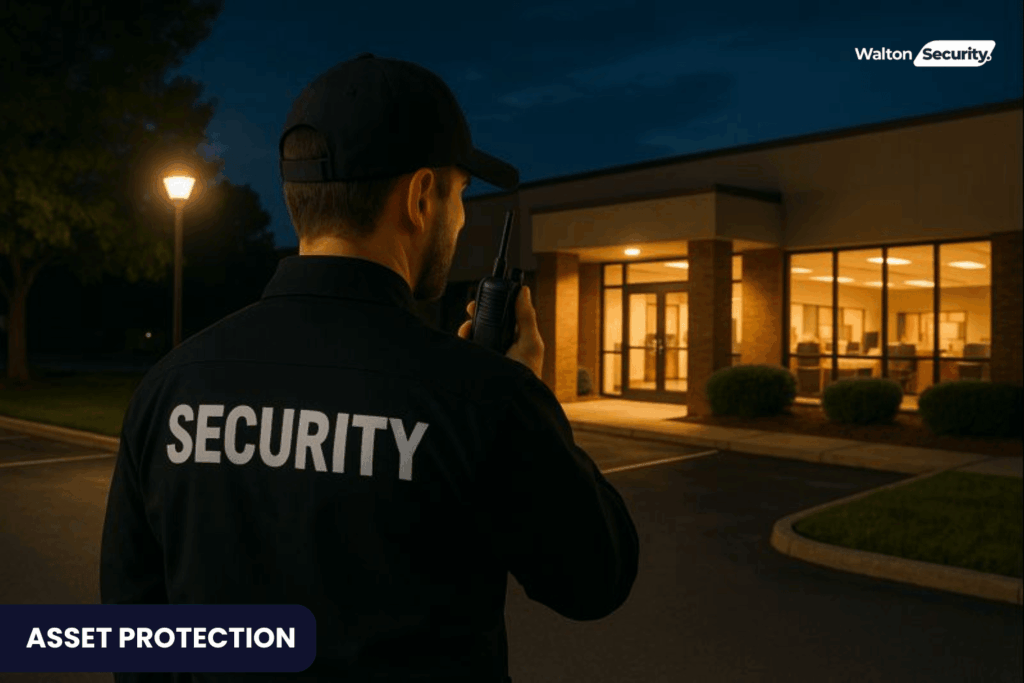
Asset protection guards focus on protecting high-value property, equipment, inventory, and critical areas. This is common in warehouses, industrial sites, transport yards, corporate facilities, and other locations where theft or sabotage could cause significant financial loss. Asset protection often combines physical security with technology and strong access control.
In practice, asset protection includes monitoring sensitive zones, enforcing strict entry rules, conducting patrols, verifying deliveries, and supporting alarm response protocols. Guards produce detailed reports to enable management to track incidents, patterns, and weaknesses. Asset protection is ideal when a site contains high-value stock, expensive machinery, or restricted information areas.
9. Industrial Security
Industrial security protects large-scale operational environments such as factories, plants, and industrial estates. These sites typically feature valuable equipment, restricted zones, heavy-vehicle movement, and safety risks. Industrial security, therefore, focuses on both crime prevention and public safety.
In practice, industrial guards control access points, monitor vehicle gates, patrol perimeters, check restricted areas, and coordinate with supervisors when safety breaches occur. They may also support emergency response procedures, including first aid readiness within training limits, and reporting of hazards. Industrial guarding is common where operational disruption would be expensive and where strict compliance standards apply.
10. Warehouse Security
Warehouse security protects stored goods, loading docks, and delivery operations. Warehouses are often targeted because they may hold high-value stock, and theft can occur during after-hours or during delivery movement. The goal is to reduce loss and property damage while keeping operations smooth.
In practice, warehouse guards monitor building entrances, loading bays, and vehicle gates. They check deliveries, verify authorised access, conduct patrols, respond to alarms, and support CCTV monitoring. A good warehouse security setup also improves documentation, because theft claims and disputes often depend on clear incident reports and patrol logs.
11. Corporate Security
Corporate security guards operate in professional environments where reputation and calmness matter. The role focuses on visitor management, access control, workplace safety support, and incident response. Corporate security is usually preventative, with strong emphasis on professionalism and communication.
In practice, corporate guards manage reception and entry procedures, monitor public areas, respond to workplace incidents, and produce reports for management. They may also support executive protection protocols in specific cases. Corporate security is used in office buildings, business parks, and commercial centres.
12. Office Security
Office security is a more specific form of corporate guarding focused on daily building routines. This includes entry management, visitor logs, after-hours access checks, and monitoring of shared areas. Office security is also important for staff safety when employees work late hours.
In practice, office guards control access, patrol corridors or car parks, respond to alarms, and escalate issues when needed. A well-run office security model prevents unauthorised access and reduces workplace safety concerns without making the environment uncomfortable.
13. Residential Security
Residential security guards protect communities, gated areas, and shared residential zones. The goal is to reduce unauthorised entry, prevent theft and vandalism, and help residents feel safe. Residential guarding is heavily focused on access control and monitoring of common areas.
In practice, residential guards monitor entrances, verify visitors, patrol perimeters, and respond to suspicious behaviour. They may also support incident reporting for building management and coordinate with emergency responders when required. Residential security is common in gated communities, estates, and shared residential complexes.
14. Apartment Security
Apartment security guards focus on building entrances, lobbies, lifts, car parks, and visitor access. Apartment buildings experience regular guest traffic, deliveries, and contractor access, which can create risks if access is not properly controlled. Apartment security reduces unauthorised access and helps residents feel more secure.
In practice, guards monitor entry points, confirm visitor access rules, patrol common areas, watch car parks for suspicious activity, and respond to incidents. Clear reporting is important because apartment issues often involve repeated nuisance behaviour or car park incidents.
15. Security Monitoring Services
Security monitoring services involve guards or security personnel who actively monitor security systems, including CCTV, alarm systems, and access control dashboards. This can be done on-site in a control room or as part of a coordinated response model with patrol units.
In practice, monitoring teams review video surveillance feeds, respond to alarms, identify suspicious activity, and dispatch on-site guards or emergency responders based on the situation. Monitoring improves response speed and documentation, but it still needs trained guards because systems can trigger false alarms and cannot physically intervene.
Main Duties and Responsibilities of Security Guards
A security guard is not hired to “stand there.” A guard is hired to run a small safety system on your site. That system is built on prevention, control, observation, response, and documentation. When those five parts are done well, the site becomes harder to target, incidents reduce, and staff feel safer.
A professional guard also works inside rules. They operate in accordance with legal regulations, company rules, and the limits of lawful authority. They are not police, but they are part of private security and often support a “private policing” or policing function for a property owner by controlling access and stopping inappropriate actions early. Serious matters are escalated to law enforcement and emergency services.
Preventative measures and high-visibility presence
The first job of a security guard is to prevent problems before they start. A high-visibility presence changes behaviour. People are less likely to engage in illegal activity when they know someone is watching, trained, and ready to respond. This is why uniformed security is common in shopping malls, retail stores, construction sites, and other soft targets.
Prevention is not only about crime. It is also about safety. A good guard notices potential hazards early. A blocked emergency exit. A damaged gate. Suspicious loitering near building entrances. A vehicle is moving where it should not. These small observations serve as preventive measures that help prevent serious emergencies.
Access control at building entrances and vehicle gates
One of the biggest responsibilities is access control. Most incidents begin with unwanted access. A guard controls who enters, where they go, and what they can do on the property.
In practice, this can include checking access permissions, managing visitor sign-in, monitoring contractors, and monitoring delivery zones. At sites with higher risk or higher value, access control includes monitoring vehicle gates, restricting after-hours entry, and ensuring doors and secure areas stay controlled.
Strong access control protects private property, reduces theft risk, and prevents inappropriate actions that lead to conflict or damage.
Patrolling, guard tour routines, and patrol systems
Patrolling is the duty that turns “presence” into “coverage.” A guard can protect more than one point by moving. Patrols check weak areas and create uncertainty for anyone looking to commit criminal acts.
A patrol may follow a schedule, but the best patrols often include random patrols so patterns cannot be predicted. Many security firms use a patrol system to confirm patrol completion. Older systems used mechanical clocks. Modern setups use electronic systems and, in some cases, GPS to verify that the guard tour occurred at the correct time.
Patrolling is also how guards detect issues that are invisible from the front door. Open side gates, damaged fences, suspicious vehicles, or signs of attempted entry.
Monitoring and working with security technology
Security guards increasingly work with technology. Common systems include alarm systems, video surveillance, video surveillance cameras, and access control panels.
The guard’s responsibility is not only to “watch screens.” It is to verify what a system is showing and take the next safe step. Cameras show, alarms alert, and guards confirm. This prevents wasted time and reduces false alarm chaos.
A trained guard also helps improve technology use. For example, they can identify blind spots, recurring false-alarm zones, or poorly lit areas that reduce the effectiveness of CCTV.
Alarm response and verification
When alarms trigger, a guard often becomes the alarm responder. This is a critical duty because it is where prevention becomes action.
Alarm response includes attending the site, checking entry points, inspecting risk areas, and confirming whether the event is a false alarm or a real incident. If the situation escalates, the guard coordinates with supervisors and law enforcement.
This duty protects high-risk property and high-value property, especially after hours. It also reduces damage because a prompt response can prevent a minor issue from escalating into property damage or a full break-in.
Incident handling, crisis response, and emergency services coordination
Security guards are expected to respond calmly under pressure. That does not mean taking dangerous risks. It means following procedures and keeping people safe.
When incidents occur, guards may need to:
- Separate conflict points
- Clear areas and protect the staff or the public
- Assist with emergency equipment if trained
- Guide emergency responders to the correct location
For medical incidents, guards may support basic response, such as first aid, within training limits and coordinate with emergency medical services. For serious emergencies, guards help create space, control access, and support the arrival of emergency responders.
Some sites also require crisis training, such as bomb-threat response and evacuation drills, especially for soft targets like shopping malls and public venues.
Reporting, documentation, and detailed reports
Reporting is where professional security becomes measurable. A guard is responsible for writing clear notes and producing detailed reports, including incident reports, when incidents occur. This protects the client, helps management make decisions, and supports legal and insurance processes such as fire insurance and claims related to property damage.
A useful report includes: what happened, where, when, who was involved, what action was taken, and whether law enforcement or emergency services were contacted. Without reporting, problems recur because no one has visibility into them.
Protecting the employer’s assets and preventing property damage prevention
Many guards are hired primarily to protect the employer’s assets. That includes stock, equipment, vehicles, restricted areas, and sensitive spaces. Asset protection is not always dramatic. It is often simple discipline. Proper access control. Patrols. Alarm response. Clear reporting.
When guards perform these tasks consistently, theft, vandalism, and property damage decline. In high-value, high-risk environments, this also supports business continuity by reducing the likelihood of operational disruption.
Customer service, communication, and professional conduct
Guards work around people. That means communication is a core responsibility. At corporate, retail, event, and residential sites, guards must enforce rules firmly while remaining calm and respectful.
This includes giving directions, helping visitors, supporting staff, and defusing conflict through tone and positioning. A well-communicating guard can prevent fights, reduce panic, and prevent situations from escalating into serious emergencies.
This is also why training and professional development matter. A guard is not only a protective agent. They are also part of the site’s daily experience.
Working under legal regulations and defined authority
Guards work under legal regulations and must understand their limits. They have responsibilities, but not the same powers as the police. Their job is to observe, deter, control access, respond, and escalate appropriately.
In some situations, legal frameworks may permit actions such as a citizen’s arrest, but this is highly sensitive and depends on local law and training. A professional security firm focuses on safe procedures, documentation, and quick escalation to law enforcement when criminal acts occur.
Which Types of Risks and Incidents Do Security Guards Help Prevent?
Security guards reduce both crime risk and safety risk. Crime risk includes theft, vandalism, trespassing, fraud, and violent incidents. Safety risks include unsecured doors, blocked exits, unsafe crowd flow, and suspicious, unattended items.
For high-risk property and high-value property, guards also protect employers’ assets through stronger access control, better patrol coverage, faster alarm response, and tighter reporting. In shopping malls and retail environments, security guards are often part of loss prevention efforts because they deter shoplifting, car-park theft, and property damage through early intervention.
Where Security Guards Work
Security guards work wherever people, property, and daily operations need protection. Some sites need guards because they are open to the public and easy to access. Other sites need guards because they hold high-value stock, equipment, or sensitive areas. Many sites simply need a trained person to run access control, patrol routines, alarm response, and incident reporting so risks don’t grow unnoticed.
Common work locations include offices, retail stores, shopping malls, construction sites, warehouses, factories, industrial plants, residential communities, apartment complexes, hospitals, schools, airports, and events. Each place uses security differently, based on foot traffic, entry points, risk profile, and operating hours.
Which Types of Sites Commonly Use Security Guards in Victoria?
In Victoria, security guard services are most commonly used at sites where either public access is high or the impact of loss is serious. These are the locations where a high-visibility presence and access control reduce everyday risk and improve safety routines.
Very common sites include:
Retail and public spaces
Shopping centres, retail strips, supermarkets, bottle shops, car parks, and high-traffic stores. These sites use security to reduce shoplifting, deter vandalism, manage aggressive behaviour, and keep the environment safe for staff and customers.
Commercial buildings and offices
Corporate offices, business parks, and mixed-use buildings. These sites typically need visitor control, building entrance management, after-hours access checks, and professional front-of-house guarding.
Construction and infrastructure
Construction compounds, active build sites, and development projects. These sites use security for boundary control, gate access, night guarding, tool and material protection, and safety control against unauthorised entry.
Warehouses and industrial sites
Warehouses, logistics sites, factories, and industrial plants. These sites require vehicle gate control, delivery verification, perimeter patrols, alarm response, and strict access rules, as theft or disruption is costly.
Residential and apartment buildings
Gated communities, residential estates, apartment complexes, and concierge buildings. These sites use security systems for controlled access, visitor management, car park monitoring, and responding to suspicious behaviour or nuisance issues.
Hospitals, schools, and events
Sites where public safety and order are a priority. Guards support controlled access, incident response, and calm crowd management.
How Do Security Guards Work at Commercial, Retail and Construction Sites?
Although the same guard skills are used everywhere, the “day-to-day” looks different depending on the site type. The main difference is what the guard prioritises: entry control, theft prevention, boundary checks, or safety compliance.
Commercial sites (offices and business buildings)
At commercial sites, guards usually focus on access control and predictable routines. They manage building entrances, monitor who enters, confirm visitor access, and keep public areas calm and organised. After hours, they may conduct patrols, check doors and restricted areas, respond to alarms, and complete incident reporting. The best commercial guarding feels professional and controlled, not aggressive.
Retail sites (stores and shopping malls)
Retail guarding is heavily preventative. Guards reduce theft and disorder mainly through a high-visibility presence, smart positioning near entrances or high-risk zones, and early intervention when behaviour looks suspicious. They may also patrol car parks, assist staff in managing difficult situations, respond to incidents, and coordinate with managers. Retail guards must be calm and customer-safe because the public is always nearby.
Construction sites (active builds and compounds)
Construction guarding is often more perimeter-based. Guards control vehicle gates and entry points, monitor fencing and site boundaries, patrol the site after hours, and watch for trespassers or suspicious vehicles. They also support safety by stopping unauthorised people from entering active work zones. Reporting is important because missing tools, damage, or attempted breaches require documentation for management and insurance.
Across all three site types, the guard works best when there are clear post orders, consistent patrol routines, and proper incident logs. That is what turns “a guard” into a security program.
What Is the Role of Residential and Apartment Security Guards?
Residential and apartment security guards primarily focus on controlled access and maintaining the safety of shared spaces. These environments differ from retail and construction because the goal is not solely crime prevention. It is also comfort, routine, and peace of mind for residents.
Residential security (estates, gated communities, shared residential areas)
Residential guards monitor entry points, verify visitor access, patrol common areas, and respond to suspicious activity. They often monitor car parks and perimeters, and handle nuisance behaviour calmly. The presence of a trained guard reduces opportunities for opportunistic behavior and improves resident confidence, especially at night.
Apartment security (lobbies, lifts, car parks, concierge buildings)
Apartment guards focus on building entrances, visitor entry management, and the safety of common areas, including lobbies, corridors, and parking areas. Deliveries and contractors generate frequent entry events, so access control becomes the primary responsibility. Guards also support incident reporting for building management, which helps identify patterns such as recurring car park issues or unauthorised access attempts.
In both residential and apartment settings, the “best” security is often the least disruptive. It is firm on access rules, respectful toward residents, consistent in patrol routines, and strong in incident documentation.
Benefits of Hiring Professional Security Guards
Hiring professional security guards is not only about “stopping crime.” The real value is control and stability. A trained guard provides structure to the site by managing access, conducting patrols, and responding promptly to suspicious activity. That reduces theft and vandalism, lowers staff stress, improves customer confidence, and protects daily operations.
Professional guards protect both people and property. They help prevent loss, property damage, and unsafe incidents by implementing preventive measures, including a high-visibility presence, access control at building entrances and vehicle gates, and consistent monitoring. When something does happen, a trained guard follows procedures, contacts emergency services as needed, and produces detailed reports that support management decisions, legal follow-up, and insurance matters.
The biggest benefit is that security becomes a program rather than a reactive response. You do not wait for problems to grow. You build a safer site routine from day one.
How Do Security Guards Help Reduce Crime and Improve Safety?
Security guards reduce crime mainly through deterrence and early intervention. Most real-world offences on business sites are opportunistic. Offenders choose locations that look easy, unmonitored, or poorly controlled. A uniformed guard creates uncertainty and increases perceived risk of detection, especially when patrols and access control are consistent. This is why a high-visibility presence can reduce shoplifting, trespassing, vandalism, and car park theft.
Guards also reduce crime by removing opportunity. Access control stops unauthorised entry. Patrol routines identify weak points such as unlocked doors, damaged fences, blind spots, or suspicious vehicles. Alarm response adds a reliable “what happens next” when a system triggers. These are practical, everyday changes that prevent illegal activity before it escalates into serious incidents.
Safety improves because guards do more than watch for crime. They look for hazards and unusual situations that could escalate into emergencies. Examples include blocked emergency exits, unsafe crowd build-up at events, aggressive behaviour, medical incidents, or fire risks. Guards coordinate with emergency responders, guide people away from danger, and support first response steps within their training limits. This is why security presence often improves public safety, not only crime prevention.
In short, guards reduce crime by increasing the risk for offenders and reduce safety issues by spotting hazards early and responding with calm, structured action.
What Are the Business Benefits of Outsourcing Security Guard Services?
Outsourcing security guard services helps businesses reduce operational burden and improve consistency. Instead of recruiting, rostering, training, supervising, and replacing guards internally, the business receives a managed service. That matters because security is only effective when staffing is reliable, and standards remain consistent across shifts.
A security firm also brings structured management. This includes site surveys, clear post orders, supervision, patrol reporting systems, and incident logs. These systems improve accountability. They also make performance easier to review, allowing the business to track issues, response patterns, and risk trends over time rather than relying on guesswork.
Outsourcing can also improve cost control. Businesses can choose the right coverage model for their risk level, such as static guarding during operating hours combined with mobile patrols after hours, or alarm-response coverage for low-traffic sites. This flexibility often delivers better protection without paying for a one-size plan.
Finally, outsourcing improves speed and continuity. If a guard is unavailable, a security firm can provide replacement coverage. If risk changes, the service can be adjusted. If incidents occur, the business receives documented reports that support decision-making and help protect the employer’s assets.
How Security Guards Work with Technology
Modern security is a mix of people and systems. Technology helps detect and record problems, but guards turn that information into safe action. Security guards commonly work with CCTV, alarm, and access control systems, as well as tools such as mobile apps, radios, GPS tracking, and incident-reporting software. These tools make security faster, more consistent, and easier to measure, especially across large sites or multiple locations.
A good setup uses technology for monitoring and proof, and uses trained guards for judgment, verification, response, and reporting. That combination is what creates a strong security program.
How Do Security Guards Use CCTV, Alarm Monitoring and Access Control Systems?
CCTV (video surveillance): Guards use CCTV to monitor key areas such as building entrances, car parks, loading bays, and restricted zones. CCTV helps detect suspicious behaviour early, confirm what happened during an incident, and support detailed reporting. Guards may also use CCTV to guide on-the-ground response, for example, directing a patrol to the correct location rather than searching blindly.
Alarm monitoring and alarm response: Alarm systems alert when a door is forced, movement is detected, or a system is triggered after hours. Guards follow a response process that typically includes verifying the alert, checking access points safely, and escalating if needed. When alarms are tied to patrol coverage, the guard becomes the alarm responder who attends, inspects, and documents outcomes.
Access control systems: Access control manages who can enter and when. Guards support this by checking permissions, monitoring access logs, managing visitor and contractor access, and monitoring for tailgating or unauthorised entry. In many sites, access control is where security becomes practical, as it reduces opportunities for theft, trespass, and workplace incidents.
When these systems are used together, guards can detect threats earlier, respond faster, and maintain clear security records for management.
Why Are Trained Guards Still Essential in a World of Cameras and Alarms?
Technology is powerful, but it has limits. Cameras record and alarms alert, but neither can physically intervene, make judgment calls, or calm a situation before it escalates. A trained guard is still essential because security is not only about detection. It is prevention and response.
Guards also solve the biggest weakness of technology: false alarms and uncertainty. Systems can be triggered by weather, animals, staff errors, or technical faults. A trained guard verifies authenticity, adheres to procedures, and escalates appropriately. Without that verification, alarms become noise, and real incidents get missed.
Finally, guards add the human layer that improves safety for people. They communicate with staff and visitors, handle conflict calmly, manage crowds at events, and support emergency response until emergency services arrive. This is why the best security programs do not choose between guards and technology. They combine both for stronger protection and better control.
How are Security Guards managed for a business?
Security works best when it is managed like a system, not treated like a “person standing on site.” A business manages security guards by setting clear shift coverage, defining duties, and making sure guards are supervised, trained, and accountable through reporting. Good management also includes regular check-ins, CCTV support where relevant, and a clear escalation plan for emergency services.
Security risk assessment and site surveys
This is the starting point. The site is reviewed to identify entry points, weak areas, high-value property, busy hours, and common risks. The output is a simple risk profile that guides what type of security is needed and where guards should focus.
Site instructions, post orders and guard briefings
These are the guard’s “rules of the site.” They explain what to do, where to stand or patrol, who may enter, what constitutes suspicious activity, and how to respond. Briefings make sure every guard follows the same standard, not personal judgment.
Supervision, patrol reporting and incident logs
Supervision keeps quality consistent across shifts. Patrol reporting confirms that tours and checks actually happened. Incident logs clearly document issues, enabling management to identify patterns and take action rather than guess.
Performance review, SLAs and continuous improvement
Performance reviews check whether the service is meeting expectations. SLAs (service level agreements) define standards like response time, reporting quality, and coverage. Continuous improvement means adjusting patrol routes, shift hours, guard placement, or training when risks change or incidents repeat.
Choosing the Right Security Guard Company in Victoria
Choosing a provider is mainly about reliability and compliance. In Victoria, private security licensing and registration requirements apply, and changes have been underway, so verifying the correct authorisation is important. Victoria Police publishes current processing updates and change guidance for licences and registrations. Beyond licensing, the best providers demonstrate strong supervision, clear post-orders, consistent reporting, and a training pathway that aligns with your site type.
What Should Businesses Look for in a Security Guard Company in Victoria?
Look for proof of licensing and background-check processes, training course pathways, supervisor structure, incident-report quality, and a clear patrol system. Ask how guards are briefed on site rules. Ask how alarm response works. Ask who you contact during serious emergencies. Practical answers matter more than sales language.
Why Work with a 24/7 Security Provider Like Walton Security?
A 24/7 provider is useful when your risk does not stop after business hours. After-hours incidents are common in retail, warehouses, construction sites, and high-value property locations. A managed provider can combine uniform security presence, patrol coverage, alarm responder services, and clear escalation pathways so you are not left guessing who will respond.
Frequently Asked Questions
Is a Security Guard a Law Enforcement Officer?
No. In Victoria, security guards are not police officers and do not have the same powers as police. Youth Law Australia. They usually work on behalf of a property owner or event organiser, enforcing entry rules and managing site safety, while criminal matters are escalated to the police.
Are Security Guards Effective at Preventing Crime?
They can be effective, particularly for opportunistic offences in which deterrence and guardianship are important. Research in Australia indicates that visible private security can reduce fear of crime and, in certain commercial contexts, reduce theft and vandalism. Australian Institute of Criminology. Effectiveness improves when guards are supervised, trained, and backed by a clear patrol system and reporting.
How Many Security Guards Work in Australia?
One widely cited research summary using ABS Census data found that in 2006, Australia had 52,768 full-time security industry personnel compared with 44,898 police. Australian Institute of Criminology Industry employment estimates for investigation and security services also report a large workforce in recent years.