
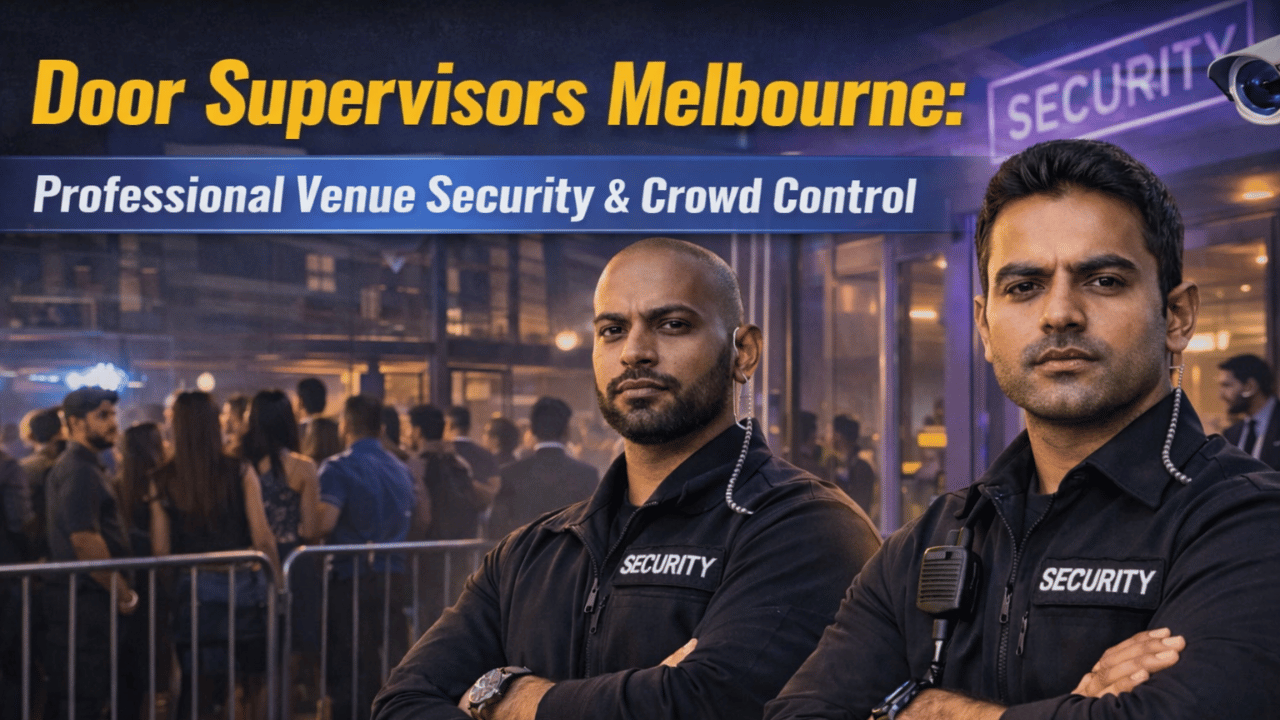
Door supervisors in Melbourne (Melbourne) provide essential security services at licensed venues including nightclubs, bars, pubs, hotels, and entertainment venues throughout the city. Commonly known as bouncers or crowd controllers, door supervisors manage patron entry, maintain venue safety, prevent violence and disorder, and ensure compliance with Melbourne liquor licensing requirements. Professional door supervisors require crowd controller endorsements beyond standard security licensing, completing specialised training in patron management, conflict resolution, intoxication recognition, and physical intervention techniques.
Walton Security provides professional door supervisors and crowd control services throughout Melbourne for nightclubs, bars, pubs, and licensed venues. Our licensed crowd controllers combine professional security training with customer service skills ensuring safe, welcoming venue environments.
Understanding Door Supervisor Roles
Door supervisors occupy critical positions managing the interface between venues and the public. Their decisions regarding patron entry and behaviour directly impact venue safety, compliance, reputation, and commercial success. Effective door supervision requires balancing welcoming hospitality with firm security enforcement.
The door supervisor role evolved significantly from traditional bouncer stereotypes. Modern door supervision emphasises communication, de-escalation, and customer service alongside physical security capabilities. Licensed venues increasingly recognise that professional door supervisors enhance patron experiences while maintaining safety.
Door supervisors represent venues to arriving patrons, creating first impressions influencing customer satisfaction. Professional door supervisors welcome patrons warmly while conducting necessary security functions including ID verification and intoxication assessment. This balance between hospitality and security characterises effective modern door supervision.
Door Supervisor Responsibilities
Door supervisors perform diverse duties addressing venue security, patron management, and regulatory compliance.
Entry Management and ID Verification
Controlling venue entry represents the primary door supervisor function. Entry management prevents underage persons, intoxicated individuals, and problematic patrons from entering venues, addressing issues before they occur inside premises.
Entry management tasks include checking identification to verify legal drinking age, assessing patrons for signs of intoxication, applying venue dress codes and entry policies, managing entry queues during busy periods, maintaining accurate door counts for capacity compliance, and refusing entry appropriately when necessary.
Intoxication Assessment
Melbourne Responsible Service of Alcohol legislation prohibits serving intoxicated persons. Door supervisors conduct initial intoxication assessment, preventing already intoxicated individuals from entering venues where further alcohol service would breach regulations.
Intoxication indicators include unsteady gait or balance problems, slurred speech patterns, bloodshot or glazed eyes, strong alcohol odour, aggressive or inappropriate behaviour, and impaired coordination.
Venue Monitoring and Patrol
Beyond entry control, door supervisors monitor venue interiors identifying developing problems before escalation. Internal monitoring enables early intervention in disputes, intoxication issues, and potential violence.
Incident Response
When incidents occur, door supervisors respond professionally to disputes between patrons, fights and physical altercations, medical emergencies, drug-related issues, property damage, and harassment complaints.
Eviction and Removal
Door supervisors remove patrons whose behaviour warrants eviction including intoxicated patrons requiring exit, individuals involved in violence or threats, persons engaging in drug use or dealing, patrons harassing others, and anyone violating venue policies or laws.
Professional eviction involves verbal direction to leave, escort from premises if compliant, minimum necessary force if non-compliant, preventing re-entry, and police coordination for serious matters.
Crowd Controller Licensing Requirements
Door supervisors require crowd controller endorsements on Melbourne security licences, completing training beyond Certificate II in Security Operations.
Crowd Controller Training
Crowd controller units address patron management in licensed environments, advanced conflict resolution techniques, intoxication recognition and management, physical intervention and restraint, Responsible Service of Alcohol integration, and venue-specific legal obligations.
Training typically spans one to two weeks beyond Certificate II, with combined courses completing both qualifications in three to five weeks. Crowd controller endorsement enables work at licensed venues, nightclubs, concerts, and events involving alcohol service.
Licensing Application
Crowd controller licence applications follow standard VBLA processes with additional endorsement requirements. Applicants must complete crowd controller training units, pass competency assessments, and demonstrate suitability for licensed venue work.
Door Supervisor Skills and Attributes
Effective door supervision requires specific skills beyond formal qualifications.
Communication Excellence
Strong verbal communication prevents most conflicts through clear direction and professional interaction. Door supervisors communicate constantly with patrons, colleagues, venue management, and emergency services.
Conflict Resolution
De-escalation skills prevent situations from becoming violent. Door supervisors use verbal techniques to calm aggressive individuals, redirect conflicts, and resolve disputes without physical intervention.
Physical Capability
While physical intervention remains last resort, door supervisors must possess capability for situations requiring it. Physical fitness, defensive training, and restraint techniques prepare supervisors for unavoidable physical confrontations.
Situational Awareness
Constant observation identifies developing problems before escalation. Experienced door supervisors maintain awareness of the entire venue while managing immediate responsibilities.
Emotional Control
Door supervisors encounter provocation, insults, and abuse while maintaining professional composure. Emotional control prevents escalation and ensures appropriate responses regardless of patron behaviour.
Customer Service Orientation
Modern door supervision integrates security with hospitality. Door supervisors should genuinely welcome patrons while performing necessary security functions.
Door Supervisor Costs and Wages
Understanding door supervisor pricing enables venue operators to budget appropriately and door supervisors to evaluate employment opportunities.
Hourly Rates
| Position/Timing | Hourly Rate (AUD) |
| Door Supervisor (Weeknight) | $45 – $58 |
| Door Supervisor (Weekend) | $52 – $70 |
| Head Door Supervisor | $60 – $85 |
| Door Supervisor (Public Holiday) | $70 – $100 |
| Event Crowd Controller | $50 – $68 |
Venue Security Packages
Typical venue security costs include small bar with two door supervisors on weekends at $500 to $700 per night, medium nightclub with four door supervisors at $1,200 to $1,800 per night, large nightclub with six to eight supervisors at $2,000 to $3,500 per night, and pub with two to three supervisors at $600 to $1,000 per night.
Types of Venues Using Door Supervisors
Various licensed venues employ door supervisors addressing their specific security and compliance requirements.
Nightclubs
Nightclubs represent intensive door supervisor environments with high patron numbers, late trading hours, and elevated intoxication levels. Nightclub security typically requires multiple door supervisors managing entry, internal monitoring, and external areas.
Bars and Pubs
Smaller licensed venues employ door supervisors particularly during weekend peak periods. Bar and pub security often involves two to three supervisors managing entry and monitoring patron behaviour.
Hotels and Gaming Venues
Hotels with bars, nightclubs, or gaming areas require door supervisors managing access and maintaining safe environments. Gaming venues face specific security requirements including self-exclusion program enforcement.
Live Music Venues
Concert venues and music bars combine door supervision with event security addressing performer protection, stage security, and crowd management beyond standard venue requirements.
Restaurants with Bars
Licensed restaurants sometimes require door supervisors during late-night bar trading, particularly venues transitioning from dining to drinking-focused operations after dinner service.
Door Supervisor Best Practices
Effective door supervision follows established best practices, optimising safety and customer experience.
Consistent Policy Application
Apply venue policies consistently to all patrons regardless of appearance, perceived status, or familiarity. Inconsistent enforcement creates problems and potential discrimination issues.
Documentation and Reporting
Document all incidents thoroughly including times, persons involved, actions taken, and witnesses. Accurate documentation supports venue defence in legal matters and identifies patterns requiring attention.
Team Communication
Maintain constant communication with door team colleagues using radios or earpieces. Coordinated teams respond more effectively to incidents than individuals operating independently.
Police Liaison
Develop positive relationships with local police supporting venue operations. Cooperate fully with police attendance and provide accurate information about incidents.
Venue Integration
Coordinate closely with bar staff, management, and venue security systems. Integrated approaches address patron behaviour issues more effectively than isolated door operations.
What is the difference between door supervisors and security guards?
Door supervisors are security guards with additional crowd controller endorsements enabling work at licensed venues. Standard security guards cannot work in licensed venue roles without crowd controller qualifications. Door supervisors complete additional training in patron management, intoxication assessment, and licensed venue security beyond Certificate II in Security Operations.
How much do door supervisors earn in Melbourne?
Door supervisors in Melbourne earn $45 to $70 per hour for standard shifts, with weekend rates at the higher end. Head door supervisors earn $60 to $85 hourly. Public holiday rates reach $70 to $100 per hour. Door supervisor work is predominantly casual employment concentrated on weekend evenings. Full-time door supervisors often combine venue work with other security roles.
What qualifications do door supervisors need?
Door supervisors require Certificate II in Security Operations plus crowd controller endorsement units. Crowd controller training addresses patron management, conflict resolution, and licensed venue security. First aid certification is mandatory. Total training takes three to five weeks. Applicants must pass VBLA background checks and meet character requirements. Previous experience benefits applications but is not mandatory.
Can door supervisors use force to remove patrons?
Door supervisors may use reasonable force to remove patrons who refuse to leave after being asked. Force must be minimum necessary for removal and proportionate to resistance encountered. Excessive force exposes supervisors and venues to assault charges and civil liability. Professional door supervisors use verbal direction first, with physical removal as last resort.
What hours do door supervisors work?
Door supervisor shifts typically span venue operating hours, commonly 9pm to 3am or later on weekends. Weeknight shifts may run 10pm to 2am. Shifts vary by venue type and trading hours. Work concentrates on Thursday through Sunday nights with limited weekday opportunities except in busy entertainment precincts.
Do venues have to employ door supervisors?
Melbourne liquor licensing may require door supervisors as licence conditions for certain venues. Requirements depend on venue type, capacity, location, and trading hours. Many venues voluntarily employ door supervisors beyond minimum requirements for enhanced security and patron safety.
How many door supervisors does a venue need?
Door supervisor numbers depend on venue size, capacity, patron demographics, and risk profile. General guidance suggests one supervisor per 100 patrons for standard venues, with higher ratios for high-risk environments. Licence conditions may specify minimum staffing. Quality over quantity matters as experienced supervisors handle situations more effectively than larger inexperienced teams.
Professional Door Supervision Services
Door supervisors maintain safe, compliant licensed venues throughout Melbourne. Walton Security provides qualified crowd controllers for nightclubs, bars, pubs, and entertainment venues.
Our door supervisors combine professional security training with customer service excellence, delivering security that welcomes patrons while maintaining venue safety. We also provide event security for concerts and functions, mobile patrols for after-hours venue security, and asset protection for venue equipment and premises. Contact Walton Security to discuss door supervision requirements for your Melbourne venue. Our team assesses your venue needs, recommends appropriate staffing levels, and delivers professional door supervisors who protect your patrons, staff, and business.