
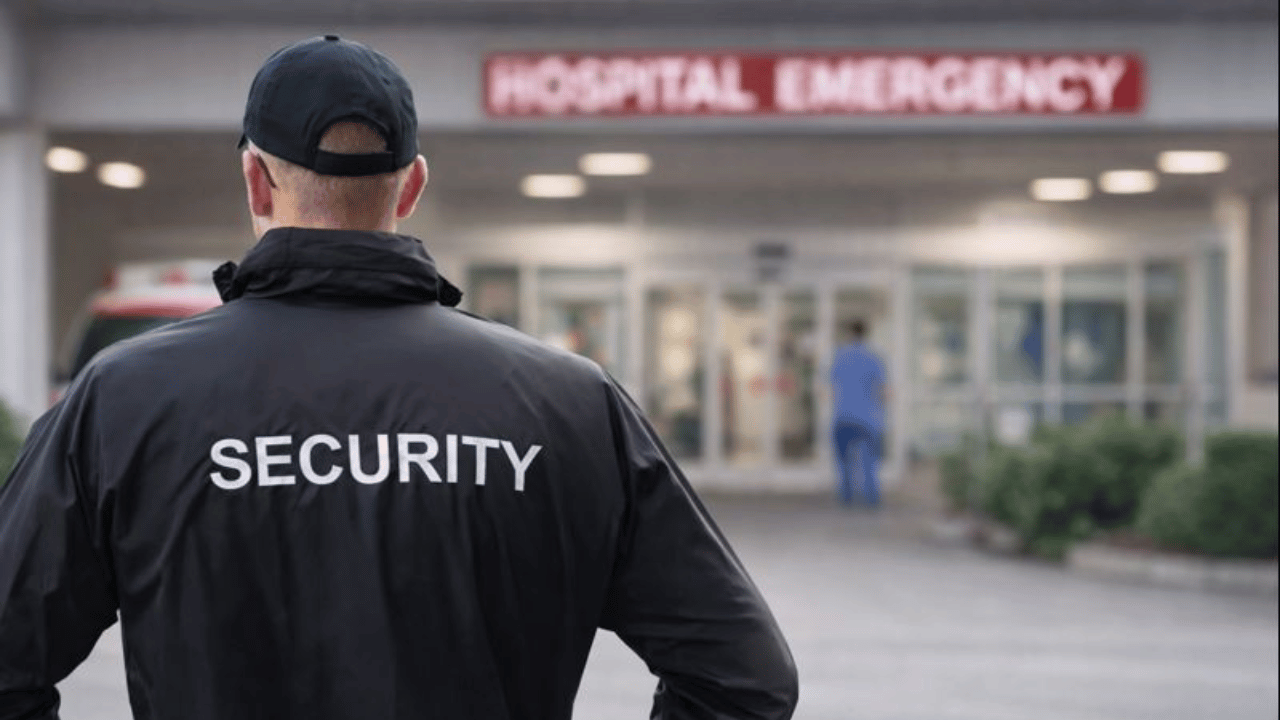
Hospital security guards protect patients, staff, visitors, and assets in Melbourne healthcare facilities through specialised security services that address unique medical-environment challenges. Healthcare security requires personnel trained to manage distressed individuals, maintain patient confidentiality, and operate within clinical settings without disrupting care delivery. Australian hospitals report over 9,000 workplace violence incidents annually, making professional security essential for staff safety and facility protection.
Walton Security provides professional hospital and healthcare security services throughout Melbourne, delivering trained guards who understand medical environment requirements and maintain appropriate conduct in clinical settings.
Security Challenges in Healthcare Environments
Hospitals present complex security environments combining public access requirements with vulnerable populations, valuable assets, and elevated emotional situations.
Violence Against Healthcare Workers
Healthcare workers face workplace violence rates significantly exceeding other industries. Australian research indicates nurses experience physical assault at rates 3.5 times higher than the general workforce. Emergency departments, mental health units, and aged care facilities present particularly elevated risk.
Violent sources include patients affected by mental health conditions, intoxication, or pain, distressed family members in emotional crisis situations, visitors with grievances against healthcare providers, and individuals seeking drug access or other criminal objectives.
Emergency Department Challenges
Emergency departments operate as hospital front doors, receiving unpredictable patient presentations including intoxicated individuals, mental health crises, and people in acute distress. ED waiting areas require constant security attention managing volatile situations.
Mental Health Unit Security
Psychiatric units require specialised security approaches balancing patient safety with therapeutic environment maintenance. Security in mental health settings must support clinical objectives while managing risks from acutely unwell patients. Mental health considerations include preventing patient absconding, managing acute behavioural disturbance, protecting patients from self-harm, and maintaining security without creating institutional atmospheres.
Drug and Pharmaceutical Security
Hospitals store controlled substances attracting theft attempts from both external criminals and internal diversion. Pharmaceutical security protects medication supplies while supporting clinical access requirements. Asset protection measures safeguard high-value pharmaceutical inventories.
Infant and Paediatric Security
Maternity wards and paediatric units require enhanced security preventing infant abduction and ensuring appropriate visitor access. Security measures must protect vulnerable young patients without creating alarming environments for families.
Hospital Security Guard Services
Healthcare security encompasses various service types addressing different protection requirements within medical environments.
Emergency Department Security
Dedicated ED security provides continuous presence in high-risk emergency areas. ED guards manage waiting room behaviour, support triage staff, and respond to aggressive patient situations. ED security functions include waiting area monitoring and crowd management, supporting clinical staff during aggressive patient encounters, weapons screening where implemented, controlling access between ED zones, and coordinating with police for mental health and criminal matters.
Access Control and Reception
Hospital access control manages entry to clinical areas, restricts after-hours access, and verifies visitors to sensitive units. Reception security provides visitor assistance while maintaining security protocols. Access control duties include main entrance monitoring during operational hours, after-hours entry management and verification, visitor pass issuance and management, directing visitors to appropriate departments, and challenging and reporting unauthorised access attempts.
Internal Patrols
Regular patrols observe hospital areas, deter inappropriate behaviour, and identify security concerns. Patrols cover clinical floors, car parks, loading docks, and perimeter areas. Mobile patrol services can supplement static guards with additional coverage.
Duress Response
Security guards respond to duress alarms activated by staff facing threatening situations. Rapid response capability protects healthcare workers experiencing aggression or violence. Duress response includes immediate response to alarm activations, assessment of threat situations, de-escalation and intervention as appropriate, police coordination for serious incidents, and post-incident documentation and support.
Patient Watch Services
Patients requiring constant observation for safety reasons may need dedicated security presence. Patient watch provides one-on-one monitoring supporting clinical supervision requirements. Patient watch scenarios include patients at risk of self-harm, confused patients at wandering or falls risk, patients under police guard, and behaviourally challenging patients requiring supervision.
Qualifications for Healthcare Security
Hospital security demands specific qualifications and capabilities reflecting the sensitive nature of healthcare environments.
Licensing Requirements
All hospital security guards must hold valid Melbourne security licences. Healthcare settings require guards with clean backgrounds and demonstrated suitability for sensitive environments involving vulnerable populations.
First Aid and Medical Response
Enhanced first aid training benefits hospital security guards who may provide initial response before clinical staff arrive. Relevant certifications include Provide First Aid (HLTAID011), Provide CPR (HLTAID009), and additional training such as mental health first aid depending on role requirements.
De-escalation and Mental Health Awareness
Healthcare security requires advanced de-escalation skills addressing patients affected by illness, pain, medication, or mental health conditions. Understanding mental health presentations enables appropriate responses to behavioural disturbance. De-escalation training covers recognising mental health crisis presentations, verbal techniques for calming distressed individuals, trauma-informed approaches to patient interaction, and restraint as last resort with clinical coordination.
Confidentiality and Privacy
Hospital security guards observe sensitive patient information and situations requiring strict confidentiality. Understanding privacy obligations prevents inappropriate information disclosure. Privacy requirements include maintaining patient confidentiality at all times, appropriate incident documentation without unnecessary detail, and professional discretion regarding observed situations.
Security in Different Healthcare Settings
Different healthcare facilities present varying security requirements reflecting their patient populations and service profiles.
Public Hospitals
Major public hospitals including emergency departments, inpatient wards, and outpatient clinics require comprehensive security programs. High patient volumes, acute presentations, and 24/7 operations create substantial security demands. Public hospital security typically includes 24-hour security coverage, dedicated ED security presence, regular internal and external patrols, access control for clinical areas, and coordination with hospital security management.
Private Hospitals
Private hospitals generally experience lower violence rates but still require professional security. Patient expectations in private settings emphasise discrete, service-oriented security presence. Private hospital considerations include balancing security with patient experience, protecting high-value medical equipment, VIP and celebrity patient privacy, and maintaining premium facility presentation.
Mental Health Facilities
Standalone psychiatric hospitals and mental health units within general hospitals require specialised security approaches. Guards must support therapeutic objectives while managing risks from acutely unwell patients. Mental health security elements include preventing patient absconding, supporting clinical staff during behavioural emergencies, maintaining calm professional presence, and understanding mental health treatment approaches.
Aged Care Facilities
Residential aged care facilities face security challenges including aggressive behaviours from dementia-affected residents, visitor access management, and after-hours security for vulnerable populations. Aged care considerations include patient and gentle approaches to residents, family communication and support, and protecting residents from exploitation.
Hospital Security Costs
Healthcare security costs reflect the specialised training and capabilities required for medical environments.
Hourly Rates
| Service Type | Hourly Rate (AUD) |
| Hospital Security (Day) | $42 – $55 |
| Hospital Security (Night) | $50 – $65 |
| Emergency Department Security | $48 – $62 |
| Patient Watch/Observation | $45 – $58 |
| Healthcare Patrol (per visit) | $40 – $52 |
Coverage Models
Hospital security coverage models include 24/7 continuous coverage for major facilities requiring $8,000 to $11,000 weekly for single-position coverage, business hours coverage for clinics at approximately $2,500 to $3,200 weekly, after-hours patrol coverage at approximately $800 to $1,200 weekly, and ED-specific dedicated coverage at approximately $4,500 to $6,000 weekly for 24/7 presence.
Working with Clinical Staff
Effective hospital security requires close collaboration between security guards and clinical teams.
Understanding Clinical Priorities
Security responses must accommodate clinical care requirements. Patient treatment takes priority, with security supporting rather than hindering care delivery. Guards must understand when to intervene and when to defer to clinical judgement.
Code Response Coordination
Hospitals use code systems for emergency responses including behavioural emergencies, medical emergencies, and security threats. Guards must understand code meanings and respond appropriately as part of coordinated teams. Common hospital codes include Code Grey for unarmed threat or behavioural emergency, Code Black for armed or extreme threat, Code Blue for medical emergency, and Code Orange for evacuation.
Restraint and Physical Intervention
Physical restraint in healthcare settings requires clinical authorisation and coordination. Security guards may assist clinical staff with restraint but should not initiate restraint independently except in immediate danger situations. Restraint principles include clinical decision-making authority, minimum force necessary for safety, continuous monitoring during restraint, and documentation and review requirements.
Technology in Hospital Security
Modern hospital security integrates various technologies enhancing protection and response capability.
Access Control Systems
Electronic access control manages entry to clinical areas, medication storage, and sensitive departments. Guards monitor access systems, investigate alerts, and manage visitor access. Access control elements include card-based entry for staff areas, restricted access to pharmacy and medication storage, maternity ward infant security systems, and visitor management integration.
CCTV and Monitoring
Video surveillance monitors hospital areas including entrances, car parks, ED waiting rooms, and sensitive locations. Guards monitor CCTV feeds and review footage for incident investigation.
Duress and Alarm Systems
Personal duress devices and fixed alarm points enable staff to summon security assistance. Guards respond immediately to alarm activations, prioritising staff safety.
Infant Security Systems
Maternity units use electronic infant protection systems with tagged bands alerting security to unauthorised infant movement. Guards respond to infant security alarms with established protocols.
Frequently Asked Questions
What training do hospital security guards receive?
Hospital security guards receive standard security training for Melbourne licensing plus additional healthcare-specific preparation. Additional training typically includes advanced de-escalation techniques, mental health awareness, healthcare environment orientation, patient handling and restraint assistance, privacy and confidentiality requirements, and hospital emergency response codes.
Can hospital security guards restrain patients?
Security guards may assist clinical staff with patient restraint under clinical direction. Guards should not independently initiate restraint except in immediate danger situations where clinical staff are unavailable. Restraint requires clinical authorisation, uses minimum necessary force, and requires documentation.
How do security guards handle mental health patients?
Security guards approach mental health patients with understanding, patience, and appropriate de-escalation techniques. Guards recognise that behaviour may result from illness rather than deliberate aggression. Responses focus on verbal calming, creating safe environments, and supporting clinical staff. Physical intervention is a last resort when safety requires it.
Do hospitals need 24 hour security?
Most hospitals benefit from 24/7 security coverage given round-the-clock operations and after-hours vulnerabilities. Major hospitals with emergency departments require continuous security presence. Smaller facilities may use overnight patrols rather than static guards.
What is the role of security in emergency departments?
Emergency department security maintains safe environments for patients, visitors, and staff in high-stress settings. ED security duties include monitoring waiting areas, supporting triage staff, managing aggressive patients, controlling access between ED zones, coordinating with police, and responding to duress alarms.
How does hospital security protect patient privacy?
Hospital security guards maintain strict patient confidentiality, understanding privacy obligations under healthcare legislation. Guards avoid discussing patient matters, document incidents with appropriate discretion, and report only to authorised personnel.
What should hospitals do about workplace violence?
Hospitals should implement comprehensive workplace violence prevention programs including professional security services, staff training in de-escalation, duress alarm systems, post-incident support, and violence risk assessment processes. Security guards form one component of broader violence prevention strategies.
Professional Healthcare Security Services
Hospital security requires guards combining professional protection capabilities with understanding of healthcare environments and appropriate patient interaction skills. Walton Security provides comprehensive healthcare security services throughout Melbourne, delivering trained guards for hospitals, clinics, and medical facilities.
Our healthcare security services include emergency department coverage, access control and reception, internal and external patrols, patient watch services, and asset protection for medical equipment and pharmaceuticals. We also provide mobile patrol services for after-hours facility coverage. Contact Walton Security to discuss your healthcare security requirements. Our consultants understand medical environment challenges and recommend protection strategies supporting safe, effective patient care delivery.