- 163/585 Little Collins Street, Melbourne VIC 3000, Australia

Static Security Guards: Definition, Meaning, Duties
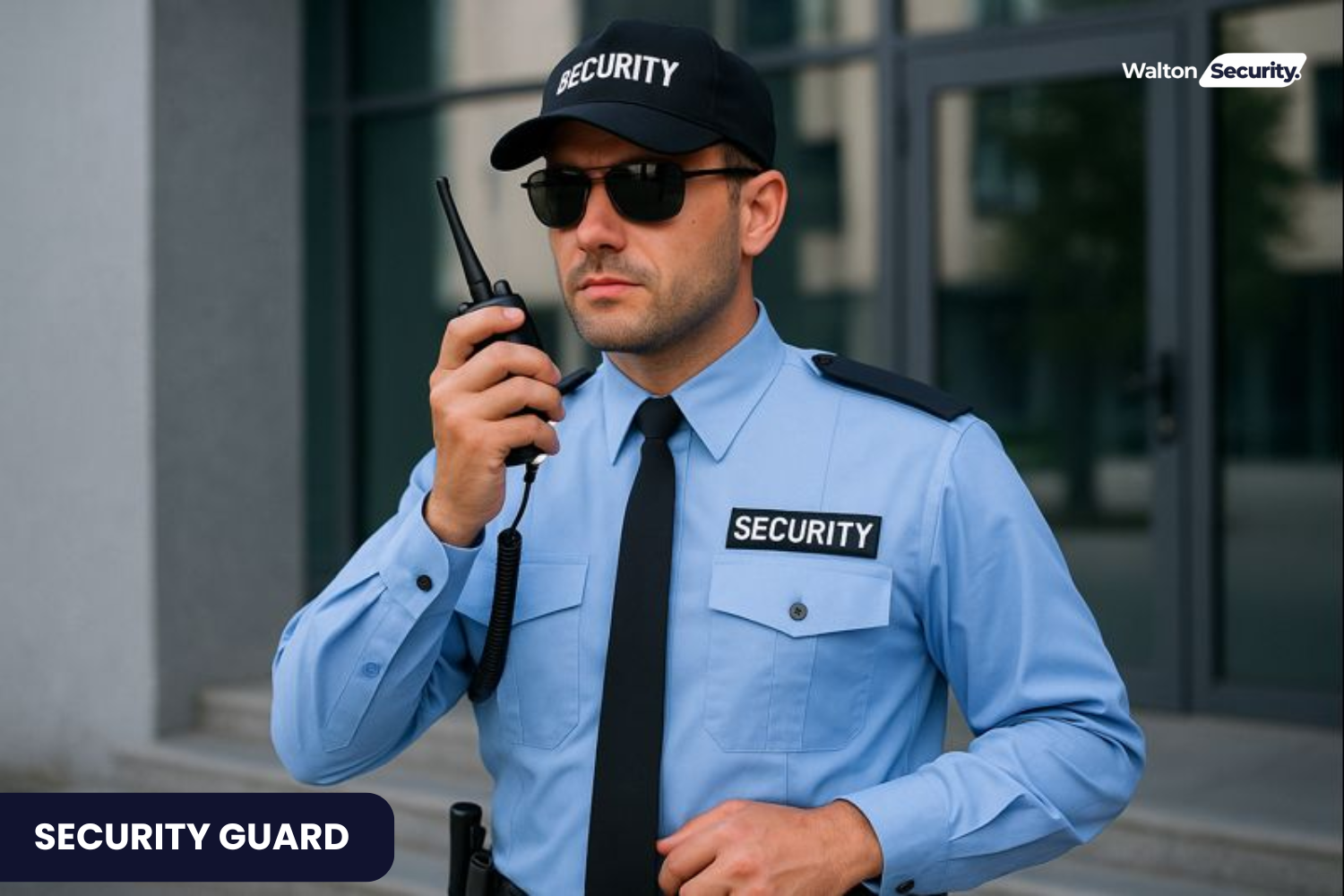
Static security guards provide dedicated protection at fixed locations where continuous human presence prevents crime, controls access, and ensures rapid emergency response. According to ASIAL Security Industry Licensing Reports, Australia employs over 150,000 licensed security personnel, with static guards forming a substantial portion of this frontline workforce. These professionals station themselves at entry points, gatehouses, retail stores, construction sites, and financial institutions to monitor people, property, and assets in real time.
Static guards deliver visible deterrent protection that research associates with lower rates of property offences and enhanced perceptions of safety. Their physical presence at one fixed location enables immediate intervention when threats emerge, unlike remote monitoring systems that detect incidents after they occur. Victorian businesses across retail, construction, corporate, and residential sectors rely on static security officers to protect access points, conduct identification checks, monitor CCTV systems, and respond to emergencies.
This comprehensive guide examines static security guard duties, deployment scenarios, licensing requirements, and business benefits for Victorian organisations. Property managers, business owners, and facility operators will gain practical knowledge for implementing effective static guarding solutions that reduce risk and protect assets.
What Is a Static Security Guard?
A static security guard is a licensed security professional stationed at a fixed location to monitor people, property, and assets in real time. Static guards maintain a constant presence at designated posts including building entrances, gatehouses, reception areas, and control rooms. Their primary function involves protecting a particular area through direct observation, access control, and immediate incident response.
Static security officers differ from roving or mobile patrol guards because they remain at one fixed post throughout their shift. This dedicated presence enables thorough familiarity with site operations, regular visitor patterns, and normal activity baselines that help guards identify unusual behaviour quickly. Static guards develop relationships with site staff and regular visitors, facilitating efficient credential checks and visitor screening processes.
The static guarding role encompasses multiple security functions including loss prevention, theft deterrence, property protection, and customer service support. Guards positioned at front desks provide directions and assistance to site visitors while simultaneously monitoring for suspicious activity and unauthorised access attempts. This dual function makes static guards valuable for both security and operational purposes.
How Is a Static Security Guard Different From a Mobile Patrol Guard?
Static security guards maintain continuous presence at a single fixed location, while mobile patrol guards travel between multiple sites conducting periodic checks. Static guards provide uninterrupted surveillance and immediate response capability at high-priority access points or valuable asset locations. Mobile patrols cover larger geographical areas but visit each location only at scheduled intervals or random patrol times.
The choice between static guards and mobile patrols depends on site risk assessment, asset value, and operational requirements. High-risk environments with frequent visitor traffic, valuable inventory, or constant access control needs typically require static guard deployment. Lower-risk sites with large perimeters or multiple buildings may achieve adequate protection through cost-effective mobile patrol services that provide visible deterrent presence without dedicated staffing.
Many Victorian businesses deploy combined security solutions using static guards at primary entry points supplemented by mobile patrols for perimeter checks and after-hours coverage. Construction sites often station static guards at main gates during work hours while mobile patrols conduct overnight inspections. This integrated approach optimises security investment by matching protection levels to risk periods and site areas.
What Are the Main Duties of a Static Security Guard?
Static security guards perform five core duty categories: access control, surveillance monitoring, incident response, documentation, and customer service support. Each function contributes to comprehensive site protection while supporting smooth business operations. The following sections detail specific responsibilities within each duty category.
How Do Static Security Guards Control Access and Check Entrants?
Static guards manage entry and exit points by verifying visitor credentials, checking identification documents, and screening entrants against authorised access lists. Access control duties include issuing visitor passes, logging arrivals and departures in visitor databases, and ensuring all persons entering restricted areas have proper authorisation. Guards position themselves at gatehouses, reception desks, and building entrances where they can observe and intercept all incoming traffic.
Credential verification processes vary based on site security requirements. High-security facilities require photo identification matching, biometric verification, and escort procedures for visitors. Standard commercial sites may use simpler sign-in procedures with visitor badges. Guards must ensure all visitors are checked and cleared before granting access to secure premises, preventing unauthorised entry that could lead to theft, vandalism, or safety incidents.
Static guards also conduct searches of bags, vehicles, and persons where site policies and legal authority permit. Construction sites commonly require vehicle inspections at entry gates to prevent tool theft. Retail environments may position guards at exits to check receipts and deter shoplifting. Effective access control requires guards to maintain high vigilance while processing entrants efficiently to avoid operational bottlenecks.
How Do Static Guards Monitor CCTV and On-Site Activity?
Static security guards monitor CCTV systems from control rooms or guard stations, watching camera feeds to detect suspicious activity across site areas beyond direct visual observation. CCTV monitoring extends guard coverage to car parks, loading docks, perimeter fences, and interior spaces that guards cannot physically patrol while maintaining access point positions. Guards identify unusual behaviour on camera feeds and dispatch response or investigate directly.
Effective CCTV monitoring requires guards to maintain situational awareness across multiple camera views simultaneously while remaining alert to activity at their physical post. Guards develop observation skills that enable recognition of normal versus abnormal patterns, identifying potential threats before incidents escalate. Motion detectors and alarm systems alert guards to specific camera views requiring immediate attention.
Static guards coordinate with remote monitoring centres that provide additional surveillance coverage during overnight hours or when on-site guards focus on other duties. Guards respond to alarm activations by verifying camera footage, investigating causes, and escalating genuine security breaches to management or emergency services. This integration between human guards and technology systems creates comprehensive protection coverage.
How Do Static Security Guards Respond to Incidents and Emergencies?
Static guards serve as first responders to security incidents, medical emergencies, fires, and other critical situations occurring within their protected areas. Emergency response duties include activating alarms, contacting emergency services, initiating evacuation procedures, and providing first aid where trained and equipped. Guards maintain communication with control rooms throughout incident management to coordinate resources and document actions taken.
Incident response protocols establish procedures for different emergency types. Security breaches require guards to observe and report while avoiding direct confrontation with armed or dangerous intruders. Medical emergencies demand immediate first aid response and ambulance coordination. Fire alarms trigger evacuation assistance and assembly point management. Guards receive training in rapid response procedures appropriate to their site assignments.
Static guards guide first responders including police, ambulance, and fire services to incident locations upon arrival. Guards provide situational briefings, unlock access points, and assist emergency personnel as directed. Post-incident duties include securing affected areas, preserving evidence, and completing detailed incident documentation for management review and insurance purposes.
What Reporting and Documentation Do Static Guards Provide?
Static security guards maintain comprehensive documentation including incident books, visitor logs, patrol records, and activity reports. Incident documentation captures event details, involved parties, guard actions, outcomes, and follow-up requirements. Accurate reporting supports insurance claims, legal proceedings, and operational improvements based on security event analysis.
Daily activity reports summarise shift events, visitor counts, access control activities, and any notable observations. Guards record routine checks, equipment tests, and compliance verifications demonstrating proper security coverage. Digital reporting systems enable real-time documentation with photograph attachments, GPS timestamps, and immediate management notification for significant incidents.
Static guards maintain visitor databases tracking all persons entering protected premises. Entry logs record visitor names, identification details, purpose of visit, host contacts, and entry/exit times. This documentation supports security investigations, compliance audits, and emergency accountability when evacuation requires confirmation that all visitors have exited safely.
How Do Static Security Guards Support Customer Service and Staff Safety?
Static guards positioned at reception areas and building entrances provide customer service functions including wayfinding assistance, visitor greeting, and general enquiry handling. Guards offer directions to offices, meeting rooms, and facilities while maintaining security awareness. This dual role maximises guard value by combining protection duties with operational support functions.
Staff safety support encompasses monitoring for workplace aggression, responding to disturbance calls, and providing safe escort services for employees working late or carrying valuables. Guards create secure environments where staff feel protected from external threats and internal conflicts. Visible guard presence deters aggressive behaviour from customers, contractors, and members of the public.
Static guards assist with operational tasks including delivery coordination, contractor supervision, and emergency equipment monitoring where security responsibilities intersect with facility management. Guards communicate professionally with all site users, representing both the security function and the client organisation’s service standards. This customer-focused approach enhances site experiences while maintaining protective vigilance.
Where Are Static Security Guards Commonly Used?
Static security guards deploy across diverse Victorian environments where continuous human presence provides essential protection. Construction sites station guards at gatehouses to control vehicle and pedestrian access while preventing equipment theft and vandalism. Retail stores position guards at entrances and exits for loss prevention, customer service, and shoplifter deterrence.
Corporate offices and financial institutions employ static guards at reception areas to manage visitor access, protect sensitive information, and ensure staff safety. Warehouses and distribution centres use guards at loading docks and entry points to verify shipments, prevent theft, and maintain inventory security. Manufacturing facilities station guards at perimeter gates and restricted production areas.
Residential complexes including apartment buildings and gated communities deploy static guards at lobby entrances and vehicle gates. Critical infrastructure sites such as utilities, telecommunications facilities, and government buildings require guards at all access points. Event venues use static guards at entry gates, backstage areas, and VIP sections. Car parks employ guards at payment booths and pedestrian entrances to deter vehicle crime and ensure patron safety.
What Licensing and Training Do Static Security Guards Need in Melbourne?
Melbourne static security guards must hold valid security licences issued by Melbourne Police Licensing and Regulation Division under the Private Security Act 2004. Licence applicants undergo national criminal history checks, character assessments, and verification of training qualifications. The licensing framework ensures guards meet minimum competency and integrity standards before undertaking security duties.
Basic static guarding requires completion of Certificate II in Security Operations covering core units in access control, communication, conflict management, and emergency response. Many employers prefer guards with additional qualifications including first aid certification, fire warden training, and customer service competencies. Guards working in licensed venues or events require crowd control endorsements with Certificate III training.
The Private Security Act establishes ongoing compliance requirements including licence renewal every five years, updated background checks, and maintenance of training currency. Security companies must verify guard credentials before deployment and maintain records demonstrating licensing compliance. Studies on private security regulation in Australia confirm that licensing requirements correlate with improved professionalism and service quality across the industry.
How Do Static Security Guards Help Prevent Crime and Reduce Risk?
Static security guards prevent crime through visible deterrent presence, access control enforcement, and early intervention in suspicious situations. Research demonstrates that higher employment of private security guards associates with lower rates of certain property offences, confirming the deterrent effect from visible guarding. Potential offenders observe guard presence and calculate increased risk of detection and apprehension.
Crime deterrence operates through multiple mechanisms. Physical presence at entry points prevents unauthorised access that enables theft, vandalism, and other offences. Guards observing unusual behaviour can intervene before criminal acts occur, questioning suspicious individuals or alerting police to developing situations. Field experiments confirm that security guards in public and semi-public spaces influence crime patterns through presence and proactive engagement.
Static guards reduce risk through systematic monitoring that identifies vulnerabilities and threats. Guards report suspicious activity including forced entry attempts, surveillance by potential offenders, and internal theft indicators. Early reporting enables management response before losses occur. The combination of deterrence, detection, and rapid response creates layered protection that significantly reduces criminal opportunity.
What Are the Business Benefits of Hiring Static Security Guards?
Static security guards deliver measurable business benefits including reduced theft losses, lower insurance premiums, improved staff confidence, and enhanced customer experiences. Loss prevention through effective guarding directly impacts profitability by protecting inventory, equipment, and property from criminal activity. Retail businesses report significant shrinkage reductions following static guard deployment at store entrances.
Insurance providers recognise professional security measures when assessing risk premiums. Documented guard presence, incident reporting systems, and access control procedures demonstrate proactive risk management that may qualify businesses for reduced coverage costs. Guards also ensure compliance with workplace safety obligations, reducing liability exposure from security-related incidents.
Staff and customer confidence improves when visible security presence creates safe environments. Employees feel protected from workplace aggression, robbery attempts, and after-hours threats when guards monitor premises. Customers perceive guarded locations as safer, supporting retail traffic and tenant satisfaction in commercial properties. Professional guard presentation enhances organisational image while providing practical protection value.
When Should a Business Choose Static Security Over Patrols or Cameras Only?
Businesses should choose static security guards when sites require continuous access control, immediate incident response, or visible deterrent presence at specific locations. CCTV systems record events for later review but cannot intervene during incidents or verify visitor credentials. Mobile patrols provide periodic checks but leave sites unmonitored between visits. Static guards fill these coverage gaps with constant human presence.
Sites with 24/7 access point traffic need static guards to manage visitor flow continuously. High-value inventory locations including electronics retailers, jewellery stores, and pharmaceutical warehouses require guards who can respond immediately to theft attempts. Construction sites with expensive tools and plant benefit from gatehouse guards who verify all entries and exits throughout work hours.
High-crime area locations and sites experiencing repeated security incidents warrant static guard deployment. Businesses receiving frequent deliveries need guards to verify shipments and prevent driver theft. Properties with complex access requirements including multiple tenant types or varying authorisation levels benefit from guards who manage access control systems while exercising human judgment for exceptional situations.
How Should a Static Guard Post Be Set Up and Managed?
Effective static guard posts require clear post orders documenting site-specific duties, procedures, and emergency protocols. Post orders define guard responsibilities including access control procedures, patrol requirements, reporting processes, and escalation contacts. Guards receive site inductions covering facility layouts, emergency equipment locations, and key personnel contacts before commencing duties.
Guard stations should provide clear sightlines to monitored areas, weather protection for external posts, and communication equipment connecting guards to control rooms and emergency services. Adequate lighting, seating for extended shifts, and access to facilities support guard alertness and professionalism. Equipment provisions include incident books, visitor logs, access control systems, and CCTV monitors as site requirements dictate.
Post management encompasses regular supervision, performance monitoring, and guard rotation to maintain effectiveness. Supervisors conduct site visits verifying post order compliance and addressing operational issues. Guard rotation prevents fatigue-related alertness decline on extended shifts and reduces collusion risks from excessive familiarity with site personnel. Quality security companies implement structured supervision programs ensuring consistent service delivery.
How Do You Choose the Right Static Security Guard Company in Melbourne?
Selecting a static security provider requires evaluation of licensing compliance, industry experience, supervision systems, and technology capabilities. Verify that companies hold current master licences and employ only licensed guards with appropriate training credentials. Request evidence of insurance coverage, workplace safety compliance, and quality management systems.
Experience in similar site types ensures guards understand industry-specific requirements and common security challenges. Construction site security differs substantially from retail or corporate environments. Companies with relevant sector experience deploy guards who require minimal site-specific training and recognise typical threat patterns. Local Melbourne and Melbourne knowledge enables effective coordination with police and emergency services.
Walton Security provides fully licensed static guard services across metropolitan Melbourne and regional Melbourne with 24/7 operational support. Experienced guards receive comprehensive training and ongoing supervision ensuring consistent professional service. Technology integration including digital reporting, GPS tracking, and remote monitoring coordination delivers accountability and transparency. Contact Walton Security for tailored static guard solutions matching your site requirements.
Are Static Security Guards Still Necessary in an Age of CCTV and Alarms?
Yes, static security guards remain essential despite advances in surveillance technology because human guards provide intervention capability that cameras and alarms cannot deliver. CCTV systems record incidents for investigation but do not prevent crimes in progress or apprehend offenders. Alarm systems detect breaches and alert monitoring centres, but response times allow offenders to complete crimes and escape before guards or police arrive.
Static guards deliver immediate response that technology cannot match. Guards observing suspicious behaviour intervene before incidents occur, questioning individuals, requesting identification, or alerting police to developing situations. This proactive capability prevents losses rather than merely documenting them. The visible deterrent effect of human presence influences potential offender decision-making in ways that cameras positioned for recording do not achieve.
Optimal security combines human guards with technology systems. Guards monitor CCTV feeds, extending observation coverage beyond direct sightlines. Alarm systems alert guards to investigate specific areas immediately. Access control technology supports guard verification procedures. This integration leverages technology efficiency while maintaining human judgment, intervention capability, and customer service functions that automated systems cannot provide.
What Other Types of Security Guard Services Should Businesses in Melbourne Know About?
Melbourne businesses access diverse security guard types beyond static guarding to address different protection requirements. Mobile patrol services provide cost-effective coverage for multiple sites or large properties through scheduled vehicle and foot patrols. Construction site security specialists understand industry-specific risks including equipment theft, material pilferage, and workplace safety requirements.
Event security and crowd control officers manage public gatherings, concerts, and sporting events requiring specialised crowd management training. Retail security guards focus on loss prevention, shoplifter deterrence, and customer service in shopping environments. Corporate security protects business headquarters with sophisticated access control and executive protection capabilities.
Security monitoring services operate control rooms providing remote CCTV surveillance and alarm response coordination. Residential security guards protect apartment buildings, gated communities, and housing estates. Cash-in-transit and armed security services handle high-value asset protection requiring weapons-trained personnel. Walton Security provides comprehensive security solutions across all guard types, enabling integrated protection strategies tailored to specific Melbourne business needs.
FAQs About Static Security Guards
Do Static Security Guards Have Authority to Detain People?
Yes, static security guards can detain individuals under limited circumstances using citizen’s arrest powers available to all Victorians. Guards must witness the offence, use only reasonable force, and contact police immediately. Detention must be brief and proportionate. Guards cannot search detained persons without consent. Improper detention exposes guards and employers to legal liability for assault and false imprisonment.
What Does a Gatehouse Security Guard Do?
A gatehouse security guard controls vehicle and pedestrian access at site entry points, typically construction sites, industrial facilities, or gated communities. Gatehouse duties include verifying driver credentials, inspecting vehicles, logging entries and departures, and ensuring only authorised persons and vehicles enter protected premises. Guards operate boom gates, issue visitor passes, and coordinate deliveries with site management.
Is Static Security More Expensive Than Mobile Patrols?
Static security typically costs more than mobile patrols because guards dedicate entire shifts to single locations rather than covering multiple sites. Mobile patrol costs distribute across several clients sharing patrol routes. However, static guards provide continuous coverage and immediate response that patrols cannot match. Cost-effectiveness depends on site risk levels, with high-risk locations justifying static guard investment while lower-risk sites achieve adequate protection through patrols.
How Do I Request a Static Security Guard for My Business?
Request static security services by contacting licensed security providers to discuss your site requirements. Providers conduct risk assessments evaluating threats, assets, and operational needs to recommend appropriate guard deployments. Services typically commence within 24 to 48 hours for standard requirements. Provide site details including location, operating hours, access points, and specific security concerns when requesting quotes.
What Equipment Do Static Security Guards Use?
Static security guards use equipment grouped into four categories. Communication equipment includes two-way radios, mobile phones, and control room intercoms. Documentation tools encompass incident books, visitor logs, and digital reporting devices. Surveillance equipment covers CCTV monitors, alarm panels, and access control systems. Personal equipment includes uniforms, identification badges, torches, and first aid kits. Armed guards carry licensed firearms with appropriate holsters and storage.
Can Static Guards Work Overnight Shifts?
Yes, static security guards work overnight shifts providing 24/7 protection for sites requiring continuous coverage. Overnight duties typically include perimeter patrols, CCTV monitoring, alarm response, and access control for authorised after-hours personnel. Guards working night shifts receive fatigue management training and regular rotation to maintain alertness. Many sites combine overnight static guards with remote monitoring support for enhanced coverage.
How Should I Brief a New Static Guard at My Site?
Brief new static guards through comprehensive site inductions covering facility layout, emergency procedures, key contacts, and specific post orders. Walk guards through the premises identifying access points, restricted areas, emergency equipment, and assembly points. Provide written post orders detailing duties, patrol routes, reporting requirements, and escalation procedures. Introduce guards to regular staff and explain visitor management protocols. Review communication equipment operation and emergency response procedures.