
16 Types of Security Guard: A Complete Guide for Victorian Businesses
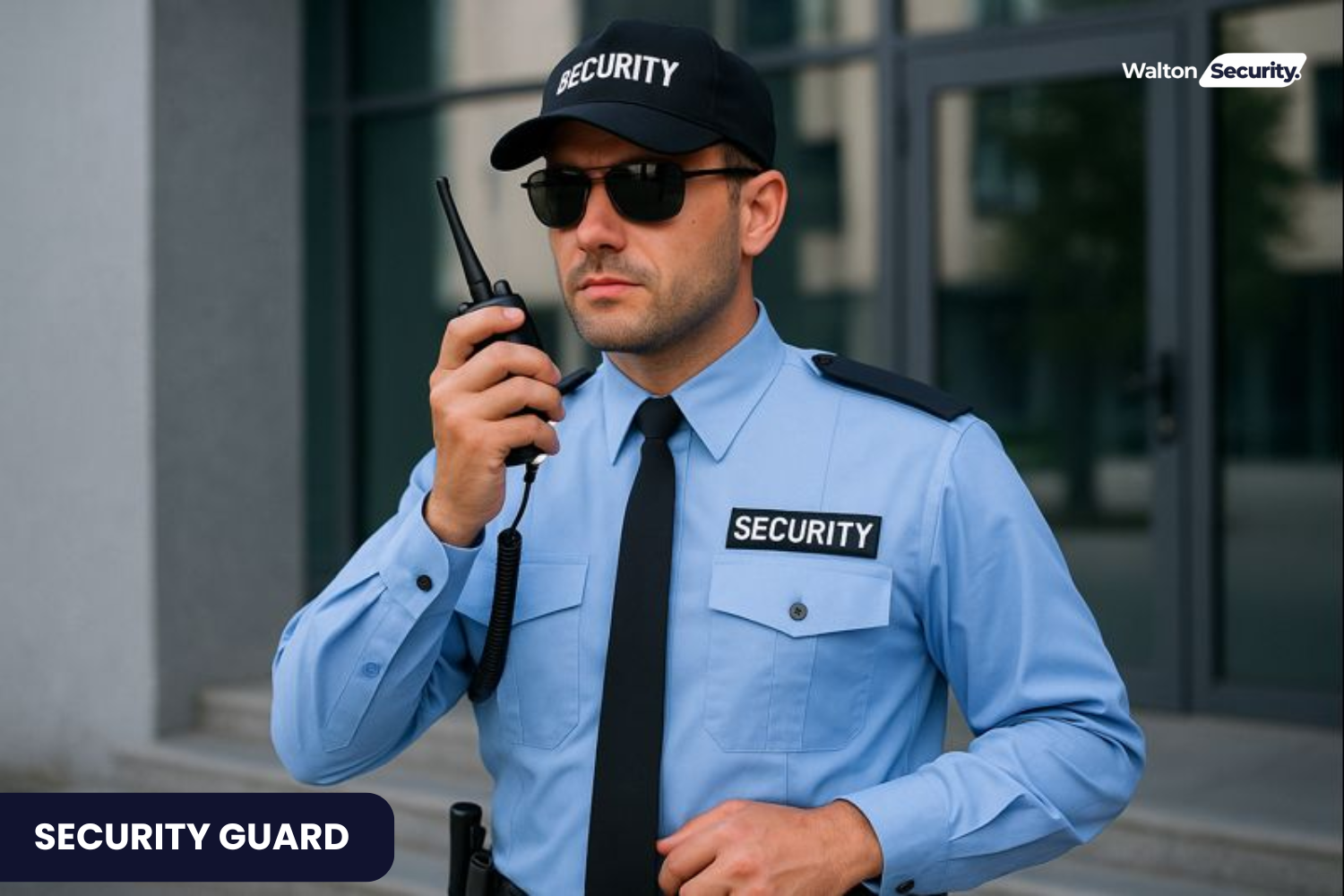
Security guards serve as the frontline defence for Australian businesses, properties, and events. According to the Australian Strategic Policy Institute (ASPI, 2018), professional security personnel provide essential protection that deters crime, manages access control, and ensures rapid emergency response. Victoria alone employs thousands of licensed security professionals across sixteen distinct guard categories, each designed to address specific risks and operational requirements.
Static security officers monitor fixed locations while mobile patrol guards cover expansive areas through scheduled vehicle or foot patrols. Armed security personnel protect high-risk assets requiring weapons-trained specialists, whereas unarmed guards handle standard surveillance and customer service duties. Event security teams manage crowd control at concerts and sporting venues, and gatehouse guards regulate entry points at industrial facilities. Each type demands specific licensing, training, and expertise under Victorian regulations.
This comprehensive guide examines all sixteen security guard categories operating in Victoria, including their core responsibilities, required certifications, and ideal deployment scenarios. Business owners, property managers, and event organisers will gain actionable insights for selecting the right security solution based on risk assessment, site requirements, and budget considerations.
What Is a Security Guard?
A security guard is a licensed professional responsible for protecting people, property, and assets through surveillance, access control, and incident response. Security officers monitor premises using visual observation and technology systems such as CCTV and alarm monitoring equipment. Their core responsibilities include verifying visitor identification, conducting perimeter checks, reporting suspicious behaviour, and coordinating emergency responses.
Security guards operate across diverse environments including corporate offices, retail stores, industrial facilities, residential complexes, and public events. Button’s research on security roles and authority confirms that guards function as both deterrent presence and active responders to threats. Essential skills for effective security work include sharp observation, clear communication, professional demeanour, and thorough incident documentation.
Victorian security guards must hold a valid security licence issued by Victoria Police Licensing and Regulation Division. The licensing framework established under the Private Security Act 2004 requires background checks, character assessments, and completion of approved training programs. Nalla and Crichlow (2017) found that licensing requirements directly correlate with improved professionalism and service quality in the security industry.
16 Main Types of Security Guard
Victorian businesses access sixteen distinct security guard categories, each addressing specific protection requirements. Security Guard Victoria documentation identifies these classifications based on deployment method, site type, and specialist training credentials. The following sections detail each guard type, their primary duties, and optimal use cases.
1. Static Security Guards
Static security guards maintain fixed positions at designated entry points, lobbies, or high-value areas within a site. These officers provide continuous surveillance from a single location, enabling consistent monitoring and immediate response to incidents. Primary duties include visitor screening, ID verification, access control management, and maintaining detailed activity logs.
Businesses deploy static guards at reception desks, building entrances, loading docks, and secure storage areas. This guard type excels in environments requiring constant human presence, such as corporate headquarters, government buildings, and financial institutions. Static officers typically work eight to twelve hour shifts, maintaining vigilance through systematic observation protocols.
2. Mobile Security Patrols
Mobile patrol guards conduct scheduled or random inspections across multiple locations using vehicles, bicycles, or foot routes. These security officers cover large geographical areas that static guards cannot monitor effectively. Patrol responsibilities encompass perimeter checks, lock and unlock services, alarm response, and visible deterrent presence throughout designated zones.
Vehicle patrols prove cost-effective for businesses with multiple sites or expansive properties including shopping centres, industrial parks, and residential estates. Mobile guards utilise GPS tracking and digital reporting systems to document patrol completion times and any observed anomalies. Bej et al. (2021) research confirms that technology-enhanced patrols significantly improve guard alertness and incident detection rates.
3. Construction Site Security
Construction site security guards protect active building projects from theft, vandalism, and unauthorised access. These specialists monitor expensive equipment, building materials, and partially completed structures that attract criminal activity. Guard duties include controlling site entry, conducting vehicle inspections, verifying worker credentials, and maintaining overnight surveillance.
Construction security officers require understanding of workplace health and safety requirements, hazardous material protocols, and emergency evacuation procedures. Guards coordinate with site managers to adapt security measures as construction phases progress. Effective construction security reduces material losses, prevents project delays, and protects workers from external threats.
4. Retail Security Guards
Retail security guards protect stores, shopping centres, and commercial premises from shoplifting, fraud, and customer disputes. These officers combine visible deterrent presence with discreet surveillance to identify suspicious behaviour without disrupting legitimate shoppers. Key responsibilities include monitoring fitting rooms, observing point-of-sale areas, and responding to theft incidents.
Retail guards balance security functions with customer service, often providing directions and assistance while maintaining protective oversight. Guards must understand legal limitations on detention and search powers under Victorian law. Professional retail security reduces shrinkage rates while maintaining positive shopping experiences that support brand reputation.
5. Loss Prevention Security
Loss prevention officers specialise in identifying and preventing inventory shrinkage through both internal and external theft. These security professionals analyse sales data, monitor employee behaviour, and implement systematic controls that reduce financial losses. Loss prevention extends beyond traditional guarding to include audit procedures, policy development, and staff training programs.
Loss prevention guards often work in plainclothes to observe customer and employee behaviour without detection. Their investigations may uncover organised retail crime rings, employee collusion, or procedural vulnerabilities enabling theft. Effective loss prevention programs combine human surveillance with electronic article surveillance, CCTV analytics, and inventory management systems.
6. Event Security
Event security guards manage safety and access control at concerts, sporting matches, festivals, and corporate functions. These officers conduct bag checks, verify tickets, monitor crowd behaviour, and coordinate emergency evacuations. Event security requires rapid adaptation to changing conditions as attendee numbers fluctuate throughout programs.
Event guards receive briefings on venue layouts, emergency exits, first aid locations, and communication protocols specific to each engagement. Security teams coordinate with police, medical personnel, and venue management to address incidents efficiently. Large events may require hundreds of guards covering perimeter control, stage protection, VIP areas, and general admission zones.
7. Crowd Control
Crowd control officers manage large gatherings to prevent crushing, violence, and panic situations that endanger public safety. These specialists receive additional training in crowd psychology, de-escalation techniques, and barrier management. Crowd controllers hold specific licensing endorsements beyond standard security credentials in Victoria.
Crowd control duties encompass queue management, capacity monitoring, intoxicated patron handling, and evacuation coordination. Guards position themselves at choke points, entry gates, and high-density areas to maintain orderly movement. Effective crowd management prevents injuries, reduces liability exposure, and ensures compliance with occupancy limits mandated by fire safety regulations.
8. Asset Protection
Asset protection guards safeguard high-value items, equipment, and inventory from theft, damage, and unauthorised access. These officers implement comprehensive security strategies covering physical barriers, surveillance systems, and procedural controls. Asset protection extends to intellectual property, sensitive documents, and proprietary information requiring confidentiality measures.
Asset protection professionals conduct risk assessments to identify vulnerabilities and recommend targeted countermeasures. Guards verify authorisation for asset movement, maintain chain-of-custody documentation, and investigate discrepancies. Industries including pharmaceuticals, electronics manufacturing, and logistics rely heavily on asset protection to prevent significant financial losses.
9. Industrial Security
Industrial security guards protect manufacturing facilities, processing plants, and heavy industry operations from external threats and internal safety violations. These officers understand industrial hazards, restricted zone protocols, and emergency response procedures for chemical spills, fires, and equipment malfunctions. Industrial guards monitor compliance with workplace safety regulations.
Industrial security encompasses perimeter patrols, employee access verification, contractor management, and vehicle inspection at delivery points. Guards coordinate with safety officers to enforce personal protective equipment requirements and exclusion zones. Effective industrial security reduces workplace accidents, prevents industrial espionage, and protects critical infrastructure.
10. Warehouse Security
Warehouse security guards protect storage facilities, distribution centres, and logistics hubs from theft, pilferage, and supply chain disruptions. These officers monitor loading dock activities, verify shipment documentation, and prevent unauthorised removal of inventory. Warehouse guards understand inventory management systems and chain of custody requirements.
Warehouse security integrates physical guarding with technology including CCTV surveillance, access control systems, and alarm monitoring. Guards conduct random inspections of outgoing vehicles and employee belongings where legally permitted. Effective warehouse security maintains inventory accuracy while facilitating efficient logistics operations.
11. Corporate Security
Corporate security guards protect business headquarters, executive offices, and corporate campuses from threats including unauthorised access, workplace violence, and information theft. These officers present professional appearances while managing sophisticated access control systems and visitor management protocols. Corporate guards often receive training in executive protection principles.
Corporate security encompasses lobby management, meeting room monitoring, after-hours patrols, and emergency response coordination. Guards liaise with human resources regarding terminated employees, restraining orders, and potential threat situations. Professional corporate security maintains confidential business environments while projecting positive organisational images to visitors.
12. Office Security
Office security guards manage access control and safety for commercial office buildings, professional suites, and shared workspaces. These officers verify visitor credentials, issue temporary passes, and maintain lobby surveillance. Office guards handle deliveries, coordinate with building management, and respond to tenant concerns regarding suspicious activity.
Office security requires customer service orientation balanced with security vigilance. Guards assist with wayfinding, manage parking access, and provide after-hours lockup services. Multi-tenant buildings require guards to understand individual lease agreements and access authorisations for different floor levels and secure areas.
13. Residential Security
Residential security guards protect gated communities, housing estates, and private residences from intrusion and property crime. These officers conduct perimeter patrols, verify resident and visitor identification, and monitor community access points. Residential guards respond to noise complaints, suspicious vehicles, and resident safety concerns.
Residential security balances protective functions with community relations, requiring diplomatic communication skills. Guards enforce community rules regarding parking, visitor hours, and common area usage. Effective residential security creates safe living environments that enhance property values and resident satisfaction.
14. Apartment Security
Apartment security guards manage access control and safety for multi-unit residential buildings, condominiums, and high-rise towers. These officers monitor lobby entrances, parking structures, and common areas including pools, gyms, and rooftop facilities. Apartment guards verify resident credentials and escort authorised visitors to units.
Apartment security includes responding to domestic disturbances, medical emergencies, and maintenance emergencies within residential units. Guards coordinate with property management regarding lease violations, eviction support, and building emergencies. Professional apartment security reduces insurance claims while increasing tenant retention rates.
15. Security Monitoring Services
Security monitoring officers operate surveillance systems from centralised control rooms, watching multiple sites through CCTV feeds, alarm panels, and access control dashboards. These operators identify suspicious activity, dispatch patrol guards, and coordinate emergency responses. Monitoring officers maintain constant vigilance across dozens of camera views simultaneously.
Security monitoring requires technical proficiency with video management systems, alarm verification procedures, and communication equipment. Operators document all incidents, generate reports, and maintain communication logs. Remote monitoring provides cost-effective surveillance coverage for sites that cannot justify dedicated on-site guards.
16. Security Guard Risk Assessment
Security guard risk assessment specialists evaluate site vulnerabilities, threat levels, and protection requirements to recommend appropriate security solutions. These professionals analyse crime statistics, assess physical security measures, and identify gaps in existing protection. Risk assessments form the foundation for security planning and resource allocation.
Risk assessment services include site surveys, threat analysis, security audits, and emergency preparedness evaluations. Assessors recommend guard deployments, technology integrations, and procedural improvements based on findings. Regular risk assessments ensure security measures adapt to changing threat environments and operational requirements.
Why Are There Different Types of Security Guard?
Different security guard types exist because diverse sites, industries, and situations present unique risks requiring specialised responses. A retail store faces shoplifting threats that demand different skills than a construction site vulnerable to equipment theft. Event venues require crowd management expertise irrelevant to corporate office protection. Matching guard specialisation to specific risks maximises protection effectiveness.
How Are Security Guards Classified by Risk, Site, and Duties?
Security guards receive classification based on three primary factors: risk level, site type, and operational duties. High-risk classifications include armed guards for cash-in-transit and close protection officers for threatened individuals. Site-based classifications distinguish between static positions, mobile patrols, and remote monitoring operations. Duty classifications separate access control specialists from crowd controllers and loss prevention investigators.
Victorian licensing reflects these classifications through endorsement categories covering crowd control, bodyguarding, and armed services. Each endorsement requires specific training, competency assessments, and character evaluations. Guards may hold multiple endorsements enabling deployment across different security functions as client needs evolve.
Which Types of Security Guard Are Most Common in Victoria?
Static guards and mobile patrol officers represent the most common security types across Victoria. Melbourne CBD buildings employ thousands of static guards for lobby management and access control. Shopping centres, industrial estates, and residential communities rely heavily on mobile patrols for cost-effective coverage. Retail security guards also deploy extensively throughout Victorian shopping precincts.
Event security and crowd control demand increases seasonally, with major sporting events, festivals, and concert seasons requiring substantial temporary deployments. Construction security grows alongside Victoria’s building sector activity. Corporate security positions concentrate in Melbourne’s business districts where major companies maintain headquarters operations.
How to Choose the Right Type of Security Guard for Your Site
Selecting appropriate security guard types requires systematic assessment of site characteristics, risk profiles, and operational objectives. Effective security planning matches guard capabilities to specific protection requirements while optimising budget allocation. The following considerations guide security type selection decisions.
What Risks and Assets Do You Need to Protect?
Risk assessment identifies threats your site faces and assets requiring protection. Consider theft vulnerability, vandalism history, workplace violence potential, and emergency evacuation requirements. Asset inventories should include physical property, inventory, equipment, intellectual property, and personnel safety. High-value concentrations may justify armed guards or enhanced surveillance systems.
Crime data analysis reveals threat patterns guiding security deployment timing and positioning. Businesses in high-crime areas require more visible deterrent presence than those in secure locations. Threat assessments should address both external criminal activity and internal risks from employees, contractors, and authorised visitors.
Do You Need Static Guards, Mobile Patrols, or Both?
Static guards suit locations requiring continuous human presence at critical access points or high-value areas. Mobile patrols prove effective for large properties, multiple sites, or locations where deterrent presence matters more than constant monitoring. Many sites benefit from combined approaches using static guards during peak hours supplemented by mobile patrols during quieter periods.
Cost considerations influence deployment decisions. Static guards provide dedicated coverage but require full-shift wages for single locations. Mobile patrols distribute costs across multiple clients through shared patrol routes. Remote monitoring offers lowest cost per site but lacks immediate physical response capability.
What Licensing and Training Should Your Guards Have in Victoria?
Victorian security guards must hold current licences issued under the Private Security Act 2004. Standard security licences require Certificate II in Security Operations as minimum qualification. Crowd control endorsements demand additional Certificate III training covering de-escalation, conflict resolution, and crowd management techniques.
Armed guard deployment requires firearms licences and weapons training beyond standard security credentials. Close protection officers need bodyguarding endorsements with advanced threat assessment and protective skills training. Verify guard credentials through Victoria Police Licensing and Regulation Division before engagement.
How Security Guards Are Regulated in Victoria
Victorian security regulation ensures public safety through licensing requirements, training standards, and compliance monitoring. The Private Security Act 2004 establishes legal frameworks governing security guard conduct, powers, and accountability. Understanding regulatory requirements protects businesses from liability exposure and ensures quality service delivery.
Licensing and Training Requirements for Security Guards in Victoria
Victoria Police Licensing and Regulation Division administers security industry licensing. Applicants must pass national criminal history checks, provide character references, and demonstrate completion of approved training programs. Licence categories include general guard, crowd controller, bodyguard, and armed security with specific requirements for each endorsement.
Training requirements include Certificate II in Security Operations for entry-level positions and Certificate III for crowd control endorsements. First aid certification, conflict management training, and ongoing professional development maintain guard competency. Licences require renewal every five years with updated background checks.
Legal Responsibilities of Security Providers and Businesses
Security companies must hold master licences authorising the provision of security services in Victoria. Employers are responsible for verifying guard credentials, maintaining training records, and ensuring compliance with licensing requirements. Businesses engaging security services should verify provider licensing and insurance coverage before contract execution.
Security guards operate within legal constraints on detention, search, and use of force. Guards cannot arrest without witnessing offences or receiving citizen’s arrest authority. Excessive force or false imprisonment exposes both guards and clients to civil liability. Clear operational procedures and incident documentation protect all parties.
Why Working with a Fully Licensed Victorian Security Company Matters
Licensed security providers demonstrate commitment to professional standards, regulatory compliance, and quality service delivery. Master licence holders undergo rigorous vetting including business structure verification, insurance confirmation, and principal character assessment. Licensed companies maintain accountability to regulatory oversight.
Engaging unlicensed operators exposes businesses to significant risks including inadequate guard training, unverified personnel backgrounds, and absence of insurance coverage. Regulatory penalties apply to businesses knowingly engaging unlicensed security services. Licensed providers offer contractual protections, defined service standards, and recourse through regulatory complaint mechanisms.
How Different Types of Security Guard Work with Technology
Modern security operations integrate human guards with technology systems including CCTV surveillance, access control, alarm monitoring, and digital reporting platforms. Technology enhances guard effectiveness, extends surveillance coverage, and provides audit trails for incident documentation. Effective security combines trained personnel with appropriate technological tools.
How Do Security Guards Use CCTV, Alarms, and Patrol Tracking?
Security guards monitor CCTV systems to extend visual coverage beyond direct observation ranges. Operators identify suspicious behaviour on camera feeds, directing patrol guards to investigate. Alarm systems alert guards to breaches, triggering response protocols and emergency notifications. Integration between alarm and CCTV systems enables visual verification before dispatch.
Patrol tracking systems use GPS and checkpoint scanning to verify guard movements across designated routes. Digital tracking provides accountability, ensures complete coverage, and generates timestamped records for client reporting. Mobile applications enable guards to submit incident reports, photographs, and observations directly from patrol positions.
How Do Guards Report Incidents Back to Management?
Security guards document incidents through structured reporting systems capturing event details, involved parties, actions taken, and outcomes. Digital platforms enable real-time reporting with photograph attachments, location tagging, and immediate management notification. Comprehensive incident documentation supports insurance claims, legal proceedings, and operational improvements.
Reporting protocols establish escalation procedures for different incident severities. Minor observations log through daily activity reports while serious incidents trigger immediate supervisor notification and detailed investigation documentation. Quality reporting enables pattern analysis, resource allocation adjustments, and evidence preservation for subsequent requirements.
Why Walton Security Is a Trusted Security Company in Victoria
Walton Security operates as a fully licensed Victorian security provider delivering comprehensive protection services across Melbourne and regional Victoria. The company maintains master licence compliance, rigorous guard vetting procedures, and ongoing professional development programs. Walton Security combines experienced personnel with modern technology systems to deliver effective protection solutions.
24/7 Coverage Across Melbourne and Victoria
Walton Security provides round-the-clock protection services throughout metropolitan Melbourne and regional Victorian locations. Continuous operations ensure immediate response availability regardless of time or day. Dedicated control room monitoring coordinates guard deployments, emergency responses, and client communications throughout all service hours.
Industries Walton Security Specialises In
Walton Security serves diverse industry sectors including retail, construction, corporate, industrial, residential, and events. Specialised teams understand sector-specific requirements, compliance obligations, and operational challenges. Industry experience enables tailored security solutions addressing unique client needs rather than generic approaches.
How to Get a Tailored Security Risk Assessment for Your Business
Walton Security provides complimentary security risk assessments for businesses seeking protection solutions. Experienced assessors evaluate site vulnerabilities, threat profiles, and operational requirements to recommend appropriate guard types and deployment configurations. Risk assessments establish foundations for effective security planning aligned with client objectives and budget parameters.
Contact Walton Security to schedule your site assessment and receive customised recommendations for protecting your people, property, and assets across Victoria.
FAQs About Security Guards in Victoria
Are Security Guards in Victoria Licensed and Regulated?
Yes, Victorian security guards must hold valid licences issued by Victoria Police Licensing and Regulation Division under the Private Security Act 2004. All guards require national criminal history checks, approved training completion, and ongoing licence compliance. Security companies must hold master licences authorising service provision.
What Is the Difference Between a Security Guard and a Crowd Controller?
A security guard provides general protection services including access control, surveillance, and incident response across various site types. A crowd controller holds additional licensing endorsement specifically for managing public gatherings, licensed venues, and events. Crowd controllers receive specialised training in de-escalation, intoxicated patron management, and evacuation procedures beyond standard guard qualifications.
Which Type of Security Guard Is Best for a Small Business?
Small businesses typically benefit most from mobile patrol services or part-time static guard deployments depending on specific risks. Retail businesses facing shoplifting threats require guards with loss prevention training. Office environments suit reception-based static guards during business hours. Mobile patrols provide cost-effective after-hours protection for businesses unable to justify full-time dedicated guards.
How Many Hours Does a Security Guard Usually Work on a Shift?
Standard security guard shifts range from eight to twelve hours depending on site requirements and rostering arrangements. Most Victorian security positions operate on eight-hour shifts enabling three-shift coverage for 24/7 operations. Extended twelve-hour shifts reduce handover frequency but require compliance with workplace fatigue management obligations. Guards may work rotating rosters covering day, afternoon, and night shifts throughout weekly cycles.
What Services Do Security Guards Provide?
Security guards provide services grouped into four main categories. Access control services include visitor screening, ID verification, and entry point management. Surveillance services encompass CCTV monitoring, patrol inspections, and suspicious behaviour observation. Response services cover alarm response, incident management, and emergency coordination. Reporting services include activity documentation, incident reporting, and compliance verification.
How Do I Verify a Security Guard Licence in Victoria?
Verify Victorian security guard licences through Victoria Police Licensing and Regulation Division. Request the guard’s licence number and check validity through official verification channels. Licensed guards carry identification displaying their licence number, photograph, and endorsement categories. Security companies must provide licence verification for deployed personnel upon client request.
Can Security Guards Detain Shoplifters in Victoria?
Yes, security guards can detain shoplifters in Victoria under limited circumstances. Guards exercising citizen’s arrest powers must witness the offence, use reasonable force only, and contact police immediately. Detention must be brief and proportionate to circumstances. Guards cannot search detained persons without consent. Improper detention exposes guards and employers to assault and false imprisonment claims.