
Construction Site Security Services In Melbourne
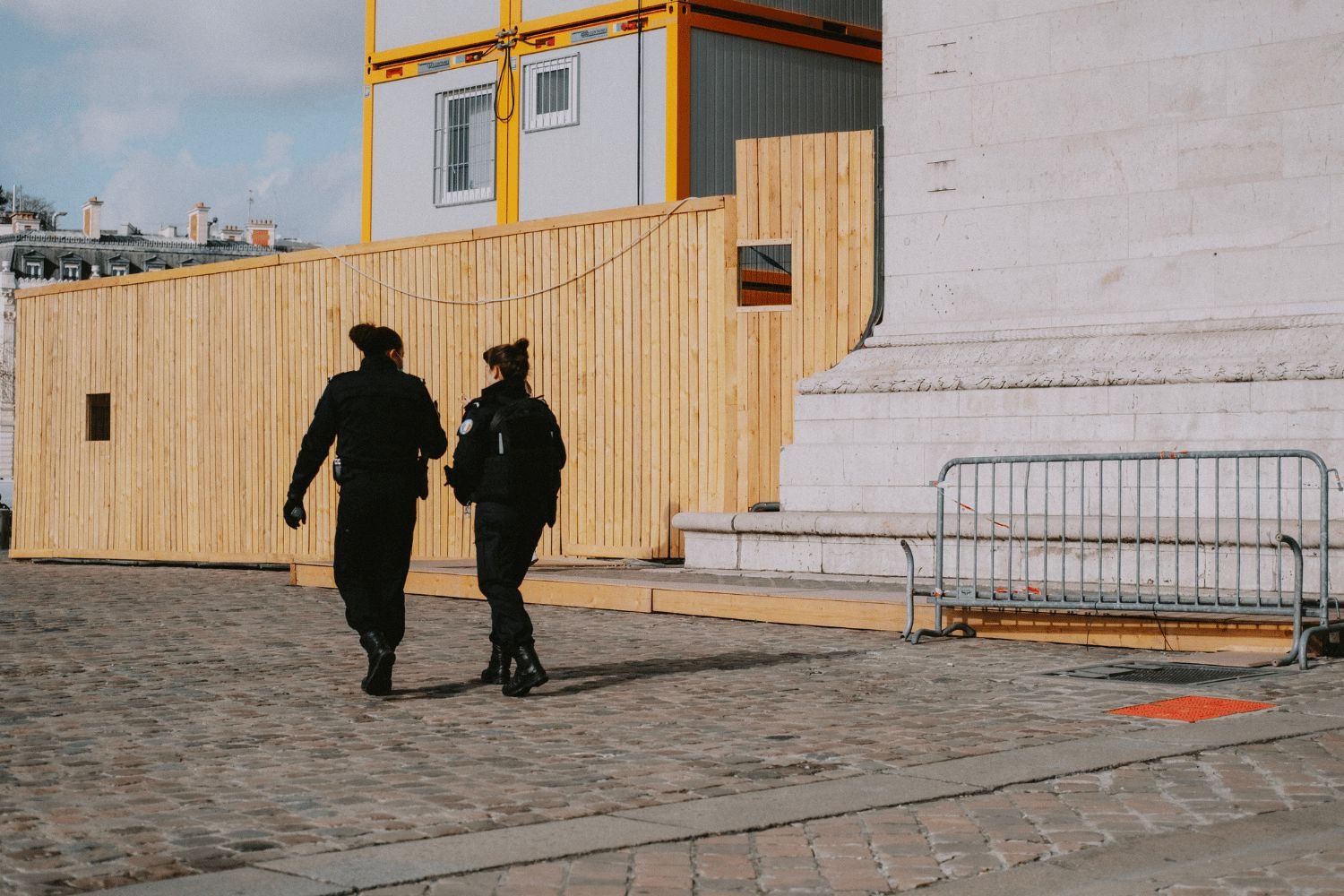
Walton Security provides construction site security services in Melbourne and Victoria for residential builds, commercial developments, industrial projects, and civil infrastructure works. Licensed construction security guards, CCTV surveillance, access control systems, mobile patrols, alarm monitoring, and fire watch services form a layered security system that protects active building sites from theft, vandalism, unauthorised access, and safety hazards. Walton Security is an ISO 9001, ISO 45001, and ISO 14001 certified construction security company in Melbourne with a verified 5-star Google rating.
All Walton Security construction site security guards hold valid private security licences issued by the Victoria Police Licensing and Regulation Division (LRD) under the Private Security Act 2004 and carry CPP20218 Certificate II in Security Operations, National Police Check clearance, and current first aid certification. Building site security services cover Melbourne CBD, South Melbourne, Docklands, Dandenong, Sunshine, Footscray, Collingwood, Geelong, Ballarat, and the greater Melbourne metropolitan area.
If you are a builder, developer, project manager, or contractor looking for construction site security in Melbourne, Walton Security provides 24/7 licensed guard deployment with rapid response within 2–4 hours. Walton Security operates from 163/585 Little Collins Street, Melbourne VIC 3000, and delivers construction security services that meet compliance requirements under the Occupational Health and Safety Act 2004 (Vic) and WorkSafe Victoria regulations.
How to Enhance Construction
Site Security
There are 6 practical steps to strengthen construction site security in Melbourne
Conduct a Risk Assessment
Identify specific threats based on site location, project type, stored materials, work schedule, and surrounding environment. A high-traffic urban site in South Melbourne presents different vulnerabilities than a rural infrastructure project near Ballarat. The risk assessment evaluates perimeter condition, access points, lighting, material storage, and workforce access patterns to produce a prioritised security plan.
Install Perimeter Fencing & Security Lighting
Anti-climb fencing combined with motion-activated security lighting creates the first physical barrier against unauthorised entry. Perimeter fencing should cover all site boundaries with no gaps at vehicle access points, pedestrian entries, or adjoining properties. Well-lit perimeters deter opportunistic theft and ensure CCTV cameras capture usable footage after dark.
Deploy CCTV Cameras
Position construction site security cameras at all entry points, material storage areas, plant equipment zones, and high-traffic work areas. Remote CCTV monitoring allows real-time threat detection from an off-site control room and provides recorded evidence for insurance claims, police reports, and incident investigation.
Implement Strict Access Control
Use sign-in logs, ID verification, site induction records, or Radio-Frequency Identification (RFID) entry systems to track every person entering and exiting the site. Restrict access to authorised workers, contractors, and approved visitors only. Controlled entry points create an auditable record of all site traffic that supports compliance audits and WorkSafe Victoria inspections.
Schedule Mobile Patrols During Off-Hours
After-hours mobile security patrols cover the vulnerable window between shifts when most construction site theft and vandalism occurs. Mobile patrol units conduct site inspections at randomised intervals, checking perimeter fencing, locked storage containers, plant equipment, and all access points.
Establish Emergency Response Protocols
Define clear procedures for security breaches, fire, medical emergencies, and adverse weather events. Emergency protocols should include contact details for Victoria Police, Ambulance Victoria, the Metropolitan Fire Brigade (MFB), and the site's security provider. Trained security personnel follow established response procedures to contain threats within minutes of detection.
Need Professional Construction Site Security in Melbourne?
Walton Security provides ISO-certified, licensed security guards with 24/7 coverage for construction sites across Melbourne and Victoria.
Keep Your Construction Site Secure
Effective construction site protection combines physical security measures, surveillance technology, and trained personnel operating as a single coordinated system. Security fencing, locked storage containers, and well-lit perimeters form the physical foundation. CCTV surveillance, alarm systems, and motion sensors extend coverage beyond what guards alone can provide.
Construction Security Guards
Construction security guards are the central element of day-to-day site protection. Guards manage gate access, conduct internal and perimeter patrols, monitor CCTV feeds, verify contractor credentials against site induction records, enforce safety rules, and respond to incidents. A visible guard presence deters most criminal activity and provides immediate on-site response capability that technology alone cannot deliver.
Material Theft Prevention
Material theft prevention requires organised storage, inventory tracking, and physical security measures. High-value items should be stored in locked, well-lit containers with controlled key access. All equipment deliveries and removals should be logged with time, date, item description, and authorising person. Crane anti-theft measures such as disabling controls, removing ignition keys, and applying steering locks protect major plant equipment during unattended periods.
Incident Reporting
Standardised incident reporting documents every security event on the construction site, from minor access violations to major break-ins. Each report records time, date, location, persons involved, action taken, and outcome. Consistent incident documentation supports insurance claims, WorkSafe Victoria compliance audits, Victoria Police investigations, and ongoing refinement of the site security plan.
Comprehensive Construction Site Security Solutions
A complete construction site security plan in Melbourne includes 5 core services that work together to protect your project:
Access Control
Access control systems manage who enters and exits the construction site and when. Gate management by security personnel, ID verification, visitor logs, site induction checks, and electronic entry systems such as RFID badges or swipe cards prevent unauthorised personnel from reaching active work zones. Controlled access points create an auditable record of all site traffic for compliance and incident investigation.
Mobile Patrols
Mobile security units conduct site inspections across the full perimeter and interior at randomised intervals to prevent predictability. GPS-enabled patrol tracking confirms guards complete assigned routes and check all designated areas, including blind spots behind fencing, partially lit zones, and temporary storage areas. Patrol reports document site condition, fence integrity, equipment status, and any observed irregularities after each inspection.
CCTV Monitoring
CCTV monitoring provides real-time and recorded visual surveillance of the entire construction site. Cameras at entry points, material storage areas, and high-traffic zones feed into a 24/7 control room where trained operators detect suspicious activity and dispatch on-site guards or emergency services. Remote video monitoring allows off-site security teams to watch multiple construction sites from a central location, maintaining round-the-clock coverage without full-time on-site personnel at every location.
Emergency Response
Emergency response coordination covers security breaches, medical incidents, fire, and natural disaster scenarios on the construction site. Trained security guards follow documented protocols to contain threats, secure the affected area, alert Victoria Police, Ambulance Victoria, or the Metropolitan Fire Brigade (MFB), and protect all site personnel. Established emergency procedures and pre-positioned response equipment minimise damage and keep workers safe.
Fire Watch
Fire watch services are required during hot work activities including welding, cutting, and grinding, and in buildings where fire suppression systems are not yet operational. Dedicated fire watch personnel monitor for ignition sources, maintain fire extinguisher access, clear combustible materials from work areas, and respond immediately to fire hazards. Fire watch meets Work Health and Safety (WHS) compliance requirements under Victorian fire safety regulations and is mandatory on many Melbourne construction sites.
Smart Security Options to Secure Your Site
Smart security combines trained personnel with advanced technology to close gaps in traditional construction site security coverage. These options provide layered protection that adapts to the changing conditions of an active building site as the project progresses through different construction phases.
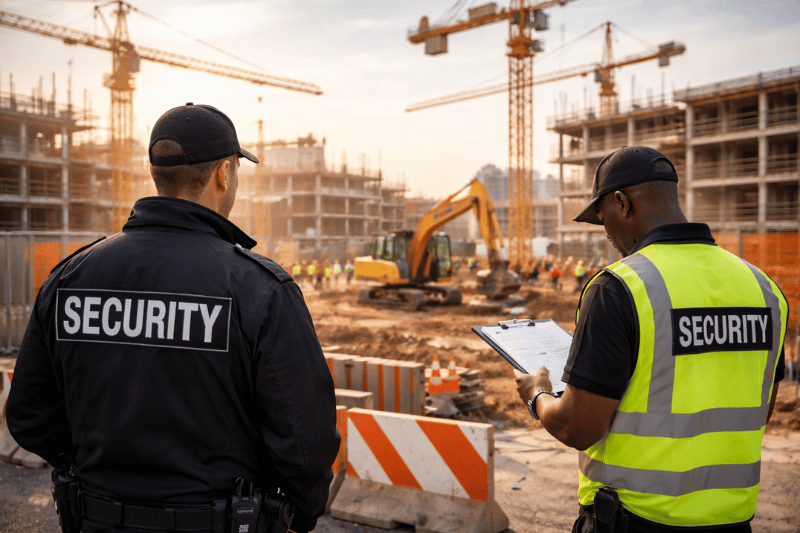
Risk Assessments
A professional construction site risk assessment identifies specific threats, evaluates existing security measures, and produces a written security plan that balances cost, coverage, and response capability. The assessment covers five areas: perimeter vulnerabilities and fencing condition, all entry and exit points, lighting and camera blind spots, material and equipment storage locations, and workforce access patterns across day and night shifts.
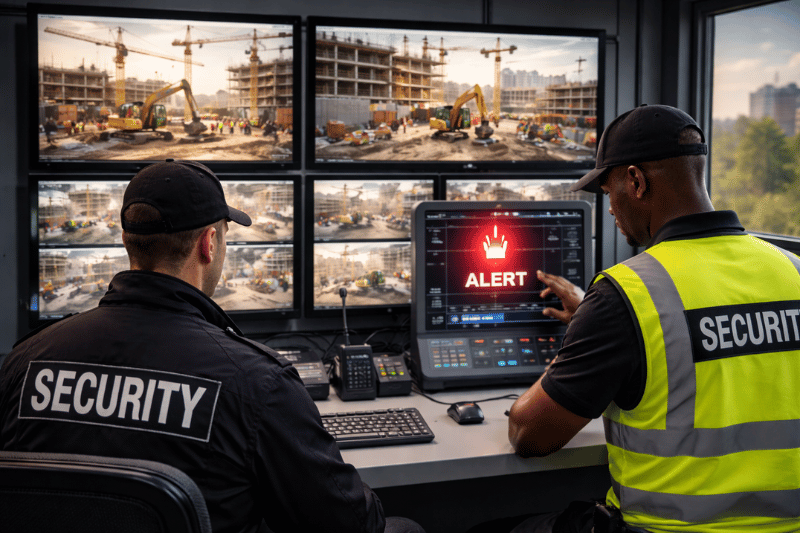
Integrated Alarm Systems
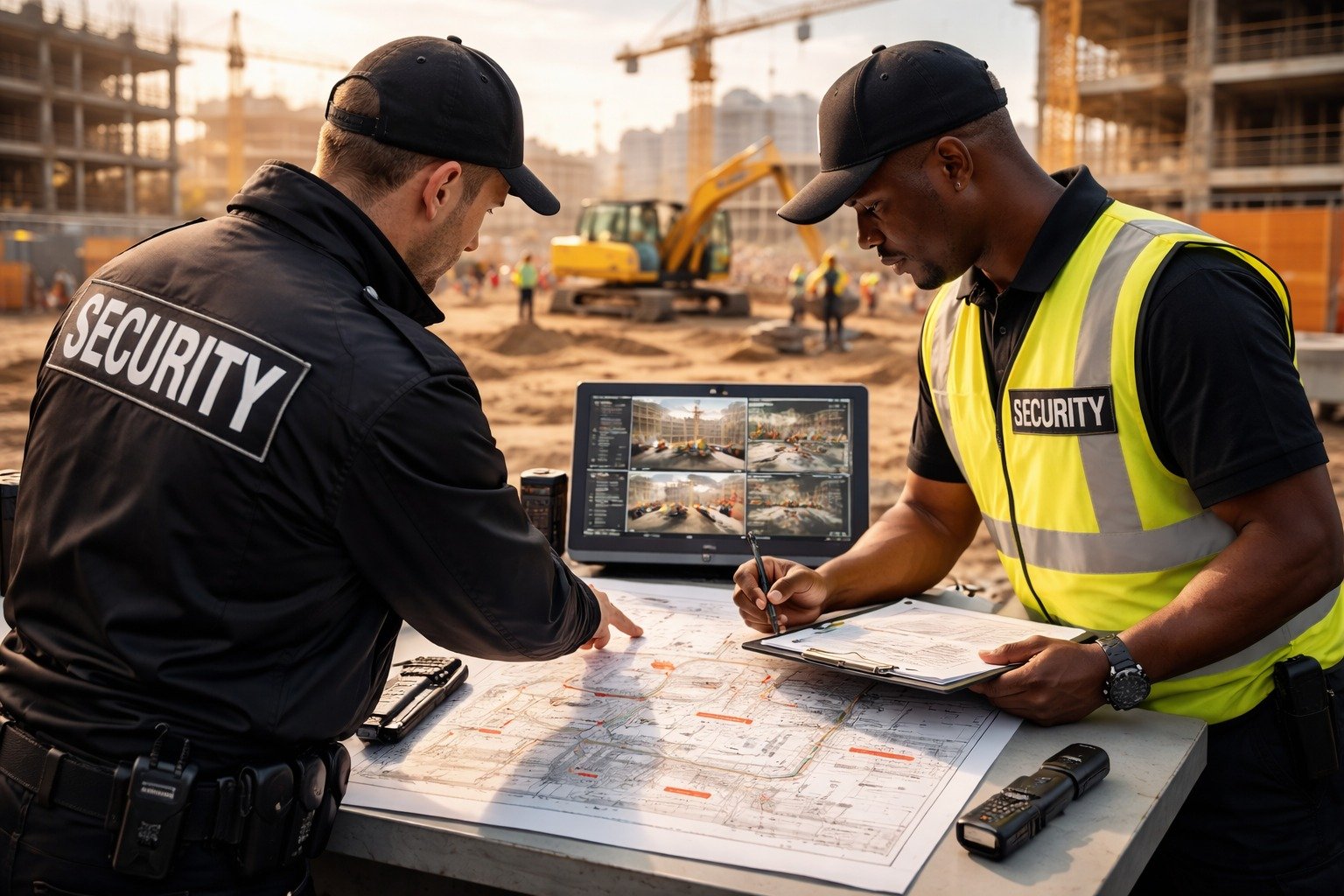
Tailored Security Plans
Continuous Monitoring & Surveillance
CCTV Coverage
After-Hours Mobile Patrols
Remote Video Monitoring
Technology
Technology supporting construction site security solutions includes the following systems:
Motion Sensors
Motion sensors detect movement across the site perimeter and interior, triggering alerts to the control room. Infrared and microwave sensor technology operates reliably in all weather conditions including rain, fog, and darkness, providing consistent perimeter breach detection around the clock.
Video Analytics
AI-powered video analytics identify suspicious behaviour patterns in real time. The system flags loitering near entry points, unauthorised vehicle movement, perimeter intrusion, and unusual activity outside normal work hours. Video analytics filter out non-threatening motion such as animals, debris, and weather interference, reducing false alarms and improving operator response accuracy.
Mobile Patrol Tracking
GPS-enabled patrol tracking confirms that guards complete assigned routes on time and visit every designated checkpoint. Supervisors and clients verify patrol coverage through a live dashboard showing real-time guard location, route history, checkpoint timestamps, and time spent at each inspection point.
Perimeter Security
RFID Entry
24/7 Control Room
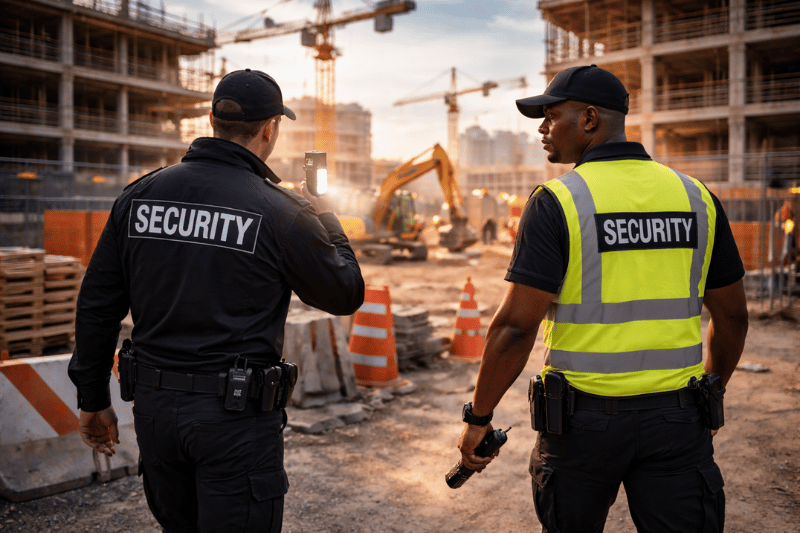
Security Patrolling – The Protection You Need
Security patrolling delivers physical protection that cameras and sensors cannot replicate. Guards walk the site, check doors and fences, verify equipment condition, and engage with anyone present on-site. Their ability to assess situations, make decisions, and physically respond to threats makes patrolling the backbone of effective construction security.
Patrol schedules vary based on site risk level. High-risk sites with large amounts of stored equipment may need patrols every 30 to 60 minutes (0.5 to 1 hour). Lower-risk sites may require 2 to 3 patrols per night. Randomised patrol timing prevents criminals from predicting guard movements and exploiting gaps.
Each patrol generates a detailed report that includes time, route, observations, and any actions taken. These reports create a security record that supports insurance claims, compliance audits, and ongoing risk assessment for the project.
Why Choose Walton Security?
Walton Security provides construction site security across Melbourne and regional Victoria with a focus on reliability, technology, and trained personnel. Here is what sets the service apart:
Efficient Security Solutions
Every security plan is built around the specific needs of your construction site. There is no one-size-fits-all approach. The team assesses your site, identifies risks, and designs a solution that uses the right combination of guards, cameras, access control, and patrols to protect your assets without unnecessary cost.
Full-Time Security Professionals
All construction security guards are fully licensed, trained, and experienced in construction site environments. Guards complete rigorous training that covers access management, conflict resolution, emergency response, fire safety, and Work Health and Safety (WHS) regulations. Ongoing training keeps skills current and performance high.
Industries We Serve
Walton Security provides construction site security services to a wide range of sectors, including residential construction, commercial development, industrial builds, infrastructure and civil works, and government projects. The company services the greater Melbourne area, including South Melbourne, Dandenong, Sunshine, Geelong and Bellarine Peninsula, Ballarat, and surrounding regions.
The Walton Security Difference in Construction Site Security in Melbourne
Walton Security combines experienced security guards with modern technology to deliver construction site security Melbourne clients can depend on. The approach starts with a thorough site assessment and ends with a security plan that adapts as your project progresses.
From CBD high-rise projects to suburban residential builds, the team understands the unique challenges of Melbourne construction sites. Guards are familiar with local conditions, council regulations, and the practical realities of protecting active work zones. This local knowledge translates into faster response times, better communication with site managers, and security plans that work in practice, not just on paper.
Transparent reporting gives clients full visibility into security operations. Daily logs, incident reports, and patrol records are available on request, so you always know what is happening on your site.
Our Clients
Walton Security provides tailored security services for construction businesses across Melbourne and regional Victoria. The team works with builders, developers, project managers, and contractors who need dependable asset protection and site access management. A deep understanding of each client's operations ensures security solutions that fit the way your site runs, not the other way around.
24/7 Protection for Your Business
Round-the-clock protection means your construction site is never left unguarded. Day shifts, night shifts, weekends, and public holidays are all covered. Whether you need a single guard at a gate or a full security team across multiple sites, Walton Security scales to match your requirements.
Types of Construction Sites That Require Professional Security
There are 4 main types of construction sites that benefit from professional security services in Melbourne:
Residential Construction Sites
Residential builds store appliances, fixtures, and finishing materials that are easy targets for theft. Homes under construction in suburban Melbourne areas like Dandenong and Sunshine often sit unattended overnight and on weekends. Security guards, CCTV cameras, and alarm systems protect these sites during vulnerable periods.
Commercial Construction Sites
Commercial developments, including office buildings, retail centres, and mixed-use projects, involve high-value materials and equipment spread across large footprints. Access control is critical on commercial sites where multiple contractors and subcontractors work simultaneously. Security personnel manage traffic flow, verify credentials, and maintain safe conditions across the site.
Industrial Construction Sites
Industrial builds such as warehouses, factories, and processing plants often contain specialised machinery and hazardous materials. Security measures for industrial sites include perimeter breach detection, CCTV surveillance, and strict access restrictions. Equipment vandalism deterrents, including GPS tracking and immobiliser systems, protect major plant assets.
Infrastructure and Civil Works
Road construction, bridge building, rail projects, and utility installations stretch across large geographic areas that are difficult to fence and monitor. Civil works protection requires mobile patrols, drone-based unmanned aerial surveillance, and coordination with local authorities. High-rise security specialists manage the added complexity of vertical construction zones with multiple access levels.
Comprehensive Security Services for Construction Sites
Professional construction security services in Melbourne cover every aspect of site protection. The following 4 services form the foundation of a complete security plan:
On-Site Security Guards
01On-site construction site security guards provide a physical security presence that deters criminal activity and responds to incidents in real time. Guards manage access points, conduct internal patrols, monitor CCTV feeds, enforce site safety rules, and handle conflict resolution. Their presence creates a controlled, organised environment that supports productive work.
CCTV Surveillance and Remote Monitoring
02CCTV surveillance systems record activity across the full site and feed live footage to monitoring stations. Remote monitoring allows security operators to watch your site from an off-site control room, reducing the need for additional on-site personnel. Recorded footage is stored for review, evidence, and incident investigation.
Access Control and Screening
03Access control and screening systems regulate who enters the construction site and when. Methods range from simple sign-in sheets and ID checks to advanced RFID badge systems and biometric scanners. Screening procedures verify contractor credentials, check deliveries, and prevent unauthorised vehicles from entering the site.
Risk Assessment and Planning
04A professional risk assessment methodology evaluates your site's vulnerabilities, threat landscape, and existing security measures. The assessment produces a written security plan with specific recommendations for guard deployment, camera placement, access control points, patrol schedules, and emergency procedures. The plan is reviewed and updated at regular intervals throughout the project lifecycle.
Frequently Asked Questions About Construction Site Security
Construction site security includes on-site security guards, CCTV surveillance, access control systems, mobile patrols, alarm systems, perimeter fencing, fire watch services, and emergency response. These components work together to prevent theft, vandalism, and unauthorised access on active work sites.
Construction site security costs in Melbourne vary based on site size, required services, guard hours, and technology. A small residential site may need a single overnight guard and basic CCTV, while a large commercial development may require 24/7 guards, multiple cameras, access control, and mobile patrols. Contact Walton Security for a free risk assessment and customised quote.
Construction sites need security guards because they contain high-value equipment, materials, and machinery that are targets for theft. Guards provide visible deterrence, manage access control, respond to incidents, and enforce safety rules. Sites without professional security experience higher rates of theft, vandalism, and project delays.
Walton Security provides construction site security across Melbourne, including South Melbourne, Dandenong, Sunshine, Geelong and Bellarine Peninsula, Ballarat, and surrounding areas in regional Victoria. Coverage extends from CBD high-rise projects to suburban and rural construction sites.
Yes, security services can be adjusted as your project progresses. Early-stage earthworks may need basic perimeter security and overnight patrols. As the project grows and more materials arrive on site, additional guards, cameras, and access control can be added. Security can scale down as the project nears completion and assets are removed.
Yes, Walton Security provides 24/7 protection for construction sites, covering day shifts, night shifts, weekends, and public holidays. Round-the-clock security ensures your site is never left unprotected during vulnerable periods.
Contact Us to Secure Your Construction Site
Get in touch today:
- 163/585 Little Collins Street, Melbourne VIC 3000, Australia