
Security Risk Assessment Melbourne: Threat, Vulnerability and Consequence Analysis
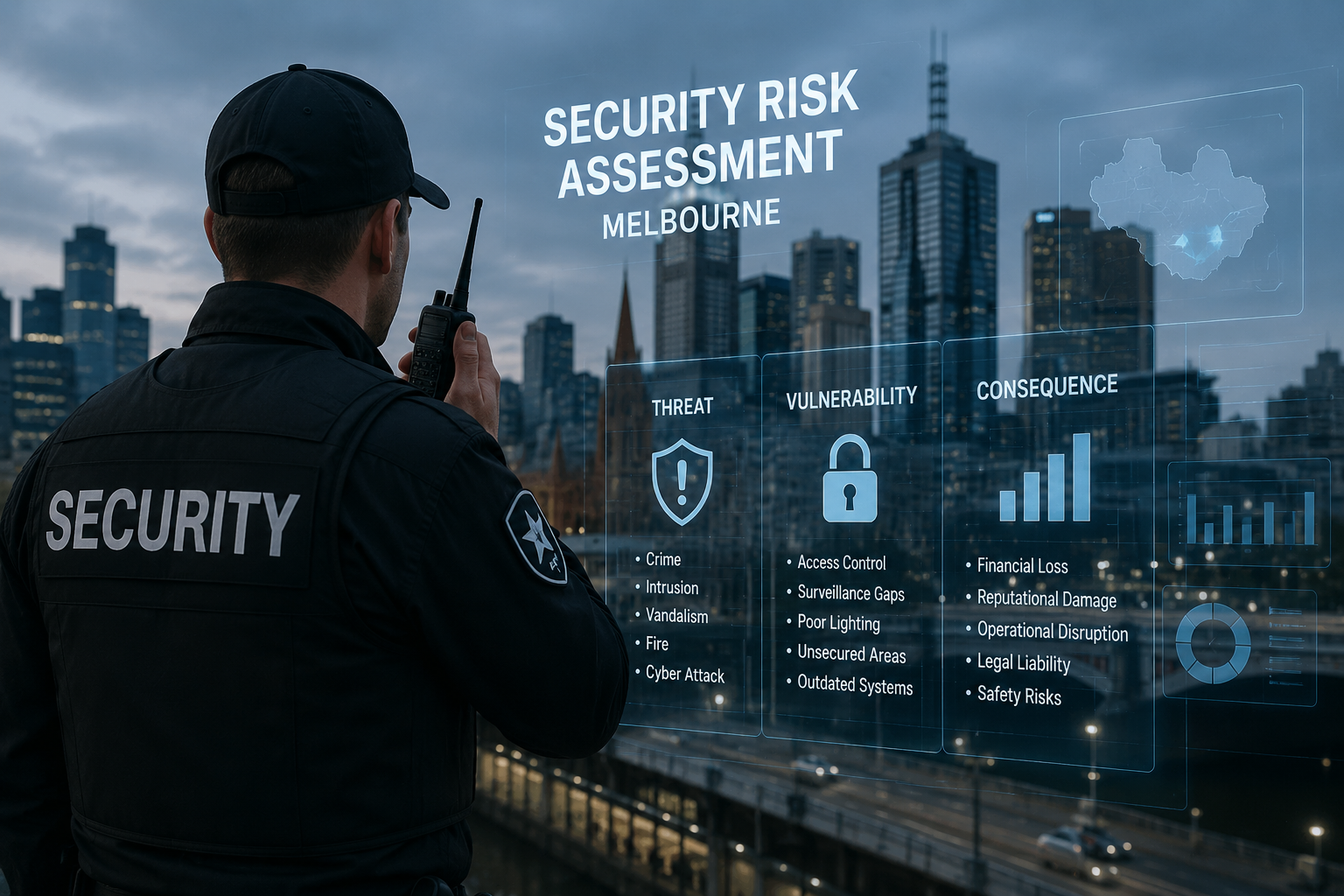
A security risk assessment is a structured evaluation that names the threats to a site, measures how exposed the site is to each one, and rates the likely consequence so protection money lands where it matters. Walton Security runs these assessments across Melbourne and Victoria for retailers, builders, corporate offices, hospitals, schools, and event organisers who need evidence, not guesswork, before they commit to guards, cameras, or fencing.
Our method follows the Australian standard AS ISO 31000:2018 for risk management and the security-specific handbook SA HB 167, applied through a Threat, Vulnerability and Consequence model. That means every finding traces back to a recognised framework a board, an insurer, or an auditor will accept. We also apply Crime Prevention Through Environmental Design (CPTED) principles when lighting, sightlines, and layout are part of the problem.
Walton Security holds ISO 9001, ISO 45001, and ISO 14001 certification, and our assessors work from real site inspections, local Victorian crime data, and your incident history rather than a generic template. An assessment built on those inputs tells you which risks are credible and which controls actually reduce them.
This page explains why a professional assessment matters, how the Threat, Vulnerability and Consequence model works, what the assessment examines, the sites we cover, what lands in your report, and how the process runs from first call to final recommendations.
Why a professional risk assessment matters
Professional assessments replace opinion with a defensible risk picture. A guard on the door might feel safer, but without an assessment you can’t prove the guard sits at your highest-risk point, and you can’t show an insurer why you spent the money. Walton Security produces findings you can take to a board meeting or a renewal review.
Credibility comes from method and independence. Our assessors align every report with AS ISO 31000:2018 and SA HB 167, the two documents Standards Australia publishes for security risk. Where relevant we reference AS/NZS 4421 for guard and patrol operations and CPTED for physical design. We don’t inflate threats to sell more hours, because the assessment and the guarding are costed separately.
A rating on its own is not a decision. Colour-coded matrices with no owner, treatment, or timeframe describe a problem instead of solving it. Every risk we log carries a recommended control, a priority, and a reason. That discipline separates a real assessment from a checklist, and it sets up the analysis model we use to get there.
The Threat, Vulnerability and Consequence model
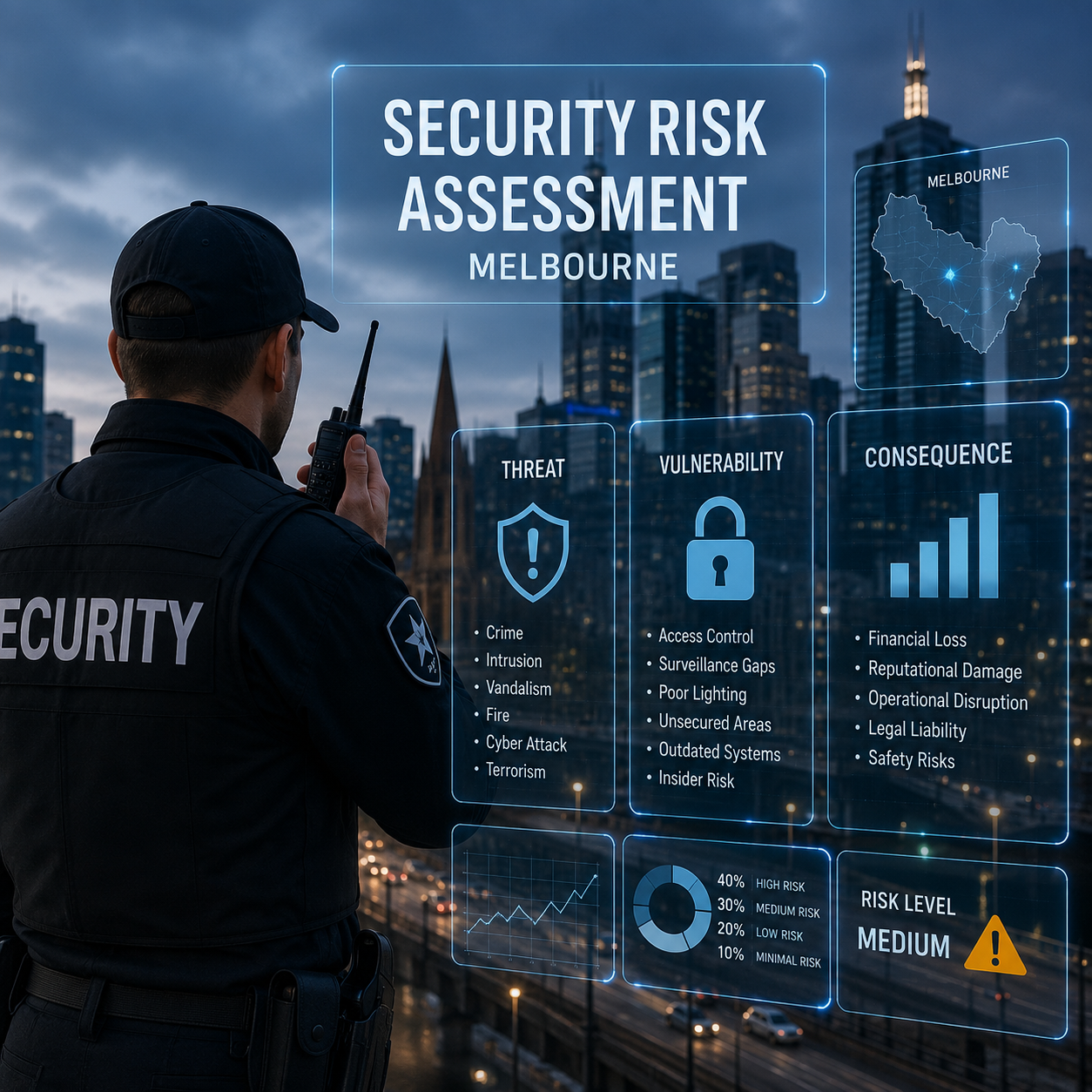
Threat, Vulnerability and Consequence (TVC) is the analytical spine of every Walton assessment. It asks three linked questions about each risk, and a risk only rates high when all three line up.
- Threat names the source of harm: opportunistic theft, ram-raid, insider fraud, vandalism, trespass, or targeted violence. A threat becomes credible when intent, capability, and opportunity meet.
- Vulnerability is the gap that lets a threat succeed: an unmonitored loading dock, a propped fire door, predictable cash runs, or a blind spot no camera covers.
- Consequence measures the damage if the event happens: injury, stock loss, downtime, reputation, or a compliance breach.
We score likelihood against consequence on a risk matrix, then rank the results so your worst exposures sit at the top. Good controls do four things: deter, detect, delay, and enable response. A control that exists on paper but nobody maintains is a vulnerability, not a strength, and we flag it as one. Once the risks are ranked, the assessment moves into what we physically examine on site.
What our assessment covers
Coverage spans four layers, because a threat rarely lives in just one. Walton assessors walk the site and test each layer against the ranked risks from the TVC analysis.
Procedural security
opening and closing routines, key control, cash handling, contractor sign-in, and after-hours rules.
Physical security
perimeter, fencing, gates, locks, lighting, access points, and barriers.
Technological security
CCTV coverage and blind spots, alarm zones, electronic access control, and monitoring arrangements
Human factors
staff awareness, lone-worker exposure, supervision gaps, and how people actually behave versus the written policy.
Each layer gets tested against local conditions, not a national average. A warehouse in Truganina faces different exposure to a boutique in South Yarra, and the report says so. That site-specific read feeds directly into which industries and property types we assess most.
Sites and industries we assess
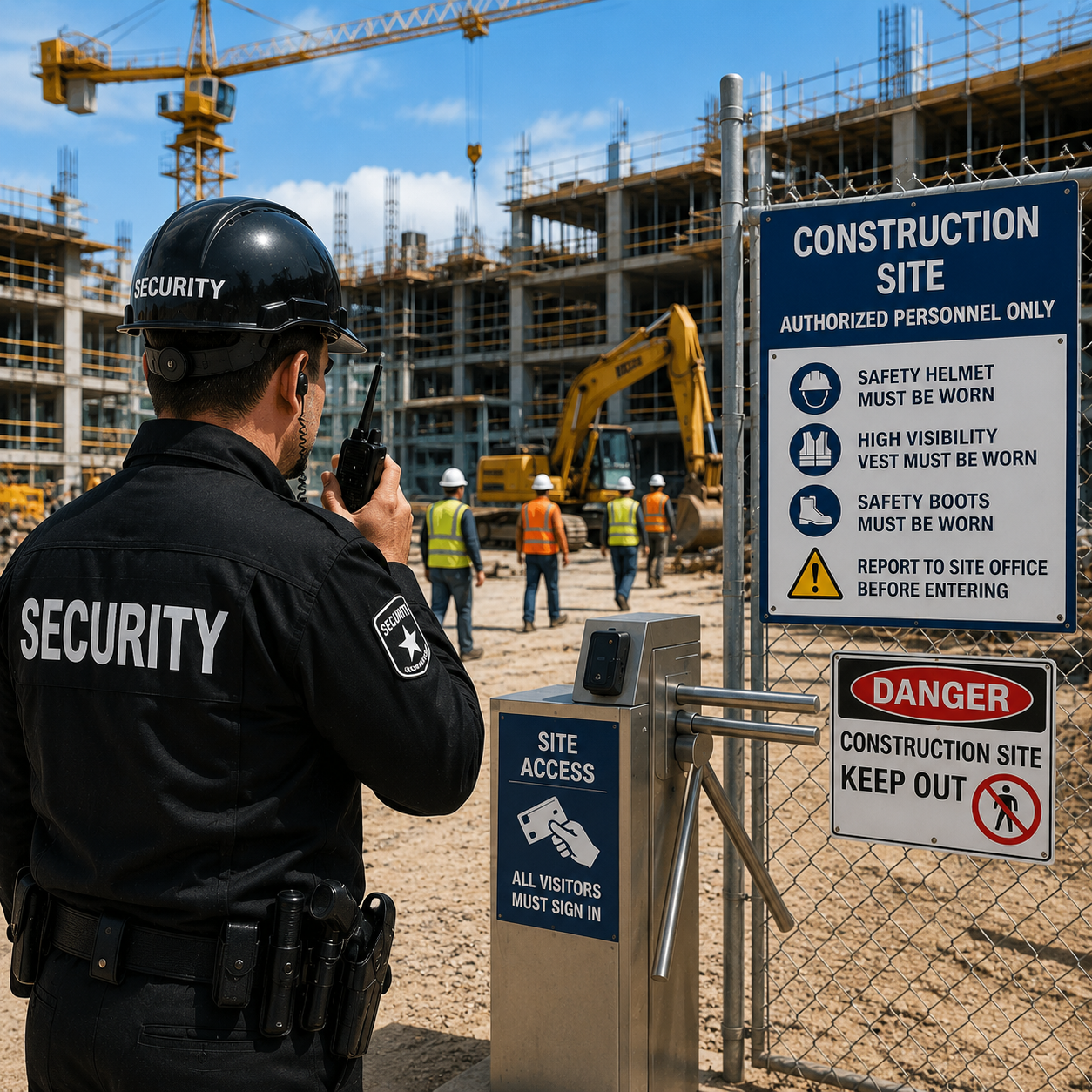
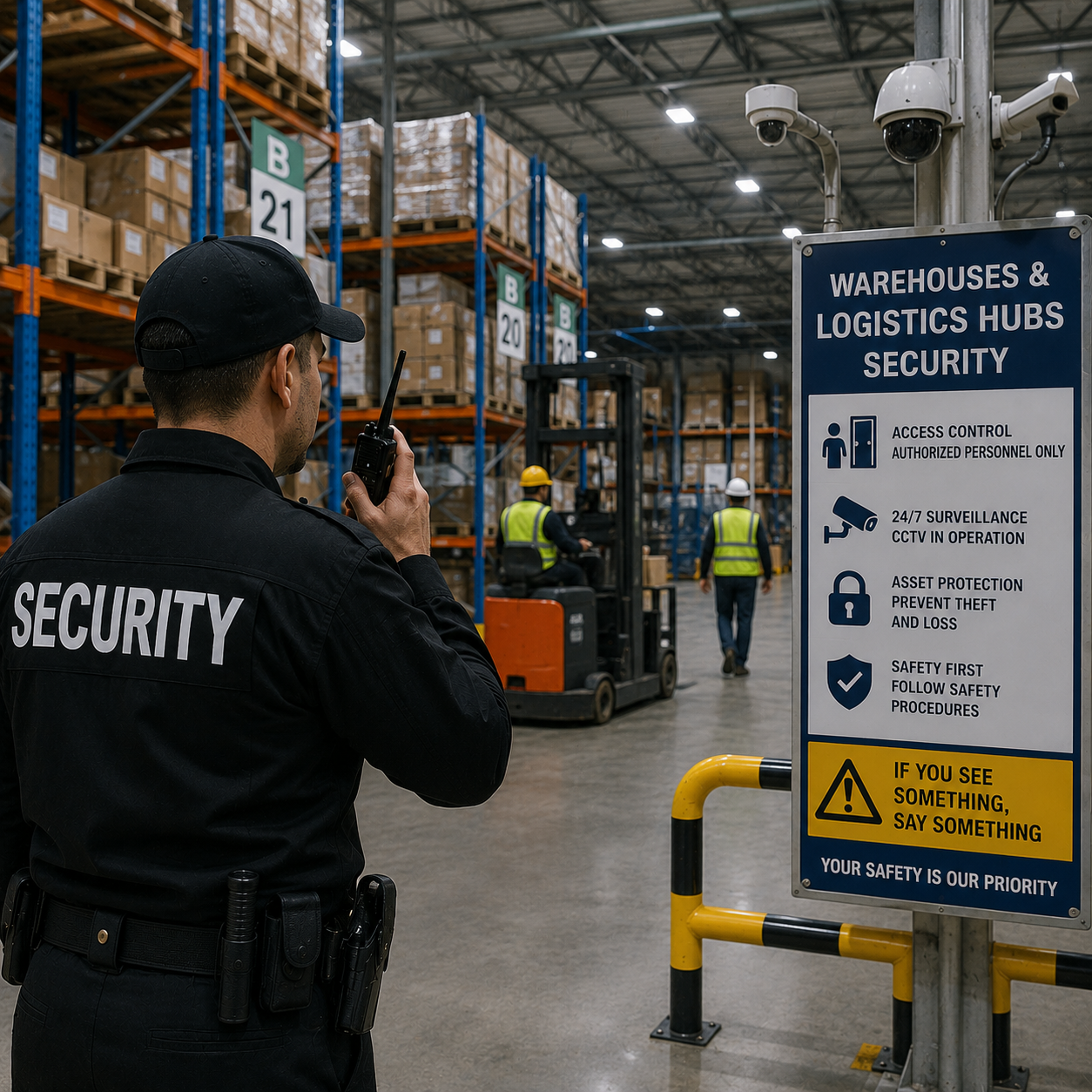
Walton Security assesses risk across the property types most exposed to loss in Melbourne. Each sector carries its own threat profile, and our assessors adjust the model to match.
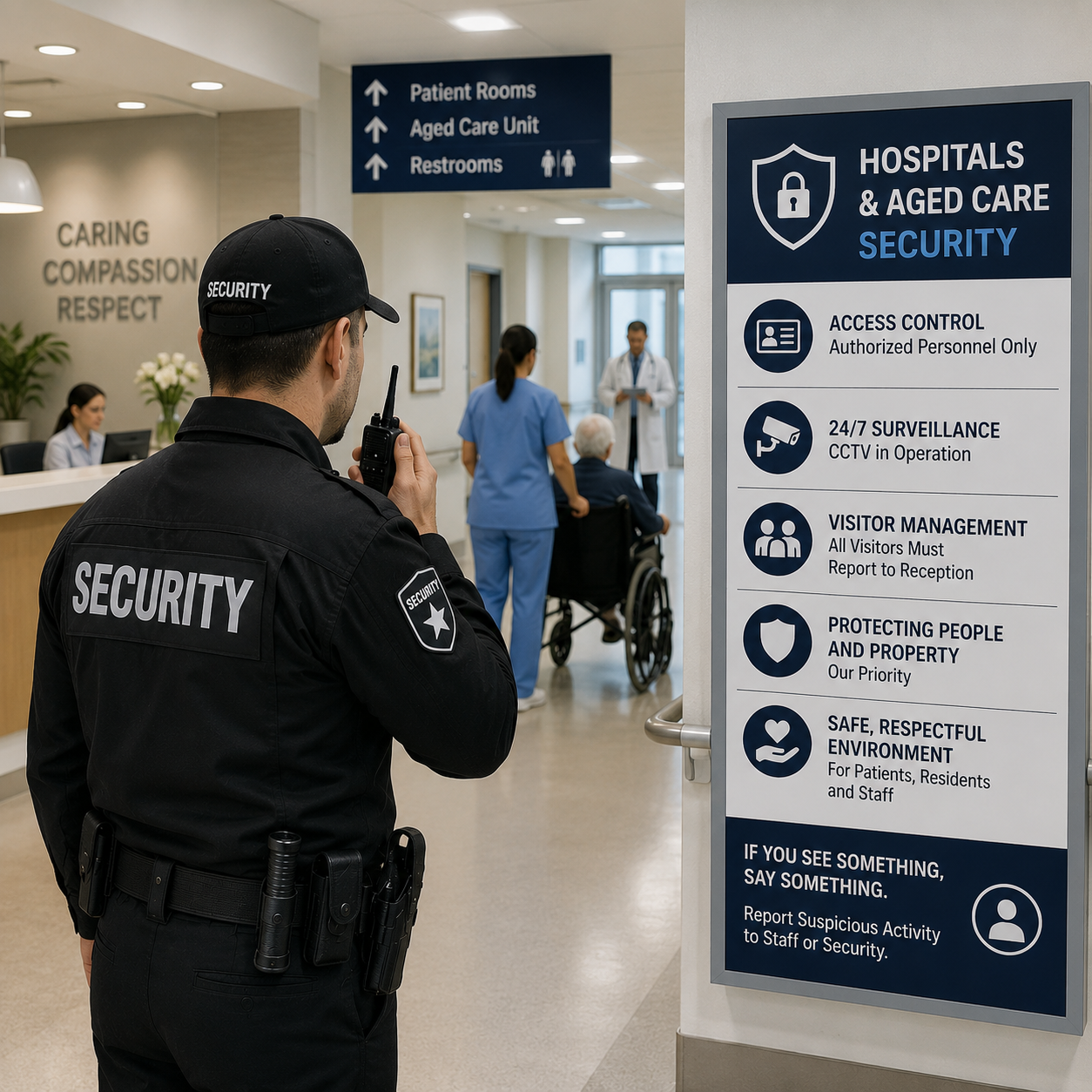
Hospitals and aged care
patient and staff safety, drug storage, and public access control.
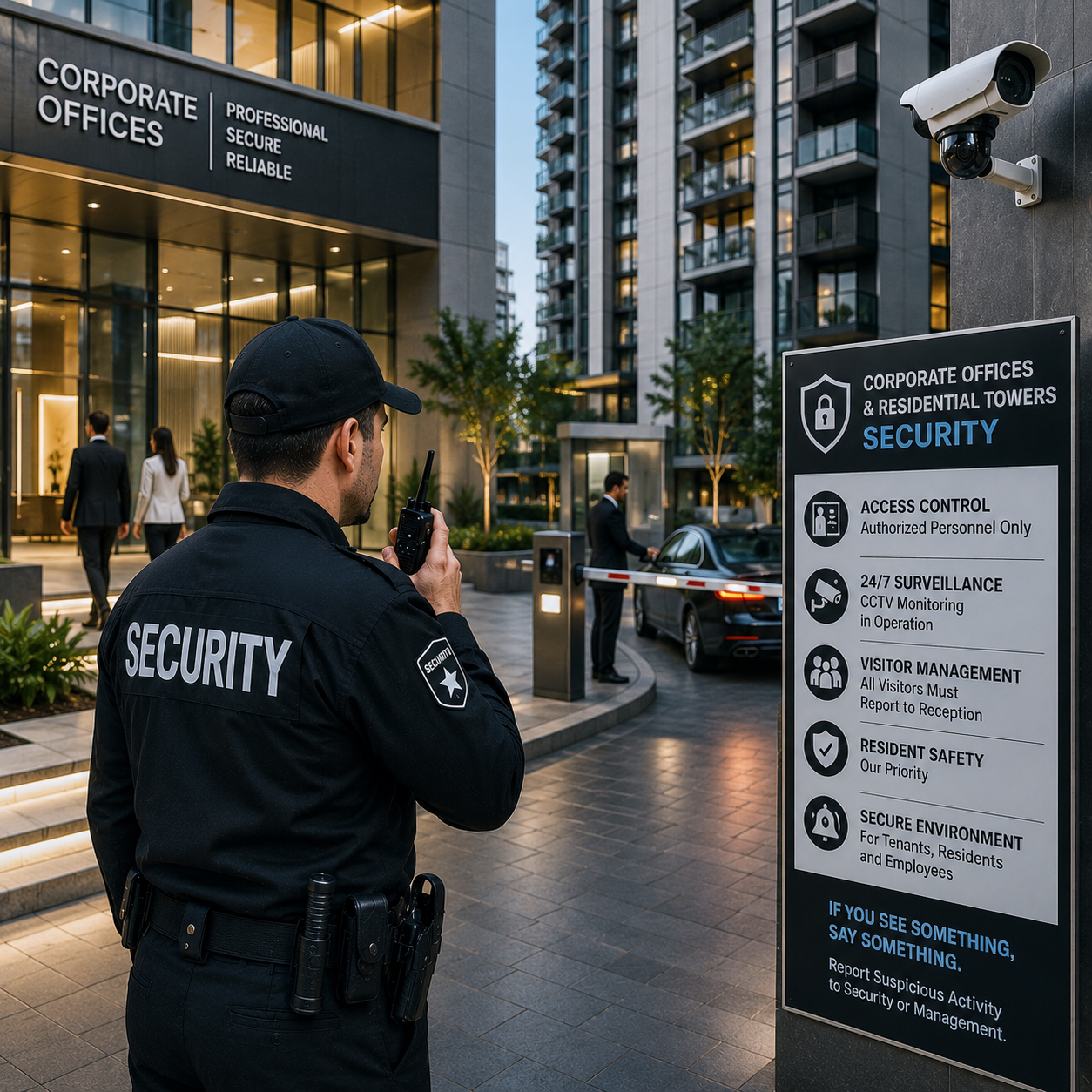
Corporate offices and residential towers
Tailgating, insider risk, and reception screening.
What lands in your risk assessment report
Reports document the whole assessment in plain language a manager and an insurer can both read. Walton delivers a single document, not a slide pack with no substance behind it.
Asset register
01Asset register listing what needs protecting and its value to the business.
Threat and vulnerability findings
02Threat and vulnerability findings for each asset, with evidence from the site walk.
Risk ratings
03Risk ratings ranked by priority so the urgent items are obvious.
Recommended controls
04Recommended controls covering guards, patrols, technology, and procedure.
An implementation order
05An implementation order so you fix the highest risk first, within budget.
How the assessment process works
The process runs in four stages and usually takes days, not weeks, depending on site size.
We agree what’s in scope, review your incident history, and confirm the assets that matter.
An assessor examines physical, procedural, and technological controls against local crime data.
Report and recommend: you receive the written report with prioritised, costed controls.
Frequently Asked Questions
A security risk assessment is a structured process that identifies threats to a site, measures its vulnerabilities, and rates the consequence of each risk to guide protection decisions. A security risk assessment is a structured process that identifies threats to a site, measures its vulnerabilities, and rates the consequence of each risk to guide protection decisions.
Cost depends on site size, complexity, and the number of buildings or zones to inspect. A single retail store assesses faster than a multi-level hospital or a large logistics site. Share your site details for a scoped quote rather than a generic figure.
Most assessments take a few days from site inspection to written report. A small office can be inspected in a single visit, while a multi-site portfolio needs longer for the walk-throughs and analysis. We confirm the timeframe once the scope is agreed.
We follow AS ISO 31000:2018 and SA HB 167, the Australian standards for risk management and security-related risk. We also apply CPTED design principles and reference AS/NZS 4421 for guard and patrol considerations where they apply.
The report includes an asset register, threat and vulnerability findings, ranked risk ratings, recommended controls, and an implementation order. Every risk carries an owner-ready recommendation, so the document supports a real decision rather than just describing the problem.
No. The assessment is independent of the guarding, and you can use the report with any provider. Most clients ask Walton to deliver the recommended cover because we already know the site, but there’s no obligation.
Yes. A small business often carries the highest exposure per dollar because one break-in can close it. A focused assessment shows where a modest spend on lighting, locks, or a patrol removes the biggest risk.
Yes. Post-incident assessments are one of the most common reasons clients call, because an event exposes a gap that needs measuring fast. We review what happened, find the vulnerability that allowed it, and recommend controls to stop a repeat.
Security risk assessment turns a vague worry into a ranked, evidence-based plan. Walton Security applies the Threat, Vulnerability and Consequence model against AS ISO 31000 and SA HB 167, examines your physical, procedural, technological, and human controls, and delivers a report that names your assets, rates your risks, and orders the fixes. Call 03 9970 8701 or request a scoped assessment to spend your security budget where the exposure actually is.
How a Security Risk Assessment Protects Your Business
A risk assessment is not protection in itself. Its value lies entirely in what it enables you to do next, and that value shows up in six distinct ways.
It directs your spending where it actually matters
Most businesses under-invest in one area while over-investing in another, usually because a supplier sold them a product rather than a solution. A proper assessment ranks every identified risk by likelihood and consequence, so you address the genuine gaps first rather than the ones that happened to come up in a sales conversation. In practice this often reveals that the cheapest interventions deliver the largest reduction in risk. Improved lighting, tighter key control, a repositioned camera, or a revised opening and closing procedure frequently outperform an expensive system upgrade, because they close the vulnerability an intruder would actually exploit.
It exposes the gaps you have stopped noticing. Familiarity works against security. Staff who pass the same rear door every day no longer register that it fails to latch properly, or that the loading bay sits outside every camera angle, or that the side gate is left open through the afternoon. An independent assessor sees the site the way an intruder would, without the assumptions that come from working there. That outside perspective consistently surfaces vulnerabilities internal reviews miss, and those overlooked gaps are precisely where incidents tend to originate.
It strengthens your compliance and insurance position.
Many Melbourne businesses carry obligations that touch on security, whether through workplace health and safety duties, industry licensing, contractual requirements imposed by clients, or specific conditions attached by insurers. A documented assessment demonstrates that you identified your risks and responded reasonably to them. That documentation matters during audits and licensing reviews, and it matters again if you ever need to substantiate a claim or explain your decisions after an incident.
It protects your people, not just your assets.
Physical security is a workplace safety issue as much as a property one. Assessing risks such as after-hours access, cash handling, lone working, car park lighting, and the potential for aggressive customer behaviour, then implementing appropriate controls and staff procedures, reduces the likelihood of anyone being harmed. It also evidences a genuine duty of care, which carries weight both legally and in how your team feels about coming to work.
It replaces reaction with planning.
Without an assessment, security decisions get made under pressure, after a break-in, after a near miss, after an insurer asks a difficult question. With one, you hold a prioritised list showing what needs immediate attention, what belongs in next year’s budget, and what can safely wait. Security stops being an unpredictable expense and becomes a managed, forecastable part of running the business.
It builds a baseline you can measure against.
A first assessment establishes where you stand. Subsequent reviews show whether your controls are working, whether new vulnerabilities have appeared as the site or operation changed, and whether the threat environment around you has shifted. That ongoing comparison is what keeps security current rather than letting it quietly decay over the years.
Get in touch today:
- 163/585 Little Collins Street, Melbourne VIC 3000, Australia